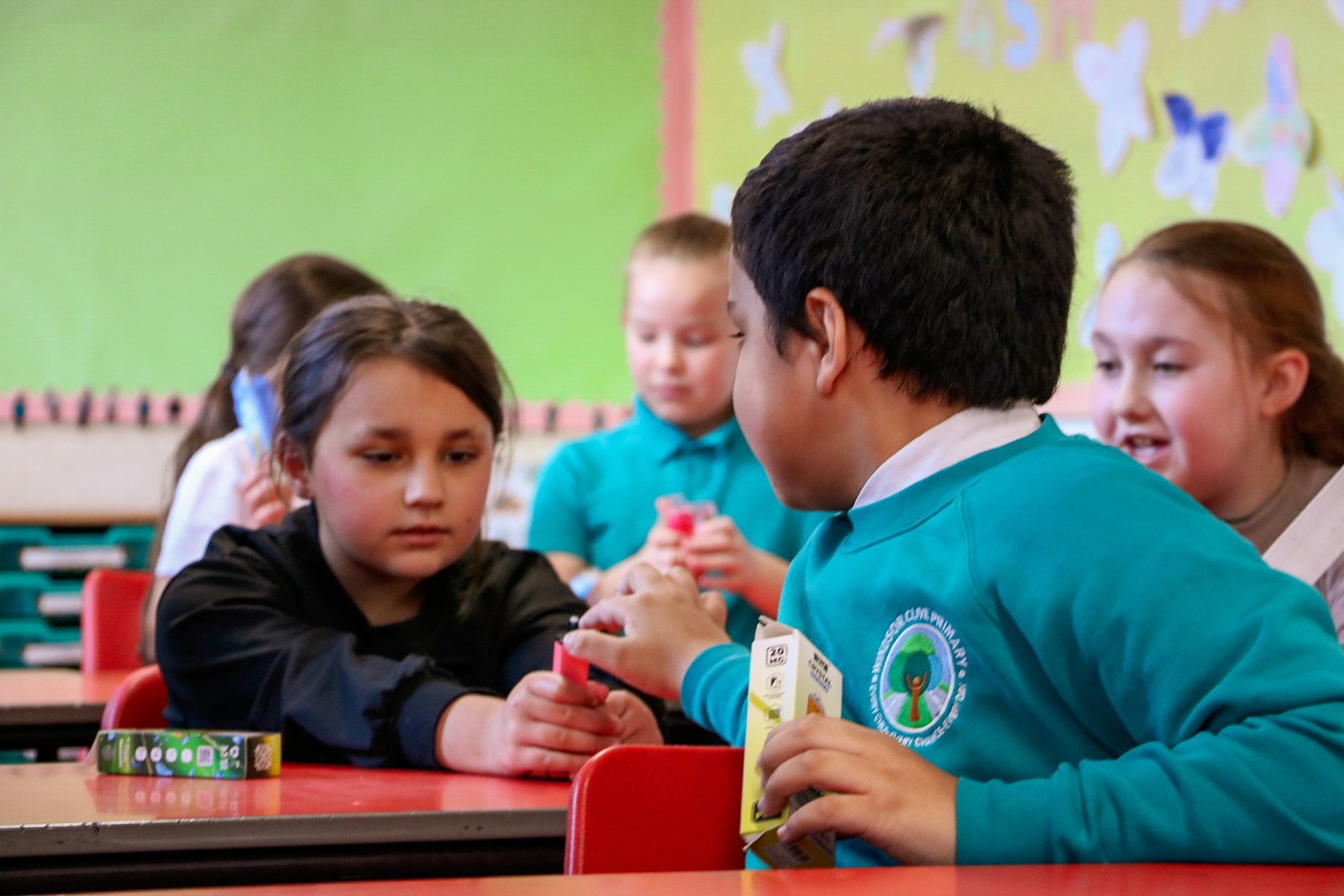
New 2025 SHRN data shows regular vaping and smoking have fallen among secondary school learners in Wales. We look at the latest figures, what they mean and why prevention work still matters.
What does peer pressure look like? Sometimes it is obvious. Sometimes it looks more like a joke, a …
A year ago, disposable vapes had become hard to miss. They were in shop displays, coat pockets, school …

Wales’s leading tobacco control charity is today calling on all parties contesting the Senedd election to set out …

This No Smoking Day 2026, we are encouraging the estimated 260,000 people in Wales who smoke to consider …

Tiffany, 54, has lived in Cardiff all her life and now calls Llanishen home. She works as a …
Information / What’s in a vape?
A legal nicotine vape sold in Great Britain usually contains a small number of main ingredients, but the device, liquid and aerosol are not all the same thing. Knowing the basics makes it easier to understand labels, spot unusual products and avoid myths.
Last reviewed: 25 September 2026
QUICK ANSWER
Some e-liquids are nicotine-free. When the liquid is heated it forms an aerosol that is inhaled. It is often called “vapour”, but it is not simply water vapour.
An addictive drug. Different products contain different strengths, and some e-liquids contain no nicotine.
A liquid commonly used to carry flavour and nicotine and help produce the aerosol.
A thicker liquid that helps create visible aerosol or “clouds”.
Ingredients used to create flavours. Legal nicotine vapes still have to comply with product rules on ingredients and notification.
The liquid mixture held in a pod, cartridge, tank or refill bottle.
A small heating element turns the liquid into an aerosol when the device is activated.
Powers the heating coil. Rechargeable devices should be used and charged according to the manufacturer’s instructions.
No. Vapes create an aerosol from heated e-liquid. The aerosol can contain nicotine, flavouring chemicals and other substances formed or released during heating.
That does not make vaping equivalent to smoking. Legal vapes expose users to significantly fewer harmful substances than cigarettes, which burn tobacco and produce tar, carbon monoxide and thousands of chemicals. Vaping is still not risk-free.
Under current Great Britain product rules, nicotine-containing vapes must be notified to the MHRA before sale. Rules include a maximum nicotine strength of 20 mg/ml, a maximum tank or pod capacity of 2 ml, and a maximum 10 ml nicotine refill container. Certain ingredients, including caffeine and taurine, are prohibited.
These rules help distinguish legal consumer products from products that do not meet UK requirements.
An illegal vape may exceed nicotine limits, contain prohibited ingredients or fail to appear on the MHRA notification list. Products sold as THC, CBD or cannabis vapes sit outside ordinary nicotine-vape assumptions and may contain unexpected substances, including synthetic cannabinoids.
Why an illicit cannabis vape may contain something different from its label.
What schools and families need to know about unexpected synthetic cannabinoids.
You do not need to dismantle a device or investigate its contents yourself. Look at the packaging, nicotine strength, product name and where it came from. If a young person becomes unwell after using an unknown vape, deal with their health first and tell medical staff what you know.
Current UK evidence and key messages on vaping, relative harm and legal products.
How vapes work, typical e-liquid ingredients and their role in quitting smoking.
Current Great Britain product requirements for nicotine-containing vapes and refill containers.