





ASH Wales Urges Senedd Members to Boycott Tobacco Industry Event

Wales’s leading tobacco control action group, ASH Wales is calling on Senedd Members not to attend an event organised by one of world’s biggest tobacco manufacturer’s Japanese Tobacco International (JTI).

The event on Wednesday (17th) on the Senedd Estate is sponsored by Conservative MS Darren Millar and focuses on JTI’s information on the illicit tobacco trade.

Welsh Government is already taking action, which does not involve the tobacco industry, to tackle illicit tobacco as part of Wales’s Tobacco Control Delivery Plan.

World Health Organization’s (WHO) Framework Convention on Tobacco Control (FCTC) sets guidance on how to protect health policy “from commercial and other vested interests of the tobacco industry”. This event presents a significant risk of tobacco industry influence over Wales’s emerging health policies.

CEO of ASH Wales, Suzanne Cass said:

“The tobacco industry have a long history of undermining tobacco control policies and trying to play down the health impact of their lethal products. Allowing one of the big tobacco companies to host an event in the Senedd which focuses on a major tobacco control policy, flies in the face of the protocols laid down by the World Health Organisation. Wales is on the brink of launching ambitious tobacco control polices to make Wales smoke free by 2030. It is imperative that the tobacco industry is kept at arms-length from the decision makers involved in that process.”
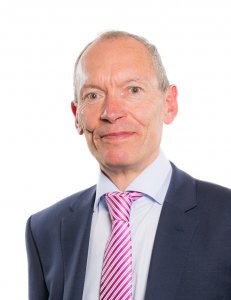
The Chair of the Senedd Smoking & Health Cross-Party Group John Griffiths MS strongly criticised the decision to allow the event to go ahead on the Senedd estate. Mr Griffiths said:

“We have seen lots of good work by our Welsh Government to create more smoke-free environments with the bold ambition of having a smoke-free Wales by 2030 – and this event undermines this and our strong public health efforts here in Wales.

“Smoking continues to take a terrible toll on our health in Wales. It is particularly damaging to families in our most deprived communities where it is a major cause of premature death and disability. It greatly adds to the pressure on our doctors, nurses and hospitals. There should be a political consensus to drive down smoking rates and support young people in stopping to develop the habit and helping smokers to quit.

“Tobacco companies have a long record of working to undermine health messages and measures, fighting a rearguard action to continue to profit from death, ill health and misery. And seeking to portray themselves as cooperating with governments and agencies to address the damage smoking causes. They have been called out by the World Health Organisation, United Nations and governments across the globe.”

The Royal College of Physicians joined the growing number of calls for Senedd Members to boycott the event, Vice President for Wales of the RCP, Dr Olwen Williams said:

“The RCP has a long history of campaigning on issues relating to tobacco use and control.  In 1962, we published Smoking and health which first highlighted the link between smoking and lung cancer, other lung diseases, heart disease and gastrointestinal problems.

“Despite five decades of campaigning, smoking unfortunately remains the leading cause of preventable death in Wales, causing at least 5,600 deaths in Wales in 2018.  It has a major impact on health inequalities and avoidable illness, and costs the NHS in Wales almost £400 million every year.

“Given the recently published target of a smoke-free Wales by 2030, I am disappointed to see that tomorrow, a Senedd member is hosting an event organised by the tobacco industry.

“I urge you and your colleagues to boycott this event in the interests of protecting the health of the people of Wales.”

Health charities across Wales have backed the boycott, including Cancer Research UK (CRUK), the British Heart Foundation (BHF) and the Asthma UK and British Lung Foundation Partnership (AUK-BLF).


For further information contact:

Simon Scheeres | Policy and Public Affairs Manager | simon@ashwales.org.uk | 07841571516|

ASH Wales will be attending the event at 10:30- 2pm, 17/11/21. If you would like to cover this item for broadcast, please contact Simon Scheeres on the above number.

About us:

ASH Wales Cymru is the leading organisation working for a smokefree Wales via strong tobacco control policy and country-wide campaigns. We work to raise awareness of the health, social and economic effects of smoking by engaging with communities, young people and partners across Wales.

NB: Please refer to ASH Wales Cymru as a ‘tobacco control campaign group’

Website www.ash.wales  Facebook www.facebook.com/ASHCymru

Twitter www.twitter.com/ASHWalesCymru

Second Open Letter To Members Of The Senedd: Japan Tobacco International

Following our previous letter to the Senedd highlighting concerns with Japan Tobacco International (JTI) funding Welsh charities for PR campaigns claiming to target cigarette butt littering, JTI are now hosting an event within the Senedd.

The ‘Tackling Illicit Tobacco Sales in Wales’ drop in event, scheduled for Wednesday 17th November in Tŷ Hywel is being organised by JTI in what may well be an attempt to garner political support.

We now write an open letter to Senedd Members urging them to not attend this event, once again referencing Article 5.3 of the World Health Organisation’s (WHO Framework Convention on Tobacco Control (FCTC).

To view the full document, click HERE.

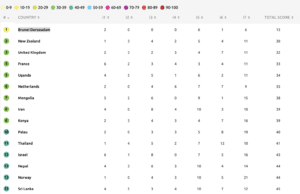
Global Tobacco Index: UK Fails to Regain Number One Position for Second Year Running

Credit: Tobacco Control Research Group at the University of Bath

Overall, the UK has failed to make progress in preventing the tobacco industry from interfering in policy and legislation, according to the latest global rankings.

While the UK continues to compare favourably to many of the 79 other countries surveyed, there is still work to do to raise its performance to the level reported in 2019, when it ranked first.

Researchers found that the UK continued to offer tobacco companies opportunities to use so-called corporate social responsibility (CSR) programmes to open the door to government officials and policy makers, particularly in areas of significant public interest such as environmental pollution and COVID-19. Also of concern is the growing use of industry front groups, and the difficulty of identifying their role in lobbying and influencing policy.

The UK research, published today in the UK Tobacco Industry Interference Index (UKTI), was led by the Tobacco Control Research Group at the University of Bath in collaboration with Action on Smoking and Health (ASH), ASH Scotland, ASH Wales and Cancer Research UK (CRUK).

The UKTI forms part of the Global Tobacco Index (GTI), which, this year, ranks 80 countries based on how well they implement and comply with the obligations of a global health treaty, known as the World Health Organization Framework Convention on Tobacco Control, which prevents tobacco industry interference with governments.

The UK scored 32 out of a possible 100 – compared to 26 in 2019 – in the ranking where the lower the score, the better a country is faring.

The Index shows several key areas of concern in the UK:

  • tobacco companies conducting CSR activities via informal parliamentary groups and by lobbying. In the case of COVID-19, this was in response to direct requests from government
  • despite Foreign and Commonwealth Office guidelines to the contrary, UK diplomats engaging with the tobacco industry in low- and middle-income countries
  • a lack of transparency across government departments about their interactions with the tobacco industry, with inconsistent and insufficient requirements for reporting between different departments
  • no general requirement for the tobacco industry and affiliated entities to register with the government, which is of particular concern given the industry’s growing use of third parties

Dr Raouf Alebshehy, monitoring coordinator for the Tobacco Control Research Group at the University of Bath and the lead researcher for the UKTI, commented:

‘The UK’s policy-making system accepts stakeholders’ submissions in some instances, allowing tobacco companies to present opinions. In such cases, as a minimum, who said what must be clearly documented and made public. Submissions from the tobacco industry can’t be equated with submissions from health advocates. This is not a level playing field.’

Deborah Arnott, chief executive of ASH, said:

‘Yet again the annual Global Tobacco Index demonstrates that the UK is doing well by comparison with many other countries in preventing the tobacco industry from interfering in tobacco policy. However, more importantly, the specific UK Tobacco Industry Interference Index shines the spotlight on the areas where the UK can and should be doing better.’

Sheila Duffy, chief executive of ASH Scotland, said:

‘Tobacco is the single most damaging consumer product on the market, and the corporate multi-nationals who promote it and profit from it have long and well-documented track records of deceit and attempts to interfere with proposed public health measures. The Westminster and Holyrood Governments must up their game on transparency about tobacco industry funded attempts to influence public health policy, and reject any suggestion that the industry and its vested interests are valid health stakeholders or partners.’

Suzanne Cass, chief executive of ASH Wales, said:

‘Recent activities in Wales show that the tobacco industry is not beyond interference at a grassroots level. ASH Wales will be working to ensure any campaigns funded by the tobacco industry are not endorsed or supported by Welsh Government or its officials. As Wales embarks on a robust campaign to reduce demand and drive down illegal tobacco sales, it is imperative that the tobacco industry is not given the opportunity to interfere. The tobacco industry still holds significant swaying power: we must continuously ensure that this does not influence policy on a local or wider level.’

Michelle Mitchell, chief executive of Cancer Research UK, said:

‘It’s disappointing to see that the UK has not managed to regain its leading position in preventing the tobacco industry from interfering in policy-making. Given the industry’s long history of subverting public policy for its own vested interests, we need our government to increase transparency, and ultimately limit interactions with these companies.

‘As highlighted by the recent takeover of Vectura by PMI, going forward it will also be essential for the government to step up its adherence to the WHO FCTC to ensure that Big Tobacco’s expansion into the health sector doesn’t permit it a seat at the policy-making table.’

Writing Credit: Dara O’Hare at the Tobacco Control Research Group at the University of Bath

Open Letter to Members of the Senedd: Japan Tobacco International

In early November 2021, we wrote an open letter to members of the Senedd, highlighting concerns with Japan Tobacco International (JTI) funding Welsh charities for PR campaigns claiming to target cigarette butt littering, in relation to Article 5.3 of the World Health Organisation’s (WHO Framework Convention on Tobacco Control (FCTC), requiring governments to take measures to protect health policy “from commercial and other vested interests of the tobacco industry”.

To view the full document, click HERE.


With Only Two Pay Days to Go, Quitting Smoking Could Pay for Christmas

As the festive countdown begins, Wales’ leading tobacco control charity, ASH Wales, is urging smokers to quit now and save over £500 for Christmas.

Latest figures from Help Me Quit, Wales’s NHS stop smoking service, show a 20 a-day smoker is now spending on average £280 a month on cigarettes, rising to £3,600 a year.

Research shows household finances in Wales have been hard hit by the pandemic with the Citizens Advice Bureau estimating a £73m arrears on household bills across Wales.

A UK-wide survey last year revealed that people in Wales spend £40 more than their UK counterparts on Christmas, with an average spend of £460 per household.

With just two pay days left before Christmas, ASH Wales CEO Suzanne Cass, said there has never been a better time to quit:

“Smokers often don’t think about how much money they spend on tobacco, quitting smoking is the single best thing you can do for your finances and your health.

‘Nearly 70% of smokers say they want to quit, we would say that now is the time to take action and save money and cover those extra Christmas costs.”

Covid has put long-term pressure on household finances, halting the amount spent on cigarettes can significantly reduce outgoings not just for Christmas, but in the long run.

Finance firm Aspen Waite Wales say monitoring outgoings is key to financial stability, David Scheeres, CEO of Aspen Waite Wales, said:

”Now, more than ever, we advise people to take a measured approach to their finances, especially while we recover from pandemic in the lead up to Christmas.

“Taking sensible steps to monitor expenditure is not only wise within the winter period, but also throughout the year. If you can improve your finances while also taking steps to improve your health: that can only be a good thing.”

Latest figures from the National Survey of Wales show that people who live in material deprivation are more than twice as likely to smoke as those that don’t (39% vs 15%).

Poorer people in Wales are not only more likely to smoke but can also expect to die around 9 years earlier than those from more affluent areas. Tobacco use is the single biggest cause of these inequalities accounting for more than half of the difference in the risk of premature death between social classes.

Smoking is the biggest cause of avoidable disease and early death in Wales, taking the lives of more than 5,000 people a year. It places a huge burden on an already overstretched NHS in Wales, costing the organisation around £302 million a year.

_________________________________________________ 

References:

NHS Wales Help Me Quit Smoking Calculator: https://www.helpmequit.wales/cost/

Citizens Advice Bureau Report: https://www.citizensadvice.org.uk/Global/CitizensAdvice/Wales/Coronavirus%20Debt%20Wales.pdf

UK-Wide Survey on Christmas Expenditure: https://www.mccarthyandstone.co.uk/life-and-living/explore/lifestyle/christmas-spending-2020/

National Survey for Wales:  National Survey for Wales: results viewer | GOV.WALES


For further information contact:

Simon Scheeres |Policy & Public Affairs Manager| simon@ashwales.org.uk | 07841 571 516|

Helping Pregnant Smokers To Quit The Habit

Across Wales 17% of mums-to-be smoke throughout their pregnancy, with  prevalence  highest among pregnant 16 to 19-year-olds at 35%.

Jodie Foran is a Maternity Care Assistant based at the University Hospital of Wales in Cardiff who specialises in supporting pregnant women to quit smoking. She told us about the women she works with and the challenges they overcome to quit the habit. 

How did you come to work in your current role?

 I was working as a band 2 HCSW on the postnatal ward at the Heath hospital part time doing mostly night shifts. The job was advertised for a band 3 full time position for a Maternity care assistant specifically for Smoking Cessation. Most of my experience and training has been centred around supporting new parents with feeding their babies which at times has included motivational interview skills to help them achieve their goals. I applied for the position because I was looking for a new challenge and an opportunity to progress in my job.

Can you tell us about the women you work with?

Every woman I work with is either a smoker, lives with a smoker or may have recently quit smoking but still requires ongoing support to stay quit. So far since January 21 the percentage of smokers at booking is roughly 8.4%

Generally the people I work with are aware that smoking can cause harm during pregnancy and to the health of their baby but it’s also very apparent that they don’t always have the correct information on the subject. I often hear things that have been ‘heard’ from friends and family members that have smoked during pregnancy but had no problems, old wives tales that play down the effects, research conducted on the internet and misinterpreted information.

Why, in your experience, do many of them find it challenging to quit smoking during pregnancy?

 I hear many different reasons why people find it so difficult to quit smoking during pregnancy. Addiction is the driving factor for most as this doesn’t change when you find out you’re pregnant. For some it then causes further concern because they’re under more pressure to try and beat it under a time constraint. Stress, mental health problems, day to day pressures, problems in the home life, relationship difficulties, habit, fear of losing a coping mechanism, fear of losing friends or family members if they need to stay away from other smokers, fear of losing part of their identity or gaining weight are all very common things I hear very often.

How do you encourage them to think about quitting smoking?

 I provide them with the correct information and suggest other ways of replacing those things they fear losing. I try to have an informal chat about their experiences and their smoking habits and work with them to make a plan going forward. Some people are ready to quit and are eager to get any help that’s offered and others need a bit more time and support to think about the pathway that will work best for them in their day to day life.

What support do you offer them to quit smoking?

I mostly support people over the phone, by text or WhatsApp but I’m also able to arrange to see them face to face at their antenatal appointments. I get a list of people interested in having a chat about smoking sent to me electronically every Monday via email. I’m based in antenatal clinic most days so am often asked to see patients during an appointment and I also have referrals sent by my colleagues as and when they come across someone who would like some help. I’m available to be contacted Monday to Friday 9-5 but I often answer texts and calls outside of those hours to try to fit in as best I can with busy lives.

I work in the hospital but am also part of the team at Help Me Quit Wales so can complete a referral with them for anyone who would like to try a structured quit attempt.

What differences do you see in women when they have successfully quit smoking in pregnancy?

First of all I tend to notice the pride and confidence they feel in themselves, I think taking on and beating something like an addiction is so powerful and gives a huge sense of empowerment to the individual. A lot of people really want to quit but doubt their ability, so start off believing they probably won’t achieve what they set out, so when they do, it opens up so many feelings.

One of the first women I supported was a smoker for over 10 years and told me she never thought she could do it and after not going a day without a cigarette in all that time she described her achievement as a dream come true.

I’ve also noticed that those who’ve managed to successfully quit are keen to help and encourage others to do the same. A great example of that was meeting a patient at an appointment, I had previously had trouble trying to get her to engage with any services and it turns out it was because she had been a smoker for such a long time and believed she was too far in her pregnancy for it to make any difference. A colleague of mine was also present at the appointment and happened to be an ex-smoker of over 30 years so I encouraged her to join the conversation and as a result of our time together the patient was inspired to show anyone who ever doubted her that she could also do the same. She was so grateful for a ‘real life’ example of what can be achieved with the right support and information.

What aspects of your role do you find most rewarding and most challenging?

I would describe all parts of my job as rewarding because everything I do is with a view to making a positive difference to someone else’s life. My favourite part is empowering people to believe in themselves and help them to discover strengths they didn’t realise they had, showing them that self belief, although hard to find at times, is one of the most effective tools we all have.

Of course it isn’t all positive so I do come across many challenges on a daily basis. It can be very hard to engage people in any conversation about them making such a huge decision like giving up smoking. People often assume that I’m going to lecture them or tell them what they should and shouldn’t be doing so I spend a lot of time reassuring and explaining what I do and what I can help with in a friendly and informal way.

 A huge factor I find challenging with regards to engaging people  is mental health difficulties. A lot of self doubt and low confidence in the people I support is as a result of this and that can mean they find it difficult to even talk on the phone never mind have face to face conversation. I’ve adapted the service to accommodate texting and WhatsApp messaging to try to give them another way they might feel more comfortable and as a result of this I do have some people I only talk to in this way.