





Is smoking burning a hole in your finances?

Is your money going up in smoke? This Talk Money Week, we’ve taken a look at why it’s so important to open up about how smoking is affecting your finances and how to start those difficult conversations:

It’s not easy to talk about money.  If you’re in debt or spending beyond your means, you may find it hard to face up to the truth, let alone admit it to friend or loved one.

Many of us hide the truth about our financial situations, even from those closest to us.  You may have secret credit bills or unpaid debts.  Or perhaps you just don’t want to admit how hard you’re finding it paying for the basics.

As well as having a big impact on our mental health, financial worries can also have a devastating effect on our relationships, with money being the biggest cause of conflict in couple’s relationships according to the charity Relate.

For smokers, conversations about money and opening up about how much they spend on funding their habit can be particularly difficult.

Smoking is a powerful addiction. And when caught in the grips of that addiction, smokers will often run up debts or sacrifice spending on other essentials just so they can afford to smoke.

The Covid-19 pandemic has put many people under huge financial pressure. Many have lost their jobs. Others, particularly the self-employed, have experienced a crushing loss of income.  According to the debt charity Step Change, 2.8 million people across the UK have fallen into arrears since the start of lockdown with part time workers, young people and the self-employed, the worst hit financially. Yet, according to the Money and Pensions Advice Service 9 out of 10 adults don’t find it any easier to talk about money now than they did before the pandemic

As we continue to face financial uncertainty it’s important to talk honestly about the role that smoking plays in your financial situation. Here are some facts to get you thinking:

20 a day smokers spend on average £72 a week, £312 a month and £3796 on cigarettes

10 a day smokers spend on average £156 a month and £1898 a year on cigarettes

If you smoke rollies you’ll be spending £480 a year for five a day, £960 a year for 10 a day and £1921 a year for 20 a day.

Starting an honest conversation about how smoking is affecting your finances won’t be easy. But it’s the crucial first step to finding a way to live without smoking.

smoking, how to quit, quit smoking tips, quit smoking blogIf you’re a non-smoker who wants to start a conversation with a loved one about how smoking is affecting their finances or your family’s financial situation, the Money & Pensions Service has published these great tips on how best to start talking about money:

Create a comfortable setting: You might feel more at ease chatting over a cup of tea, as you go for a walk or at your kitchen table so you can lay out any paperwork. Try to minimise interruptions; put phones on silent.

Prepare how you’re going to kick it off: Sometimes the hardest part of having a conversation is knowing how to start. Once you’re past the first few seconds, you might be surprised by how easily the conversation flows. If you see a news bulletin relevant to your situation, use this as a springboard to initiate a conversation – it’s a useful way to break the ice and to remember that many people are in the same boat right now.

Listen as well as talk: Try to make sure you go into the discussion with an open mind, being prepared to take in the other person’s point of view. Hearing one another’s standpoint in a respectful way can make the difference between having a constructive conversation versus an unproductive argument.

Check in with friends and family: Once you’ve made the first step to opening up about your financial worries, you can help others to do the same. Never force someone into a conversation as they’ll only be defensive, but do remind them you’re here to chat if they need support.

Choose who you open up to: Try not to have preconceptions about whom you should have these conversations with. You might find it easier to speak to someone who may not be directly impacted by your money worries, like a friend or professional.

For free stop smoking advice and support in Wales contact Help Me Quit on 0808 278 2522.

Mental health and smoking – a guide for men

This Men’s Mental Health Month, we take a look at how smoking can affect men’s state of mind.

Smoking has a devastating effect on the mental and physical health of men across the UK. In Wales, where smoking prevalence is highest among men,  smoking remains the highest cause of avoidable early death in men.

As well as having a devastating impact on men’s health, smoking also affects their state of mind. This is partly due to the health anxiety linked to an addiction that is the leading cause of lung cancer and of Chronic Obstructive Pulmonary Disease (COPD).  Every cigarette smoked contains thousands of chemicals, many of which cause cancer.  And for every 15 cigarettes a person smokes, a mutation will occur in their body’s cells that could lead to cancer.

Healthcare
Healthcare

For men there are specific health conditions that can be caused or exacerbated by smoking.  Smoking is a major cause of low sperm count and impotence and it affects the flow of blood to the penis.  An Australian study carried out by researchers from Imperial College London in 2006 found that men who smoke a pack or more of cigarettes daily are nearly 40% more likely to be impotent than non-smokers. Meanwhile even smoking less than 20 cigarettes a day was found to increase the risk of impotence by 24%. It can also be linked to prostate cancer, with research by Prostate Cancer UK showing that smoking can make prostate cancer more likely to grow and spread around the body.

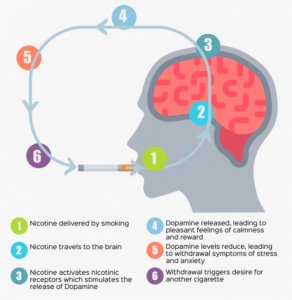
Although many smokers say they smoke to alleviate feelings of anxiety in stressful situations, smoking and more specifically nicotine withdrawal can be a major source of anxiety in itself. The jittery anxious feeling you get when you crave a cigarette is a symptom of nicotine withdrawal. Smokers start to feel calm again as soon as they take their first drag as nicotine floods into their system reaching the brain within just ten seconds. That feeling is short lived however, and it won’t be long before the smoker start to feel anxious, jittery and tense again as the cycle of withdrawal and cravings begins again.

The more smokers feed the addiction , the more intense their cravings will become over time as the brain demands more nicotine. These withdrawal symptoms and cigarette cravings trigger anxiety symptoms which can only be relieved by smoking a cigarette.


Worries over finances are one of the biggest causes of stress and sleepless nights with a survey by the Money Advice Service in 2018 revealing that nearly two thirds of Britons were concerned that money worries had affected the mental health of somebody they know. The burden of having to fund a costly addiction like smoking can greatly exacerbate these worries. A 20-a-day smoker will spend on average £72 a week on cigarettes. That’s £312 a month and a whopping £3796 a year. Meanwhile smoking 10 cigarettes a day will cost £156 a month and £1898 a year – that’s a lot of extra cash to find. And if you smoke rollies, your habit won’t come cheap either with the cost of smoking 20 rollies a day at £1921 a year.  For those smokers that do quit the habit, a huge financial burden is lifted, playing a big role in improving mental health.

While there’s no doubt that smoking takes it toll on mental health, the good news is that quitting the habit brings big rewards. According to the NHS those that give up experience improved mental health and lower rates of depression and anxiety.  In Wales free stop smoking help and support is available from the NHS Wales Help Me Quit.

Visit the website or call the helpline today to begin your journey to better mental health.

New anti-smoking laws set to tackle youth smoking prevalence in Wales

NEW laws banning smoking in schools and playgrounds could play a major role in reducing youth smoking prevalence in Wales as new figures reveal 81% of the country’s 467,000 smokers were under 18 when they tried their first cigarette.

The regulations, which were due to be debated in the Senedd today (October 20th), will come into force on March 1st as part of the Public Health (Wales) Act 2017 and are the latest in a raft of Welsh Government measures to de-normalise smoking, reduce prevalence, and protect non-smokers.

There is an urgent need for action to tackle youth smoking in Wales where 9% of 15-16-year olds smoke on a regular basis, a figure that has remained unchanged since 2013. ASH Wales’ latest YouGov Survey shows 51% of current smokers were 16 or under when they tried their first cigarette and over 80% under 18.

The survey also revealed overwhelming public support for measures to protect children from smoking, with 82% of respondents saying smoking should be banned in outdoor areas where children play sport – a move recently adopted by the Football Association of Wales.

When asked about Welsh Government action to limit smoking 43% of the Welsh public think they are not doing enough with only 10% saying they are doing too much.  Meanwhile 68% said they would support the setting of an endgame target to reduce smoking to less than 5% of the population by 2030.

Wales’s youth smoking rates have failed to fall since 2013 and, according to Cardiff University’s School Health Research Network (SHRN) 2019 Student Health and Wellbeing Survey, 15-16 years olds from the most deprived areas are twice as likely to smoke (14%) as those from the more affluent (7%).

Suzanne Cass, CEO of ASH Wales said:

“We cannot stress enough how vitally important it is to stop today’s children in Wales from becoming the next generation of adult smokers. This is a lifelong addiction that all too often begins in childhood from the moment children try their first puff on a cigarette.

“Smoking is the leading cause of premature death in Wales, killing thousands of people every year and causing dire health inequalities across the country. We now also know smokers are at significantly higher risk of suffering more severe symptoms if they catch Covid-19.

“Banning smoking in areas like children’s playgrounds and school grounds will provide a huge opportunity to de-normalise children’s perception of smoking so they no longer view it as an acceptable everyday activity.

“Alongside this legislation however, more funding is needed to provide targeted smoking cessation support for young smokers and meaningful education to raise awareness of the harms of smoking among those who have not yet started.”

ASH Wales’ YouGov survey showed that there is strong support for more action to tackle youth smoking prevalence in Wales, with 62% of those surveyed saying they support raising the age of sale for tobacco from 18 to 21 and 68% in favour of increasing government investment in public education campaigns on smoking aimed at adults and children.

Five reasons why quitting smoking is good for your mental health

For World Mental Health Day 2020 we’ve listed five reasons why your mental health could improve if you quit smoking:

Stress and anxiety

Lots of people say the reason why they smoke is because it helps them to deal with stress with many smokers automatically reaching for a cigarette when the going gets tough. But what many smokers don’t realise is that it’s the smoking that causes them to feeling stressed out.

The jittery anxious feeling you get when you crave a cigarette is a symptom of nicotine withdrawal. You’ll start to feel calm again as soon as you take your first drag as nicotine floods into your system reaching your brain within just ten seconds. That feeling is short lived however, and it won’t be long before you start to feel anxious, jittery and tense again as the cycle of withdrawal and cravings begins again.

And the more you feed you addiction with nicotine, the more intense your cravings will become over time. These withdrawal symptoms and cigarette cravings trigger anxiety symptoms which can only be relieved by smoking a cigarette. This is how nicotine addiction works. Those who successfully manage to quit smoking however, are free of that addiction and the continual cycle of withdrawal that gets stronger the more you smoke.

Financial problems

Money worries take their toll on your mental health and many smokers fall into debt as result of their habit.

A 20-a-day smoker will spend on average £72 a week on cigarettes. That’s £312 a month and a whopping £3796 a year. Meanwhile smoking 10 cigarettes a day will cost £156 a month and £1898 a year – that’s a lot of extra cash to find.

And if you smoke rollies, your habit won’t come cheap either with the cost of smoking 20 rollies a day at £1921 a year.

Quitting smoking will take away that financial pressure, meaning you’ll be better off and could have spare money to spend on activities that improve your well-being.

Depression

It is unclear whether smoking leads to depression or vice versa however, according to the Mental Health Foundation, smoking rates in the UK, are around twice as high among adults with depression as among the general population.    It can be more challenging for people suffering from depression to give up smoking.

Nicotine stimulates the release of dopamine in the brain which is the chemical responsible for triggering positive feelings. Those with depression often have low levels of dopamine. As a result, some people use cigarettes to temporarily increase their levels of dopamine. Regular smoking leads the brain to switch off its own mechanism for making dopamine, meaning that in the long-term supplies decrease, encouraging people to smoke even more.

Medication

Smoking can make prescribed medication for some mental illnesses less effective. This means the smoker would have to take higher doses of their medication in order for it to work effectively. Smoking is known to interfere in particular with the way some antipsychotic medication and antidepressants work.

Health anxiety

Here are just a few facts about how smoking can affect your health: Every cigarette you smoke contains 7,000 chemicals, 69 of which cause cancer; half of all smokers will die prematurely and smokers die on average 10 years younger than non smokers; for every cigarettes you smoke a mutation occurs which could lead to cancer; and is the leading cause of lung cancer and chronic obstructive pulmonary disease (COPD). Smokers are also at risk of suffering more severe symptoms if they catch Covid-19.  Living with this knowledge can lead to serious health anxiety.  The good news is that if you quit now your body will start to repair itself within hours and you will enjoy a better quality of life.

How to quit

All smokers are different and there is not one quit method or smoking cessation service that suits everybody. To help you find the quit smoking support that is best for you contact Help Me Quit, NHS Wales’ free smoking cessation service.  To get in touch text HMQ to 80818, call 0800 085 2219 or click here to visit the Help Me Quit website.

Why not join thousands of others in Wales – quitting smoking this Stoptober?

As Covid-19 cases rise across Wales, there has never been more important time to quit smoking, and thousands of people across Wales are doing just that. If you’re a smoker why not join them, today?

Public Health Wales officials are urging smokers to join the thousands across Wales who have given up since the start of the pandemic, to protect their health, and the health of those around them.

Smokers are at greater risk if they catch the virus, because of the damage already caused to their airways by smoking. Meanwhile the hand to mouth action of smoking means they could be more likely to catch the virus.

Ashley Gould is a Consultant in Public Health at Public Health Wales. He said: “Put simply – COVID-19 attacks the lungs and airways. Smoking damages lungs and airways. That’s why smokers are at greater risk from COVID-19.

“The repeated hand to mouth movement associated with smoking can also give the virus an easier route in to your body. That’s two good reasons to try to quit smoking – but everyone will also have their own great reasons to quit. About 70% of smokers in Wales want to have a smoke-free future, and Help Me Quit services, run the NHS in Wales boosts people’s chances of that by 300%, compared to trying alone.

“Smokers, or those that care about them can search Help Me Quit or call 0800 085 2219 and sort out expert NHS stop smoking support over the phone, plus get free medication.”

Help Me Quit has offered stop smoking support through the pandemic via its helpline and saw a surge in demand for its services at the start of the pandemic with a 51% increase in referrals in April. In June and July referrals rose by 400, but plenty of appointment slots are still available.

According to research carried out by ASH and University College London, an estimated 33,000 Welsh smokers have quit smoking since the start of the Covid19 pandemic. Fears over the impact of the virus were the major driver for those quitting with 41% of smokers surveyed across the UK citing Covid-19 as their main reason for giving up.

Suzanne Cass is CEO of ASH Wales. She said:“Covid-19 has created a real sense of urgency among smokers who may have been thinking about giving up and have now taken the plunge and quit for good.

“Research has shown that smokers are at significantly higher risk of suffering more severe symptoms if they catch the virus and it is vitally important that this acts as a catalyst for change.

“We do not know how long the virus will be with us so we must ensure that easily accessible, well-funded and targeted quit smoking support is available across Wales as part of the country’s response to the Covid-19 crisis.

Quit smoking for good this October

Every October thousands of smokers across the UK join forces to quit for Stoptober.

There are multiple reasons why smoking is the best decision you’ll ever make for your help.

However, giving up such a powerful addiction can be a daunting prospect, particularly at a time when many of us are facing stress and uncertainty.

Thankfully in Wales there is free help and support available from the NHS Wales Help Me Quit service which is currently offering help over the telephone and can point you in the direction of the quit smoking method that will suit you best.

To get you on the road to thinking about quitting, we thought we’d list some of the reasons why quitting smoking really is the best decision you’ll ever make for your health:

Bouncing back

Did you know that the health benefits of quitting smoking kick in within just 20 minutes of you stubbing out your last cigarette? Here’s what happens to your body when you give up smoking:

 Within 20 minutes: Your pulse rate returns to normal

Eight hours: The nicotine and carbon monoxide levels in your body reduce by more than half and your oxygen levels return to normal

48 hours: Carbon monoxide is eliminated from the body and the lungs start to clear out mucus and smoking debris. By this time there is no more nicotine in the body and your sense of taste and smell will be better.

72 hours: Your energy levels will improve as breathing becomes easier and your bronchial tubes start to relax

2 to 12 weeks: The blood circulation improves

3 to 9 months: Lung function increases by up to 10 per cent and coughs, wheezing and breathing problems improve

1 year: Your risk of heart disease is half that of a smoker

10 years: The risk of you developing lung cancer has fallen to half that of a smoker

15 years: You now have the same risk of having a heart attack as somebody who has never smoked in their life

Smoking, health and Covid-19 – the facts

-Every cigarette you smoke contains 7,000 chemicals, including hydrogen cyanide, carbon monoxide and ammonia.  69 of these chemicals cause cancer.

-Half of all smokers will die prematurely and smokers die on average 10 years younger than non-smokers

-Smokers are twice as likely to have a heart attack compared to non-smokers

-For every 15 cigarettes you smoke, a mutation occurs in your body, which could lead to cancer.

-Smoking is the leading cause of lung cancer and chronic obstructive pulmonary disease (COPD). It is also a major cause of heart disease and doubles your risk of having a heart attack.

-The Covid-19 pandemic has made quitting smoking even more of a priority, with research showing that smokers are far more likely to suffer more severe symptoms from the virus.

Money, money, money

When you quit smoking, you’ll have a far healthier bank balance.

If you smoke 20 cigarettes a day you’ll be saving £72 a week and £312 a month once you quit. Within a year of giving up you’ll have an extra £3796 a month in your pocket.

Meanwhile 10-a-day smokers will find themselves £156 a month and £1898 a year better off once they quit.

Those who prefer to smoke rollies will save £480 a year if they smoke 5 a day, £960 a year, for 10 a day and if they smoke 20 a day, an incredible £1921 a day.

Friends and family

By stopping smoking you’ll improve the health of your family and friends by reducing their exposure to second-hand smoke, which carries significant health risks.

Exposure to other people’s smoke raises the risk of lung cancer in non-smokers by 20 to 30% and coronary heart disease by 25 to 35%.

Children are most at risk from the harms of second-hand smoke because their respiratory systems are still developing

Home sweet home

Your home will be a happier and healthier place once you quit smoking. When you smoke in your home, 80% of cigarette smoke is invisible and it lingers around the house for up to 5 hours.

As well as posing a health risk to your family and friends, third hand smoke, the residue left behind after smoking, builds up and stains surfaces and furnishings.

When you smoke in the home, you put the health of your pets at risk.  Second hand smoke can cause breathing problems and even cancer in cats, dogs, birds and fish.

If you’d like to find out more about how to quit smoking this Stoptober contact www.helpmequit.wales or visit the ASH Wales website