





My life as a hospital stop smoking counsellor

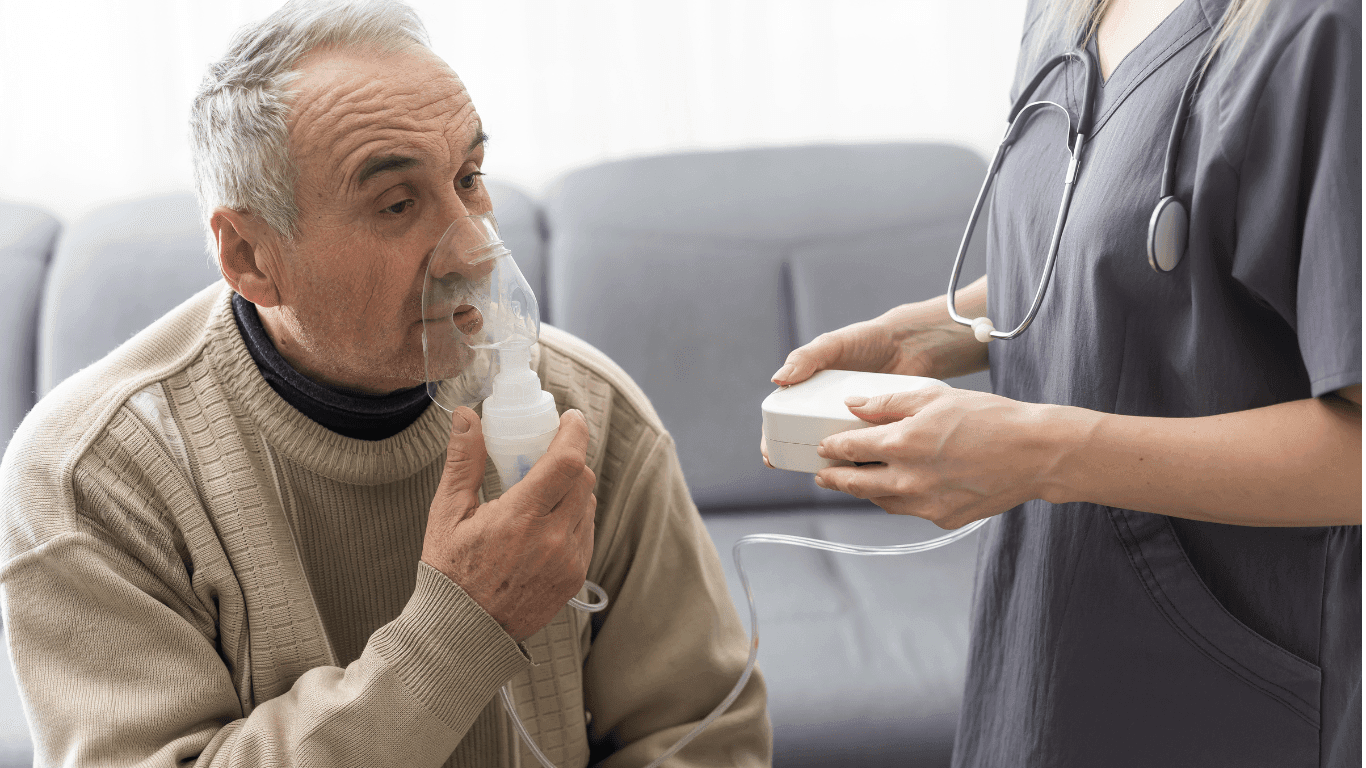
Helen Poole is a smoking cessation counsellor based at University Hospital of Wales in Cardiff who has been enabling smokers to quit the habit for 20 years.  We met her to find out more about the patients she supports and how even long-term heavy smokers can give up for good.

The main qualities you need to do this job are empathy and understanding. You don’t need to agree with somebody’s behaviour, you just need to have empathy with what they are going through.

Many of the hospital patients we work with are very vulnerable and they feel judged. We are not there to judge them we are there to motivate them.

The smokers I work with are already patients in the hospital and they come to us because they’ve become so ill from smoking that they need to stop to protect their health.  They come from all walks of life – everybody is different and we have to respect what they are going through.

We sometimes meet drug addicts and alcoholics and hear about what they have gone through in their lives and it really is quite tragic. Often people come across as aggressive but actually this is just because they are frightened.

In our work we use a combination of a cognitive behavioural therapy (CBT) approach and motivational interviewing.  This involves providing empathy and support and empowering people to believe in themselves again.

We encourage them to change their behaviour but a lot of our patients can’t drastically change their lifestyle as they may already be in a wheelchair or with chronic respiratory problems.   So instead, we encourage them to find a new hobby that fits their lifestyle. Such as playing cards or board games. One patient I worked with even took up matchstick making.

Most of our patients started smoking around 10 or 11 years old. We had one who had first tried cigars at 3 and was smoking by the time he was 6.  They just don’t know life without a cigarette and they don’t know how to get through the day without one.  They were brought up as part of a generation where it was normal and it is that generation that is coming through now and being hospitalised with respiratory problems.

It’s very difficult to change that mindset which is why we offer long term support. We see them every week for first month then every three months, every six months, every 9 months and every 12 months. We also provide nicotine replacement therapy products on a long-term basis.

I’ve seen numerous success stories of even really long-term heavy smokers giving up for good so we know it’s possible with the right support.

I worked with a grandma in her 70s who loved spending time with her grandchildren.  But she was wheelchair bound and could no longer walk on the sand with them on family holidays. She stopped smoking and her circulatory problems improved. Four months later she managed to kick a football to them.

I also worked with a patient recently who had really suffered with mental health problems and had made several suicide attempts.  Since she stopping smoking there have been no more suicide attempts and she is just so proud of what she has achieved.

Stopping smoking changes people lives and I’m proud to have played a part in that.  Our hospital patients they are very vulnerable and smoking is at the front of their minds. This provides a really good motivational opportunity to engage with them which is why hospital-based smoking cessation support is so effective.

How to make your school gates smoke-free

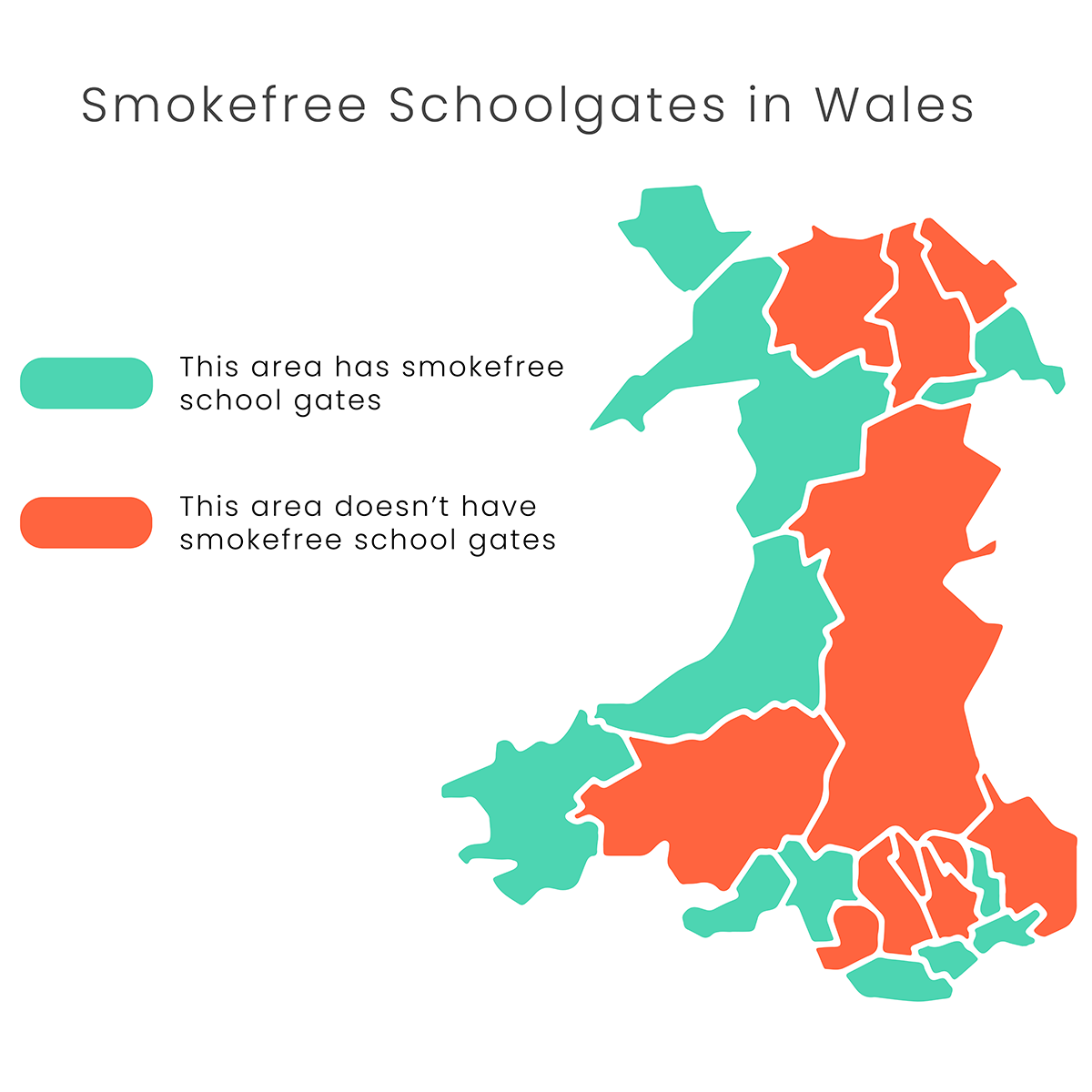
Chloe Barrell is a Health Promotion Practitioner for the Cardiff and Vale University Health Board and has been helping schools across the region to adopt the Smokefree School Gates campaign. She explains how schools can get started and what the process involves:

What is Smokefree School Gates?
Smokefree School Gates is a campaign started by ASH Wales that encourages parents, staff, visitors and passers-by not to smoke at the school gates. Schools that apply to join the scheme are given a Smokefree School Gates plaque that they can display to show that they support the campaign and to remind people not to smoke by the gates. The campaign is coordinated by Healthy Schools Coordinators across Wales.

smoking schools walesHow do you spread the message about Smokefree School Gates to schools?
The main way of spreading the word about the Smokefree School Gates campaign is through the Healthy Schools Coordinators across Cardiff and the Vale of Glamorgan. They promote the scheme through newsletters sent to schools. For example, I’ll put together a piece with photographs of a school which has gone smoke free and include direct quotes from parents and teachers about the positive effects the plaque has had. I will offer the plaques on a first come, first served basis and give the schools a deadline to apply by emailing me directly.

What happens once schools get in touch to request a smoke free school gates plaque?

I’ll place an order for plaques with the printing company. I usually give a deadline of approx 3 months, and can have as many as 35 requests in one term. The printing company usually delivers the plaques within a week or so then I arrange a time for them to go out to the schools, usually within a month. There is no cost to the schools.

Apart from putting up the plaque or window sticker, what else can schools do to show that they have adopted the policy?

What we ask in return for the plaque is that they display the plaque in a prominent position, they update any policies they have regarding smokefree areas and notify the parents on the updated policy. Finally, we ask that they identify an action they could take as a school, such as some kind of activity with the children explaining the reasons why they have been awarded a plaque. I go into schools to deliver assemblies and take in Help Me Quit cards and leaflets and, where possible, I encourage positive conversations with parents about quitting.

Campaigners call for ban on plastic cigarette filters in Wales

A WELSH charity has joined forces with environmental campaigners to call for a ban on plastic cigarette filters in Wales.

ASH Wales, the Marine Conservation Society and Keep Wales Tidy want the sale of plastic-filled cigarette butts to be banned alongside items such as plastic straws and plastic cotton bud stems.

Welsh Government launched its Reducing Single Use Plastic consultation in July, with proposals to create a law banning the sale of single use plastic items. However, cigarette butts weren’t included in the list of items that would be banned.

Cigarettes are the most common form of litter in Wales and pose a huge environmental risk, often ending up in waterways and eventually the ocean after being washed down drains.  Each cigarette butt releases thousands of chemicals and microplastics into the environment and takes up to 14 years to degrade [1].  As well as being made of plastic the filters contain a cocktail of lethal chemicals including arsenic, lead and nicotine that endanger the marine animals that often mistake the filters for food. Scientific studies have shown that one cigarette butt left to soak for 96 hours will kill half the fish exposed to it [2].

In a study carried out by Keep Wales Tidy in 2018 [3], cigarette butts were found on 80.3% of streets in Wales making them the most common form of litter in the country. Despite the impact they have on the environment they are not widely recognised as being part of the plastic problem with less than half of smokers aware that they contain plastic, according to a survey by Keep Britain Tidy [4].

Year on year, the Marine Conservation Society’s Great British Beach Clean finds cigarette stubs among the top 5 most common forms of litter on Welsh beaches. In 2019, an average of 33 cigarette stubs was found for every 100 metres of Welsh beach, making them the third most common litter form. This year, cigarette filters were the fifth most common form of litter on Welsh beaches.

Suzanne Cass, CEO of ASH Wales, said:

“Cigarette butts are a big part of the plastic pollution problem and should be treated as single use plastic items in exactly the same way as straws, balloon sticks or takeaway coffee cups. We have urged Welsh Government to include plastic cigarette filters in the list of items subject to regulatory action in Wales.

“In doing so Welsh Government would not only remove a highly destructive piece of plastic litter from the environment but it would change perceptions of cigarette litters and perhaps even encourage smokers to think about the impact their habit is having on the environment.”

Laura Foster, Head of Clean Seas at the Marine Conservation Society said

“Cigarette butts are a worryingly prolific form of litter on beaches and streets in Wales and across the UK. Just like many other single-use items, cigarette filters contain plastic meaning that they don’t degrade easily. Filters also contain some dangerous chemicals which pose a significant threat the environment and marine wildlife. We want plastic cigarette filters to be banned, and a review of other types of filters to help reduce the amount of litter found on our coasts and beaches.”

A Keep Wales Tidy spokesperson said:

“Cigarette filters are made of a type of plastic which means they can stay in the environment for up to 15 years! And, because of their small size, cigarette ends are easily transported to our waterways and coast. Everyone needs to be aware that cigarette ends are not biodegradable, are harmful to our health, wildlife and the environment.”

[1] http://www.mcsuk.org/downloads/pollution/no%20butts%20on%20the%20beach.pdf

[2] https://www.ncbi.nlm.nih.gov/pmc/articles/PMC3088407/

[3] https://www.keepwalestidy.cymru/news/smoking-litter-still-a-big-problem-in-wales

[4] https://www.keepbritaintidy.org/news/its-flicking-blue-murder

It’s never too late – you can quit smoking at any age and any stage

Did you know that it’s never too late or early to quit smoking – your health will improve, no matter how long you’ve been lighting up.

It can be tempting, when you’re a long-term smoker, to think the damage is already done so there’s no point in giving up.

That’s where you’re wrong. Your body starts to recover within minutes of you stubbing out your last cigarette and within a year your risk of a heart disease will be half that of a smoker.

Meanwhile younger smokers may believe the long term effects of smoking are so far off that they can put off giving up.  This is another myth.  For every 15 cigarettes you smoke, a mutation will occur in your cells that could later lead to cancer. So what you do now really matters.

For smokers of all ages, the cost of buying cigarettes or tobacco puts a huge strain on finances, with 20-a-day smokers spending a whopping £3796 on cigarettes.  Giving up this habit could free you from debt and improve your quality of life.

Our message to smokers in 2021 is that you can quit at any age and any stage.  It is never too late or too early to quit the habit. Quitting smoking will always been the best decision you’ll ever make to protect your health and boost your finances.

Thankfully in Wales there is free help and support available from the NHS Wales Help Me Quit service which is currently offering help over the telephone and can point you in the direction of the quit smoking method that will suit you best.

We hope you enjoy our Any Age, Any Stage campaign. To kick things off here are some reasons why you should quit in 2021.

Bouncing back

The health benefits of quitting smoking kick in within just 20 minutes of you stubbing out your last cigarette

 Within 20 minutes: Your pulse rate returns to normal

 Eight hours: The nicotine and carbon monoxide levels in your body reduce by more than half and your oxygen levels return to normal

48 hours: Carbon monoxide is eliminated from the body and the lungs start to clear out mucus and smoking debris. By this time there is no more nicotine in the body and your sense of taste and smell will be better.

72 hours: Your energy levels will im

prove as breathing becomes easier and your bronchial tubes start to relax

2 to 12 weeks: The blood circulation improves

3 to 9 months: Lung function increases by up to 10 per cent and coughs, wheezing and breathing problems improve

 1 year: Your risk of heart disease is half that of a smoker

10 years: The risk of you developing lung cancer has fallen to half that of a smoker

15 years: You now have the same risk of having a heart attack as somebody who has never smoked in their life

Smoking, health and Covid-19 – the facts

  • Every cigarette you smoke contains 7,000 chemicals, including hydrogen cyanide, carbon monoxide and ammonia. 69 of these chemicals cause cancer.
  • Half of all smokers will die prematurely and smokers die on average 10 years younger than non-smokers
  • Smokers are twice as likely to have a heart attack as non-smokers
  • For every 15 cigarettes you smoke, a mutation occurs in your body, which could lead to cancer.
  • Smoking is the leading cause of lung cancer and chronic obstructive pulmonary disease (COPD). It is also a major cause of heart disease and doubles your risk of having a heart attack.
  • The Covid-19 pandemic has made quitting smoking even more of a priority, with research showing that smokers are far more likely to suffer more severe symptoms from the virus and are up to three times more likely to become infected.

Money, money, money

When you quit smoking, you’ll have a far healthier bank balance.

If you smoke 20 cigarettes a day you’ll be saving £72 a week and £312 a month once you quit. Within a year of giving up you’ll have an extra £3796 a month in your pocket.

Meanwhile 10-a-day smokers will find themselves £156 a month and £1898 a year better off once they quit.

Those who prefer to smoke rollies will save £480 a year if they smoke 5 a day, £960 a year, for 10 a day and if they smoke 20 a day, an incredible £1921 a day.

Friends and family

By stopping smoking you’ll improve the health of your family and friends by reducing their exposure to second-hand smoke, which carries significant health risks.

Exposure to other people’s smoke raises the risk of lung cancer in non-smokers by 20 to 30% and coronary heart disease by 25 to 35%.

Children are most at risk from the harms of second-hand smoke because their respiratory systems are still developing


Home sweet home

Your home will be a happier and healthier place once you quit smoking. When you smoke in your home, 80% of cigarette smoke is invisible and it lingers around the house for up to 5 hours.

As well as posing a health risk to your family and friends, third hand smoke, the residue left behind after smoking, builds up and stains surfaces and furnishings.

When you smoke in the home, you put the health of your pets at risk.  Second hand smoke can cause breathing problems and even cancer in cats, dogs, birds and fish.

Smokers up to three times more likely to be infected by Covid-19 according to new study

According to a new study by the researchers at UCLA (University of California, Los Angeles) smokers are up to three times more at risk of being infected by Covid-19 compared to non-smokers. We spoke to Dr. Brigitte Gomperts, co-author of the study and Professor of Pulmonary Medicine at UCLA about what the research revealed and why it’s more important  than ever for smokers to quit the habit. 

Before embarking on the study, what information did you have about the risk faced by smokers from Covid-19?

When we started our study, it wasn’t clear to us whether cigarette smoking was a risk factor for severe COVID-19 or not. The research studies looking at smokers with COVID-19 were confusing and didn’t directly look at the interaction between smoking and COVID-19 in airway cells.

What were you aiming to find out in the study?

We were aiming to find out how direct cigarette smoke exposure effects COVID-19.

Can you describe the methodology behind the research?

We grew lung airway models in the dish in the lab from healthy non-smoker patients and either exposed them to cigarette smoke in a smoking chamber, or to room air in a separate chamber, for just 3 minutes per day for 4 days. We then infected the lung airway models with SARS-CoV-2, the virus that causes COVID-19. Then we analysed the lung airway models to see how many cells were infected in each group.

What did the study show about the how likely smokers are to be infected by Covid-19?

The study showed that lung airway models first exposed to cigarette smoke before SARS-CoV-2 infection had 2-3 times more infected cells than the lung airway models from the same patient that were not exposed to cigarette smoke.

Why are smokers more likely to be infected by Covid-19?

We then studied why more cells are infected if they are first exposed to cigarette smoke before SARS-CoV-2 infection and found that cigarette smoking reduces the lung tissue defences against the virus. If you think of the airways like the high walls that protect a castle, smoking cigarettes is the equivalent of creating holes in these walls. Smoking reduces the natural defences, and this allows the virus to enter and take over the cells.

If smokers become ill with Covid-19 are they more likely to suffer more serious symptoms compared to non-smokers?

Based on our studies, we believe that current smokers are more likely to have more infected cells in their lungs and therefore be at risk for more serious COVID-19.

What would your message to smokers be based on the evidence from the study?

My message to smokers is that smoking puts you at increased risk for more severe COVID-19 and this is therefore a great time to stop smoking. There are many new products available to help you stop smoking and I would suggest that you contact your GP to find out more.

For free help and support to quit smoking contact NHS Wales’ smoking cessation service Help Me Quit on 0808 278 2522 .

COPD – a guide for smokers

This World COPD Day we’ve written a guide to smokers about COPD and why quitting the habit will be the best decision they make.

COPD (Chronic Obstructive Pulmonary Disease) is a respiratory condition that affects more than 70,000 people across Wales.

It is actually the name for a collection of lung diseases including chronic bronchitis, emphysema and chronic obstructive airways disease.  The main symptoms of the condition are increasing breathlessness, a persistent cough with phlegm and frequent chest infections.

Across the UK an estimated 1.2 million people live with COPD, making it the second most common lung disease in the UK after asthma.

Although it can sometimes affect non-smokers, smoking is the main cause of COPD accounting for around 9 in every 10 cases. Smoking causes COPD by irritating and inflaming the lining of the lungs causing scarring. Over the years this inflammation causes permanent damage to the lungs – the walls of the airways thicken and more mucous is produced.  As the delicate walls of the air sacs in the lungs are damaged the lungs lose their elasticity leading to emphysema.  Breathlessness, coughing and phlegm is the result of the airways becoming scarred and narrowed.

Many smokers dismiss these symptoms as just a ‘smoker’s cough’, which means the condition can go undiagnosed for years.  Early diagnosis is really important however as it means treatment can be given to try to slow the deterioration of the lungs so contact your GP if you have concerns.

If you smoke the single most important way to reduce your risk of getting the condition is to quit now.  If you’re a smoker who has been diagnosed with COPD then it’s really important that you give up to stop the COPD from getting any worse.

Although the damage smoking has caused to your lungs cannot be reversed the good news is that you can at least prevent any further damage by quitting the habit.

Research has shown that you are up to four times more likely to quit for good if you use stop smoking medication alongside receiving support from a specialised stop smoking advisor.  So why not take the first step by calling  Help Me Quit on 0808 278 2522 for free stop smoking advice and support.

Meanwhile you can read Ian’s story to find out more about living with COPD.