


FAW announces historic move to ban smoking on the side-lines of children’s football games in Wales

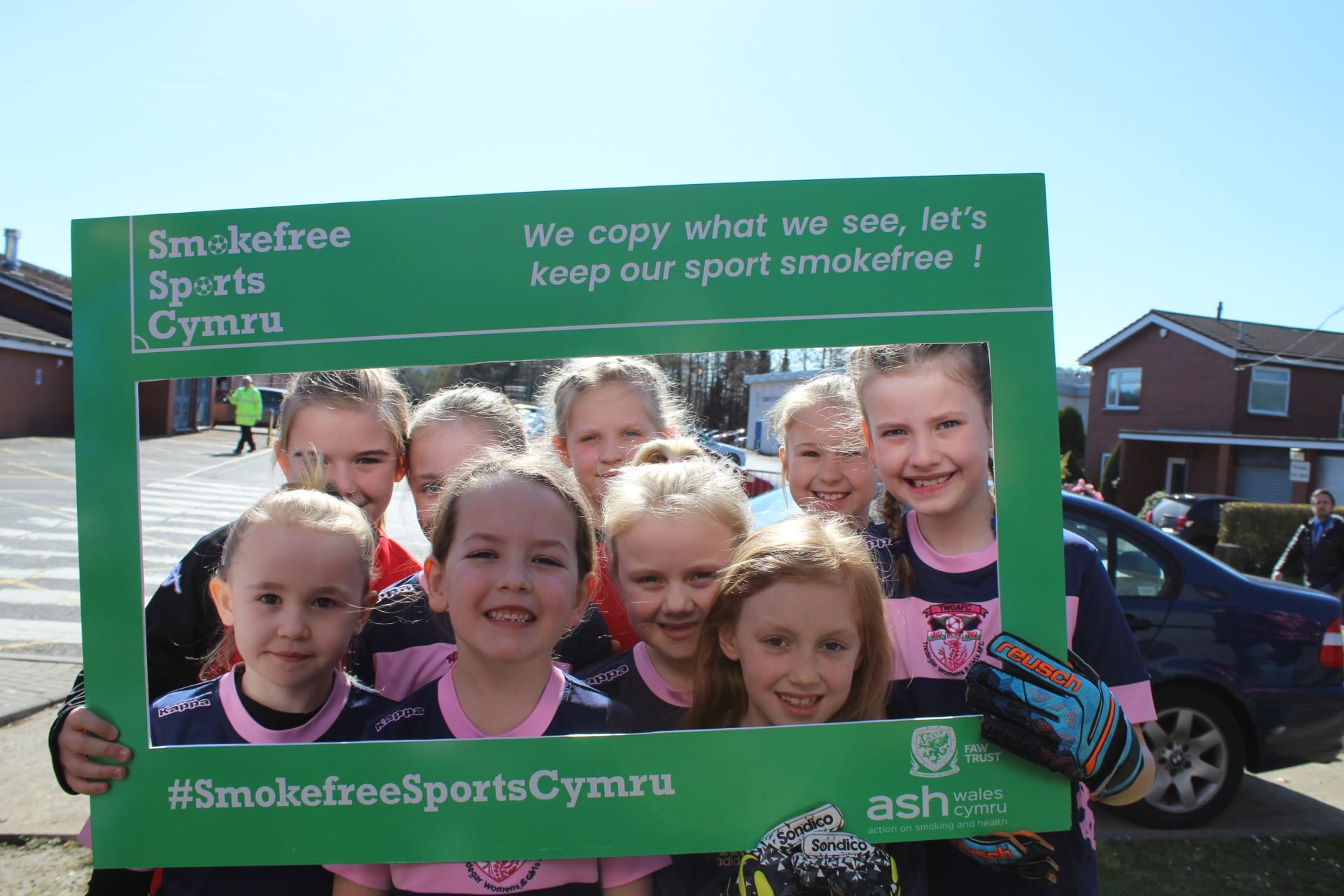
Wales is to become the first country in the UK to see smoking banned on the side-lines of children’s football games in a historic move by the Football Association of Wales (FAW) and FAW Trust.

FAW logoThe decision by the FAW to introduce a no smoking policy on the side-lines of its small-sided, children’s football games has been welcomed by Health Minister Vaughan Gething and follows a campaign by ASH Wales aimed at de-normalising smoking and preventing children from ever taking up the habit, particularly in light of the Covid-19 pandemic and increased risks faced by smokers.

It is launching the policy today to mark World Heart Day which is run by the World Heart Federation and supported by UEFA and Healthy Stadia.

In the first grass-roots country-wide initiative of its kind in the UK, FAW and FAW Trust will ask all small-sided football teams to apply the policy during games and training sessions for 522 junior clubs, 3,159 teams and 42,232 players across Wales.

The new FAW policy will see smoking banned from the side-lines at football matches across Wales for ages 5-11-years old from September 2020, followed by 5-12-years from September 2021 and then 5-13-years from 2022.

Research has shown that children are highly influenced by the behaviour of adults in their lives, such as parents and sports coaches. Children with a parent who smokes are 70% more likely to smoke themselves. The Smokefree Sports Cymru campaign aims to raise awareness of this intergenerational habit with 9% of 15 to 16-year olds in Wales still smoking and more than 6,000 children taking up smoking every year in Wales, according to Cancer Research UK. The policy will also ensure that more children are protected from exposure to second-hand smoke.

A pilot smoking ban was trialled at Rhondda & District Football League’s mini and junior football games and at the South Wales Women’s and Girl’s League junior matches before the decision was made to introduce the policy across Wales.

The FAW and FAW Trust policy comes ahead of new regulations banning smoking in playgrounds and in the grounds of schools and hospitals as part of the Public Health (Wales) Act, that are due to come into force next March.

Health Minister Vaughan Gething said:

“I welcome the work undertaken by the FAW to ban smoking on the side-lines of all children’s football games in Wales. Voluntary bans like this one help protect children from seeing smoking as an acceptable and normal behaviour and can help prevent them from taking up smoking in the first place.

“I remain committed to take further action to de-normalise smoking in more public places, particularly those where children are likely to be present and plan to introduce a ban on smoking in outdoor care settings for children, school grounds, hospital grounds and public playgrounds on 1 March 2021.

“I would encourage anyone who wants to quit smoking to contact Help Me Quit, the NHS Wales service on Freephone 0808 163 3129 or visit HelpMeQuit.wales to request a call back. Smokers who use cessation support are up to four times more likely to succeed.”

CARDIFF, WALES – Picture taken pre-Covid. Thursday, June 1, 2017: Vaughan Gethin (Welsh Cabinet Secretary for Health, Well-being and Sport) [L] (Pic by David Rawcliffe/Propaganda)
Dr David Adams, FAW Trust Technical Director, added:

“As a parent of children who take part in grassroots football, I am delighted with our partnership with ASH Wales and that the FAW and

Dr David Adams, FAW Trust Technical Director

FAW Trust are leading the way to help the next generation of children grow up recognising the health risks associated with smoking.

“This step change is also part of our wider agenda to ensure children’s first experiences of small sided football are positive.”

According to ASH Wales’ latest YouGov survey, 82% of adults in Wales are in favour of banning smoking in outdoor areas where children play sport.

Suzanne Cass, CEO of ASH Wales said:

ASH Wales CEO Suzanne Cass

“Currently in Wales there is an urgent need to address youth smoking prevalence which is still at an unacceptable level. When children witness adults lighting up in everyday settings such as football pitches, they come to see smoking as a normal lifestyle choice, rather than the deadly addiction that it is.

“This policy will make a big difference to children’s perception of smoking and we very much hope that this will prevent many of them from taking up the habit in later life.”

Dr David Tuthill, Officer for Wales at the Royal College of Paediatrics and Child Health (RCPCH) also welcomed the move:

“We applaud this new initiative by the FAW. Earlier this year, our State of Child Health report showed that Wales had the highest proportion of young people smoking of all the four nations.

“Worryingly, this proportion seemed to be increasing – the only one of the four where that was the case. Smoking causes long-term harm to children and adults. Keeping children smoke-free is vital.”

John Griffiths, MS, for Newport East and Chair of the Cross-Party Group on Smoking and Health said:

John Griffiths MS ASH Wales
John Griffiths, MS for Newport East

“This is another important step forward to making our public spaces fully smoke free. The side-lines of our children’s football games across Wales should be a safe place for parents and players. They shouldn’t have to endure the harmful effects of passive smoke.”

World Heart Day takes place on September 29 every year and aims to raise awareness of heart disease and stroke. This year’s campaign has special significance due to ongoing efforts to tackle Covid-19. Research has shown that smoking tobacco, poor diet and physical inactivity are associated with increased severity of disease in Covid-19 patients.  The campaign is urging all football fans across Europe to stop smoking, do more exercise and eat a balanced diet.

Head of BHF (British Heart Foundation) Cymru Adam Fletcher, said:

“Quitting smoking is the best thing you can do for your health and to protect the health of your heart. Inhaling cigarette smoke increases the risk of getting heart disease, including having a stroke or a heart attack because it forces your heart to work harder than it should have to.

“We welcome this decision by the FAW and FAW Trust to ban smoking on the side-lines of children’s football games. It will help to change perceptions towards smoking and help to prevent young people seeing it as a normal lifestyle choice.


Cross Party Group on Smoking & Health, September 2020

The meeting will consider the impending Public Health (Wales) Act, due to come into force in 2021. The new regulations will ban smoking on hospital grounds, on school grounds and local authority playgrounds. During the meeting stakeholders and partners will discuss how best to maximise the benefits of these regulations.

Please email enquiries@ashwales.org.uk for more details and login information.

Speakers

Smokefree Partnership

Based in Belgium, the mission of the Smokefree Partnership is the effective implementation of the WHO Framework Convention on Tobacco Control (FCTC).

Claire Clement, Policy Officer will:

· Present the European smokefree policy map and explain where Wales sits in the world of tobacco control including the rate of change

· Explore some of the emerging trends in tobacco control

· Outline the different ways in which these policies are adopted

· Recommendations surrounding the key elements of the adoption of smokefree policies.

Dr Esteve Feranandez, Director of Tobacco Control Unit of the Catalan Institute of Oncology and Professor of Epidemiology and Public Health at the School of Medicine of the University of Barcelona.

Spanish Tobacco Control law includes bans on smoking in hospital grounds, school grounds, children’s playgrounds and more recently a ban on outdoor terraces and public places.

Dr Fernandez will:

· Provide an overview of smokefree hospitals

· Pitfalls to avoid, ie poor enforcement procedures

· Indicators of success and reward programmes

· Recommendations for the successful adoption of smokefree policies

Andrea Crossfield MBE, Independent Public Health Consultant, Greater Manchester Health & Social Care Partnership

Andrea is leading the mobilisation of the Making Smoking History Strategy in Greater Manchester alongside partners across the city region to reduce smoking prevalence further and faster than anywhere else in the UK and globally, over the next 3 years.

Andrea will:

· Present of summary of where they’ve reached in their ambition

· Share outcomes of the programme so far

· How the Data Toolkit is used to measure progress and shape future policy

· What lessons have been learned

Please email julie@ashwales.org.uk for more details and login information.

How smoking affects the respiratory system

It’s common knowledge that smoking damages the respiratory system.  If you’re a smoker you’ll have noticed that you cough frequently and may suffer from breathlessness.

That’s a sign that smoking is affecting the health of your lungs and that you may have developed a respiratory condition as a result of your habit. 

You may also have seen images showing the difference between the healthy lungs of a non smoker, compared to the blackened and unhealthy lungs of a non-smoker. But do you know why smoking is so bad for your lungs?

In this article we’ll explain why smoking harms the respiratory system and how quitting the habit will benefit your respiratory system.

How does smoking affect the lungs?

The lungs are lined with cilia – little hair like structures that do the important job of sweeping particles out of your airways. Smoking damages the cilia and stops them from working properly

Smoking causes the airways to become inflamed and to produce more mucus which can lead to a chronic cough.

The airways also start to narrow as a result of the damage caused by smoking, making it harder for air to flow in and out of your body, leading to breathlessness.

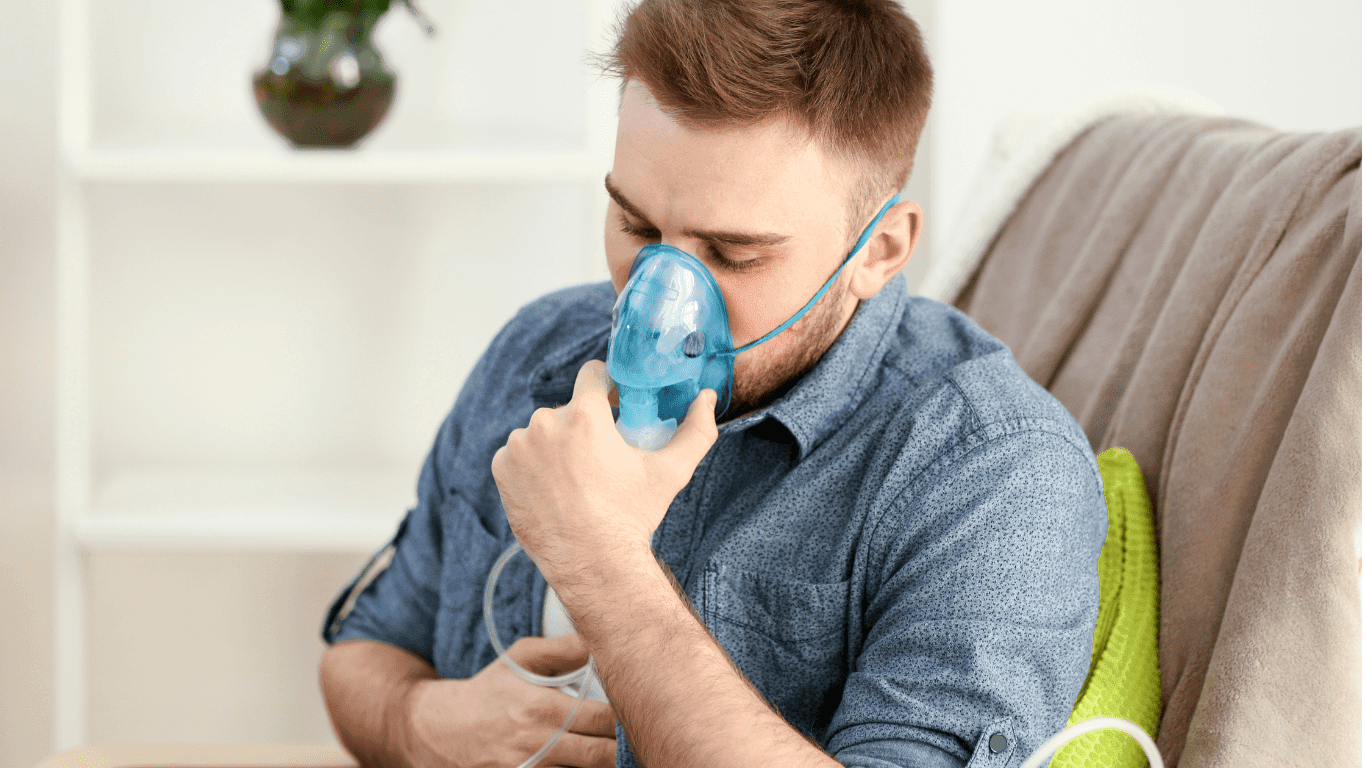
This shortness of breath is a symptom of chronic obstructive pulmonary disease (COPD) – a group of lung conditions that cause shortness of breath, including chronic bronchitis and emphysema.

Your lungs contain air sacs called alveoli which transfer the oxygen you breath in to your bloodstream. Smoking destroys the alveoli meaning the lungs are less able to provide your body with oxygen, a condition called emphysema.   As the condition progresses you will find it more difficult to take part in physical activities and may even feel short of breath while resting.  Your brain function will also be affected as it will be receiving less oxygen than it needs.

Smoking is the leading cause of lung cancer which develops when toxic substances contained in cigarette smoking cause the cells in the airway to become malignant.

According to the European Lung Foundation, 90% of all deaths from COPD are caused by cigarette smoking and 90% of lung cancer deaths in men and almost 80% in women are caused by smoking.

Because of the damage smoking causes to the lungs, smokers are at far higher risk of suffering severe symptoms if they develop Covid-19.  This is as a result of the lungs immune defences being damaged and the fact that smokers are more likely suffer from respiratory conditions that put them at higher risk from Covid-19.

The benefits of quitting smoking

After just one month of giving up smoking, your lung function will start to improve. As the lungs heal you will start to cough less and breathlessness will improve. You may find yourself better able to take part in physical activities.

Lungs that have been severely damaged by smoking cannot return to normal if you quit. However, by giving up you will prevent diseases such as COPD getting worse and further affecting your quality of life

When you stop smoking, you reduce your chance of developing lung cancer. After 15 to 20 years your risk of developing lung cancer will be reduced by 90% compared to those who continue to smoke.

If you are a smoker who would like to access free help and advice on how to quit smoking, then contact NHS Wales Help Me Quit service.

Health board reports rise in pregnant smokers quitting the habit since start of pandemic

Midwives in Swansea have reported a sharp increase in the numbers of pregnant women quitting smoking since the start of the pandemic.

Swansea Bay University Health Board saw the quit smoking rate among pregnant women rise from 4% to 8.9% since March.

The increase comes despite the fact that midwives are unable to use CO monitors to measure women’s carbon monoxide levels due to the risks of spreading the virus.

Smokers are at substantially increased risk of suffering more serious complications if they develop Covid-19 because smoking weakens their lung defences and causes pre-existing lung conditions that are major risk factors for the virus.

Smoking during pregnancy can also lead to greater risk of serious complications, such as miscarriage and stillbirth, putting the health of women and their babies at risk. Across Wales, 16% of pregnant women smoke.  Smoking prevalence is highest among pregnant teenagers with 30% of pregnant 16 to 19-year-old’s smoking at the time of their baby’s birth and 33% at their initial assessment.

Ann-Marie Thomas

Ann-Marie Thomas is a community midwife and team leader at Swansea UHB. She believes that growing awareness of the risks faced by smokers from Covid-19, and a greater focus on healthier lifestyles is encouraging more pregnant smokers to quit:

“What we’re seeing is that people are more motivated to give up smoking because of all the public health messages that are out there.

“All the publicity around handwashing and now obesity means people are a lot more aware of how their lifestyles can have an impact on their health.

There’s also a growing awareness of the effect of Covid-19 on people’s lung function and people are starting to consider the quality of their own breathing.”

She went on to say that she has seen a particular change among younger pregnant women who traditionally have been more likely to smoke: “From my personal experience our younger pregnant women are now smoking a lot less and seem to be far more conscious of the importance of good diet, exercise and nutrition. They just don’t seem to think smoking is cool anymore.”

As midwives are no longer able to use CO monitors to start conversations around smoking, Ann-Marie said it is even more important for them to build good relationships and trust with the women they support and to provide non- judgemental advice on quitting smoking:

“Without CO monitors we rely more on people self-reporting about their smoking.  I do miss having the CO monitors because seeing the CO levels go down really helped people to stay motivated.

“It’s really important to build a good relationship with the women we work with because that opens the door to have that conversation about giving up smoking.

“I usually start off by asking people if they are eating and drinking healthily and whether they are relying on anything to deal with stress.  Everybody is different so you do have to approach every person in a different way. But good communication is the bread and butter of being a community midwife.”

Although there has been an increase in the numbers of pregnant women quitting, Ann-Marie said rates remain highest among the more deprived communities the health board covers, with many women having grown up among generations of smokers and seeing it as the norm:

“There are some communities where there isn’t as much awareness of the harm that smoking can cause a baby.  In areas of social deprivation where people are used to being surrounded by family members that smoke some women just think it’s a normal part of life.”

Previously the midwifery team had also encouraged the woman’s partner and family to give up smoking, both to encourage the mother to quit and to protect the baby from second hand smoke once it was born. As women have had to attend appointments on their own however, this has not been possible during the pandemic.

“It used to be that women could come along to the antenatal appointments with a partner or family but now they come on their own which can be a double-edged sword,” said Ann-Marie.  “Sometimes being on their own makes them feel more comfortable about talking about any issues.

“But that can also make it more difficult to address smoking in the wider circle of family and friends. Previously we have tried to encourage partners that smoke to also contact Help Me Quit because we know women that smoke are more likely to make a successful quit attempt if their partner does too.”

Currently the NHS Wales Help Me Quit service is providing support to women over the phone and Ann-Marie said the midwives are following up with women on how their quit attempt is progressing.
She said she is delighted by the increase in numbers deciding to quit:

“I’m over the moon about the increase. I took part in smoking cessation training last year as part of a secondment to the public health team and it has been hugely beneficial. I learnt so much about having motivational conversations with women and I’ve brought that back to my role and to the rest of my team. This is great news for us as it shows the message is getting through.”

Does smoking cause anxiety?

It’s difficult to imagine that smoking could actually be a direct cause of stress when so many people’s automatic response to a tense situation is to light up a cigarette. Can smoking cause anxiety? In this article we’ll attempt to answer that question.

Many people smoke to relieve stress and continue to do so for fear that if they give up, they will no longer be able to rely on that instant nicotine hit to calm them down.

Ironically however, smoking is a significant cause of stress in itself, with nicotine cravings causing a constant cycle of anxiety through the day that can only be relieved by smoking a cigarette.

It’s true that when you smoke a cigarette, you do feel a short-term sense of well-being as that welcome rush of nicotine floods into your system, reaching your brain within just ten seconds of you taking a drag on your cigarette.

However, this feeling soon gives way to withdrawal symptoms and cravings that can make you feel anxiety, jittery and tense.

The more you feed your addiction with nicotine the more intense these cravings will become.  Over time smoking leads to changes in your brain which intensify your need for nicotine.

These powerful physical urges for nicotine and the anxiety that kicks in when you can’t get hold it are stressful enough.

But consider also how expensive it is to fund this habit. If you’re a 20-a-day smoker, you’ll be spending on average £72 a week and £312 a month on cigarettes.  That’s a lot of money to have to find each month and could lead to you racking up debt or struggling to pay for other basic necessities such as food or energy bills – a significant source of stress.

Smoking also leads to health anxiety, with many smokers well aware of the harm they are causing their bodies, yet feeling like they are unable to stop. Cigarettes contains over 5,000 deadly chemicals, many of which cause cancer and it is the leading cause of premature death in Wales.  Around the world, smoking kills 50% of those that take it up and many long term smokers live with chronic lung conditions that significantly affect their quality of life.  Smokers live with that knowledge and the constant fear of what the future holds in terms of their health. It is also a risk factor for Covid-19 with smokers more likely to suffer severe symptoms if they catch the virus.

The good news for smokers, is that according to the NHS, quitting smoking will boost your mental health and well-being and relieve stress, anxiety and even depression.

If you rely on smoking to relieve stress, then the thought of quitting is very daunting but, try to focus on the huge long term benefits you will enjoy if you do give up –  no longer having to feed constant cravings for nicotine, spend a fortune on cigarettes or worry about your health.

It really is never too late to give up with the health benefits of quitting, kicking in within minutes of you stubbing out that last cigarettes.

Research has shown that you’re about three times more likely to quit for good if you do so using a combination of behavioural support and stop smoking medication so it’s really important to seek help.

NHS Wales Help Me Quit service provides free support and advice on how to find the quit smoking method that suits you best. You can also access help from your GP and local pharmacy.

There are many sources of stress in life that are beyond your control. You do however, have the ability to quit smoking and to significantly reduce your anxiety levels in the process.

Are smokers more at risk from Covid-19?

There has never been a more important time for you to stop smoking with growing evidence showing that if you smoke you are more likely to suffer severe symptoms of Covid-19.

The good news for smokers if that if they give up now, they will boost their body’s chances of recovering from the virus.

Since the start of the Covid-19 pandemic thousands of smokers across Wales have made the decision to give up the habit. According to analysis by ASH and University College London an estimated one million smokers in the UK had quit within the first few months of the pandemic, including 33,000 Welsh smokers. Fears over the impact of the virus were a major driver for those quitting, with 41% surveyed in the UK citing Covid-19 as their main reason for giving up.

These quitters had good reason to be concerned about the impact of the virus. We know that smokers who contract Covid-19 suffer more severe symptoms. This is because smokers already have weakened lung defences as a result of smoking damaging the cells protecting their nose and upper and lower airways.

Recently Data from the COVID Symptom Study app involving more than 3 million people from the UK, Sweden and US, found that  current smokers were 14% more likely to develop the three classic symptoms of coronavirus infection – fever, persistent cough and shortness of breath – than non-smokers.

Smokers were also 29% more likely to report more than five symptoms associated with COVID-19 and 50% more likely to report more than 10, including loss of smell, skipping meals, tiredness, diarrhoea, confusion or muscle pain. In addition, smokers were more than twice as likely as non-smokers to end up in hospital with severe symptoms of COVID-19 having tested positive for the disease.

Smoking is also a leading cause of cardiovascular, respiratory and cancer conditions that put patients are higher risk if they catch the virus.

Giving up smoking now really is the best decision you can make to protect your health and the health of your family who are more at risk from being exposed to second hand smoke

When you give up smoking, the body begins to repair itself, your lung health improves and your immune system is strengthened giving you a better chance of recovering from the virus.

It’s never too late to quit and even life long heavy smokers can benefit from giving up.  For many smokers Covid-19 has been a wake-up call and we would urge anyone who wants to quit to call the NHS Wales Help Me Quit helpline.

Help Me Quit is a free smoking cessation service run by NHS Wales and throughout the pandemic it has been providing support to smokers who want to give up through its helpline. The Help Me Quit advisors will talk you through the different options there are for giving up and help you to find the one that suits you best.

Research has shown that you’re far more likely to quit for good if you seek support so pick up the phone and find out what help is available.