A guide for smokers confused by nicotine and Covid-19 reports

If you’re a smoker or ex-smoker who has read reports that nicotine could prevent you from catching Covid-19, then you may be confused about what to do.

So far, the advice has been to quit smoking as this improves your chances of recovering from the virus.

You may now be wondering if quitting really is the best idea, with researchers looking at whether or not nicotine could protect you from catching the virus.
If you’re questioning whether quitting smoking is still the best way for you to protect your health, then the answer is YES.

Since the pandemic started, medical experts have warned that smokers are more likely to become seriously ill if they catch Covid-19. So even with the possibility that nicotine could offer protection against catching the virus, those smokers that do become infected are at far greater risks of developing severe symptoms.

Evidence suggests smokers and ex-smokers hospitalised with COVID-19 are at increased risk of greater disease severity.

quit for covidSmoking weakens the body’s natural lung defences by damaging the cells protecting the nose and upper and lower airways.
Smoking is the leading cause of many life- threatening lung and cardiovascular conditions that are high risk factors for Covid-19. A study from China found that smokers are in fact 14 times more likely to suffer serious illness if they develop Covid-19.

More recently data from the COVID Symptom Study app involving more than 3 million people from the UK, Sweden and US, found that  current smokers were 14% more likely to develop the three classic symptoms of coronavirus infection – fever, persistent cough and shortness of breath – than non-smokers.

Smokers were also 29% more likely to report more than five symptoms associated with COVID-19 and 50% more likely to report more than 10, including loss of smell, skipping meals, tiredness, diarrhoea, confusion or muscle pain. In addition, smokers were more than twice as likely as non-smokers to end up in hospital with severe symptoms of COVID-19 having tested positive for the disease.

The reports of a trial in France on nicotine patches to help prevent or lessen symptoms of COVID-19 should not put smokers off trying to quit, but encourage them to use other sources of nicotine to help them quit smoking tobacco.

Nicotine replacement therapy such as patches and gum are prescribed by doctors and provided by pharmacists as a safe and effective way to stop people from smoking.

Smoking tobacco, however is not safe. It contains over 5,000 deadly chemicals, many of which cause cancer and it is the leading cause of premature death in Wales.  Around the world, smoking kills 50% of those that take it up.

ASH Wales’ advice to smokers is to quit now to reduce their risk of suffering severe symptoms of Covid-19. Using Nicotine Replace Therapy, e.g. patches, gum and e-cigarettes, is an effective way to quit smoking and much less harmful than cigarettes.  Meanwhile non-smokers should never consider taking up a habit that is highly likely to one day kill them.

The World Health Organisation has issued a statement stressing that there is currently insufficient information to confirm any link between tobacco or nicotine in the prevention or treatment of COVID-19. To find out more click here. 

NHS Wales Help Me Quit stop smoking service is offering free advice and support to smokers that want to quit via their helpline 0800 0085 2219. Alternatively visit www.helpmequit.wales.

ASH Wales runs an online support group on Facebook, Quit Smoking (Wales).

Swansea hospital stop smoking advisor – helping smokers to quit during Covid-19

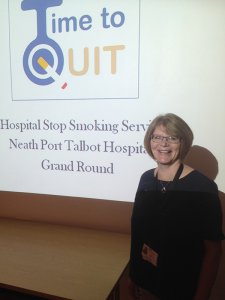
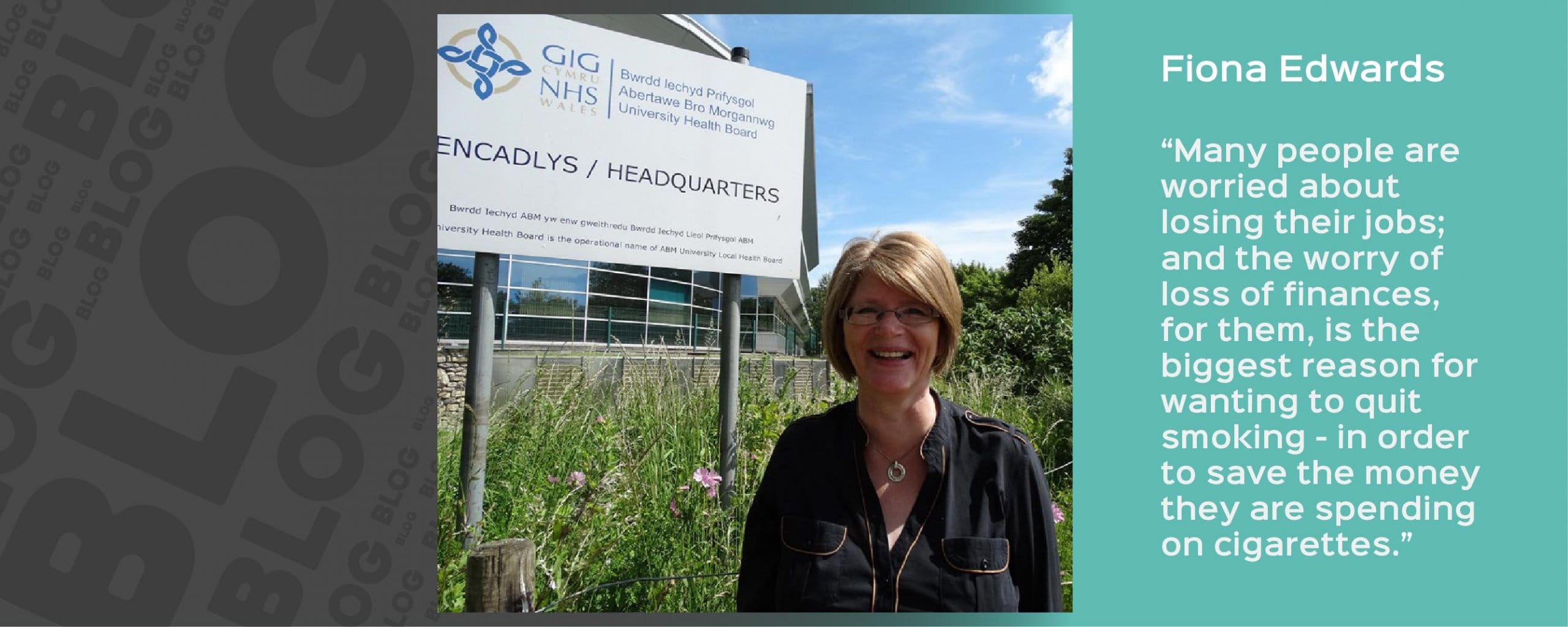
We spoke to Fiona Edwards, who is a Smoking Cessation Practitioner and works with patients in hospital at Swansea Bay University Health Board.  She told us about her experiences in supporting people to stop smoking during the Covid-19 outbreak.

quitting smoking coronavirus

How are your patients feeling about the Covid-19 outbreak?

Usually my patients have a chronic respiratory illness, like COPD, and they are very worried about Covid-19.

I find people fall into one of two camps – some are more determined to quit smoking because of Covid-19 and some are much more stressed due to the outbreak, which does make it harder for them when trying to quit smoking.

Many people are worried about losing their jobs, and the worry of loss of finances, and for them that is the biggest reason for wanting to quit smoking, in order to save the money they are spending on cigarettes.

 What happens when your clients decide they want to quit smoking and are referred to you?

We are aligned with the pharmacies in the hospitals, so patients are referred to us from them. Sometimes they are still in hospital, for example this week I have been working with patients who are in coronary care in Morriston Hospital.

Normally (when not in lockdown) I go into the wards and see patients face-to-face with support sessions to quit smoking. This is not possible with the current lockdown procedures in place, so I phone the ward, speak to the patient over the phone, and we discuss what smoking cessation medication might be suitable for them. I then arrange delivery of the medication, usually Nicotine Replacement Therapy (patches, gum etc) to the ward. We usually arrange for them to go home with 2 weeks’ worth of medication with discharge, and then they will continue to receive medication for a total of 12 weeks.

stop smoking advice covid 19If people are already at home when I start the support with them, I phone them and when we decide on what type of nicotine replacement therapy or medication suits them best, I post a letter to their home which they can take to the pharmacy to pick it up.  If they are unable to leave their home, I send it to the pharmacy and then the pharmacy can arrange delivery.

What other issues do you find people quitting smoking are facing during the lockdown?

People who are using vape to quit smoking are having a difficult time because the vape shops are currently closed for the lockdown. They are concerned about ordering vape liquids and equipment from the internet in case of safety issues. They often prefer a particular brand but are now unable to find it.  Also vape shop owners can be very knowledgeable and helpful advising people on which product best suits them and how to use them.

I am worried that it has become far easier for vapers to buy tobacco rather than vape, and that many vapers are going to say to themselves that they may as well buy cigarettes during the lockdown, and become hooked again.

I have worked with a lot of people over the 5 years that I have been a smoking cessation advisor and for some people who have been trying to quit for years, vaping is the one thing that has really made a difference.  It doesn’t make sense that people can buy paint and garden furniture but they can’t buy vape products which are keeping them off smoking.

If you would like help to quit smoking, you can call the NHS Wales Help Me Quit service on 0800 085 2219 or visit the website helpmequit.wales for telephone support plus free stop smoking medication.

Allen Carr CEO’s myth busting guide to quitting smoking

In his latest instalment on quitting smoking in lockdown, Allen Carr CEO John Dicey, answers some of your questions about quitting smoking and attempts to bust some myths about giving up.

Is putting on weight inevitable if you quit smoking?

Previously I’ve explained how most of us gain weight when quitting smoking using willpower due to substitution (eating or drinking instead of smoking) and why as long as you understand the illusions that surround smoking you won’t be inclined to do that (and therefore don’t need to gain weight once you quit).

I’ve also talked a little about appetite suppression and how we’re fooled into believing that smoking takes our hunger pangs away and therefore prevents us over-eating. Knowing that it was you who ignored your hunger, in exactly the same way as a non-smoker does, is really important. The other key illusion involved with weight gain is one of the most commonly expressed at our live seminars, “What about my metabolic rate?”.

Your metabolic rate is defined as “the amount of energy you use per unit of time”. Because smoking does technically increase your metabolic rate (the rate at which you burn calories), it’s easy to see how this fact, combined with the illusion of appetite suppression, and the substitution issues we experience when we try to quit with willpower, make us feel resigned to gaining weight as an inevitable side effect of quitting smoking. But I have some great news for you.

Weight gain is not inevitable!

To be clear, although smoking does indeed increase your metabolic rate, it’s affect in doing so is…insignificant!

This is something glossy women’s magazines and health and fitness magazines never clarify when they bang on about quitting smoking and weight gain. It’s enough to put us off even trying to quit. But the fact is, there simply isn’t a calorie-burning or fat-burning machine beavering away inside us when we smoke.

Think about it, how long does it take you to burn off a few hundred calories on a treadmill or exercise bike at the gym? Unless you work out really hard – it’s around 30 minutes. And how do you feel at the end of that? Pretty tired, pretty sweaty, and pretty good actually. But I digress. The point is there simply isn’t a meaningful calorie-burn occurring just because you’re puffing your way through 20 cigarettes a day. Or 40. Or for that matter 80! I was an 80 a day smoker and according to the metabolic rate theory I should have been as thin as a rake…I was far from that!

When I stopped smoking, I felt so empowered. I never thought I would ever be free, and the sense of elation and achievement was wonderful. It helped me sort out all sorts of other issues in my life, including my weight. I’m at least 3 stones (19 kilos – or 42 pounds) lighter than I was as a smoker. And I have zero willpower.

Why quit – I might get run over by a bus tomorrow?

This is another question that often crops up at our live group seminars. It’s fairly easily handled. It’s great to have a hedonistic, devil-may-care, swashbuckling approach to life yet that doesn’t prevent us from taking sensible precautions.

The fact is that life’s extreme daredevils display incredible levels of precaution, attention to detail, and care when they pack each other’s parachutes for sky-dives, prepare breathing apparatus for deep dives, or undertake meticulous calculations of speed, distance, and ‘point of impact’ for stunt-driving “accidents” staged for movies. They simply don’t have a, what’s the point in taking care when I-might-get -run-over-by-a-bus-tomorrow kind of attitude. They have the furthest thing from it.

In fact, you’re exactly the same. When you cross the street you don’t close your eyes, hum the national anthem, and hope for the best do you? Of course not. You look both ways and cross the road with care. And you teach your children to do the same.

Why? Because you don’t go looking for trouble. If there’s a way of mitigating the risk of anything we do, we do so.

The “I might get run over by a bus tomorrow”, attitude is born out of frustration at previous failed attempts to quit. We’d far rather present our failure to get free as a devil-may-care attitude to life, but deep down we know the truth. The only reason we smoke, is because we’ve failed to quit in the past and are afraid of trying again.

The good news is that once you understand how nicotine fools us into thinking it provides boundless pleasures and infinite support and benefits, you stop falling for it. It really is like a confidence trick – once you know how it works – no way can you be fooled by it again.

I lack the will power to quit smoking completely, can I just cut down instead?

The most important thing to remember is that stopping smoking is the key to your prison cell. As I’ve said before., it’s the distractions that prevent us from making a positive decision to quit that cause most harm. We kid ourselves that cutting down will work, in our heart of hearts we know it won’t last. We’re beaten before we even try. Ask yourself a question:

DO YOU WANT TO BE A SMOKER FOR THE REST OF YOUR LIFE – SMOKING DAY AFTER DAY, NIGHT AFTER NIGHT, YEAR AFTER YEAR, NEVER BEING ALLOWED TO STOP?

Your answer to that question will always be “no”. Nothing will ever change your answer to that question.

Now you can either decide to be free from the whole filthy nightmare and spend the rest of your life celebrating your freedom – or you can try a half-hearted attempt to cut down or resist temptation with a feeling of doom and gloom.

Attitude Is Everything – GO FOR IT!

If you want to quit smoking on your own – it’ll be my pleasure to provide you with some further advice and guidance, or answer your questions, over the coming week or so. If you’d like to use Allen Carr’s Easyway the offers I made remain available to you (many of which are FREE).

The great thing about Allen Carr’s method is that you carry on smoking until you’re happy to stub out your final cigarette – so there’s no need to panic or worry – take your time and pick your moment – in the meantime, if you intend to use Allen Carr’s Easyway to quit please do carry on smoking (unless you’ve already quit of course), and if you want to quit on your own – start thinking about when. There is no time like the present. If you’re not sure then please do take up today’s free offer below.

I have several special offers for you to get on you started on your quit smoking journey:

ONLINE>FREE: Pre-quit Preparation Webinar: This is something I think anyone will find interesting, inspirational, and useful even if they don’t really want to quit smoking right now, or think they might want to quit now, or feel they’re nearly ready to take the plunge but aren’t quite sure. It isn’t a quit smoking programme, it has absolutely no scare tactics or shocking photos, and it’s actually quite entertaining.

Even if you don’t want to quit smoking it is worth watching this now. There is information contained in it which you’ll find incredibly useful if your mind ever turns towards quitting smoking. It’s presented by brilliant Senior Allen Carr’s Easyway Therapist, Colleen Dwyer. This information will stay with you for years. There is a special offer for our Live Online Group Seminars at the end – but please do ignore that. The intention of this is for you to enjoy the programme rather than react to any special offer (if I had the technical skills here in lockdown in my home office I would ‘edit-out’ the sales message at the end out – but I’m afraid that I don’t).

Anyway, I hope you’ve found this instalment interesting, inspiring, and of use. I’ll be in touch again in a couple of days, to answer some of your questions and cover some other common concerns and issues that smokers encounter when they quit (please email your questions to mail@allencarr.com with John Dicey in the subject box).

Next time, we’ll cover:

  • I used Allen Carr’s method before, but it didn’t work
  • Is now the right time for me to quit – especially during this COVID-19 lockdown
  • You’ve mentioned a money back guarantee with the Live Online Group Seminars – what’s the catch?

In the meantime, best wishes, stay safe, & keep smiling

John at Allen Carr

John C Dicey

Global CEO & Senior Therapist

Allen Carr’s Easyway

Copyright Allen Carr 2020

Appeal for those in at risk groups to join world’s biggest Covid-19 study

ASH Wales has joined forces with the  COVID Symptom Tracker app, The Academy of Medical Royal Colleges and the UK’s largest health based charities to help reach the most at risk groups, including those with pre-existing health conditions such as heart disease, diabetes and asthma and those aged over 70.

The COVID-19 Symptom Tracker app has been developed by King’s College London and health science company ZOE, and it is endorsed by the Welsh Government, NHS Wales, the Scottish Government and NHS Scotland. More than 2.5 million participants have downloaded the app and are using it to regularly report on their health, making it the largest public science project of its kind anywhere in the world.

The over-70s and those who have pre existing health conditions appear to be most at risk from the effects of COVID-19, yet they are significantly under-represented in the group of people currently providing data through the app. However, early analysis shows that the illness may start with different symptoms in these groups, such as diarrhoea and confusion, rather than the classic cough and fever.

One of the biggest barriers to recruiting people with pre-existing health conditions and those over 70 was access to technology. Developers at ZOE – the company behind the app – have now updated it to allow multiple user profiles, so that family, friends or carers can log daily health reports on behalf of anyone who wishes to take part in the study but does not have access to a smartphone.

Charities including Cancer Research UK, the British Heart Foundation, AGE UK, Alzheimer’s Society, Diabetes UK, Versus Arthritis (full list below) and doctors’ membership bodies including the Royal College of Physicians, Royal College of General Practitioners, Royal College of Obstetricians and Gynaecologists and Royal College of Surgeons of England (full list below), have come together to urge people, especially over 70 and anyone with a pre-existing health issue such as heart disease, diabetes, arthritis, cancer, dementia and other age-related conditions to link up with their relatives, or log on themselves, to help build an accurate picture of how COVID-19 affects us all.

The findings from the research will help to answer key questions that many people are worried about, such as:

  • Which underlying health conditions increase the risk of COVID-19?
  • Does having asthma put me at higher risk?
  • Which of my medications may be protecting me?
  • I’m older but fit and healthy – am I still at increased risk?
  • Is mild high blood pressure or type II diabetes a real risk factor for COVID-19?
  • Will stopping smoking reduce my risk from COVID-19?
  • I’m living with cancer – what does COVID-19 mean for me?
  • Is it safe to take ibuprofen painkillers?
  • Should I continue to take steroids for my arthritis?
  • Is this skin rash a sign of COVID-19?
  • Is COVID-19 common in my area right now?

Anyone can join the study by downloading the simple, free COVID Symptom Tracker app from covid.joinzoe.com and answering a few questions about their health and medications. Participants then spend a minute checking in every day, whether they are feeling physically healthy or experiencing any new symptoms.

Study leader Dr Claire Steves, Clinical Senior Lecturer at King’s College London and Consultant Geriatrician at Guys and St Thomas’s NHS Foundation Trust, says: “We have been blown away by the public’s response to the app and the data collected so far has been invaluable. However, we have a clear gap in the data, so in order for us to really understand how the virus affects those over 70 and with pre-existing health conditions we need the support of the public more than ever to help us reach these individuals.”

Tim Spector, Professor of Genetic Epidemiology and PI of the overall study at King’s College London said: “Whether you’re fit and well or have an existing health condition, using the app to report daily on your own health and that of your loved ones will be making a really valuable contribution to the fight against COVID-19.”

 President of the Royal College of Physicians Professor Andrew Goddard said: “One of the most difficult challenges about this coronavirus is the wide range of symptoms people are presenting with and the heart-breaking effect COVID-19 has from person to person – mild in many to life threatening for others in what seems like just moments. We urgently need to learn more about COVID-19 and until we have widespread population testing of antibodies, trackers like this app are really useful.”

 Professor Martin Marshall, Chair of the Royal College of GPs, said: “This is an exciting development that is already redefining the diagnosis and treatment of COVID-19. As well as providing vital evidence to support the work of GPs and the medical profession, it could identify patients who are most susceptible at a much earlier stage. It has the potential to make a major contribution to our fight against the disease.”

President of the Royal College of Surgeons of England, Professor Derek Alderson said: “It is crucial we build as detailed a picture as possible about this devastating virus, including who is most affected and the wide range of symptoms people present with. This app will play an important contribution and I welcome its development.”

Suzanne Cass, CEO at ASH Wales said: “It is crucially important that we build up a picture of  how Covid-19 affects the population so that we can better understand who is most at risk from the virus and why. We know that smokers are more likely to suffer severe complications if they catch Covid-19. Smoking weakens the body’s lung defences and leads to respiratory and heart conditions – all of which could be risk factors for Covid-19. We would urge the 17% of adults in Wales that smoke to download this app so that we can better understand the risks they face and the symptoms they could experience. Family members and those living with smokers could also provide vital information on their behalf.”

 Caroline Abrahams, Charity Director at Age UK said: “For both now and the future it’s crucial that we understand in as much detail as possible the impact of this virus on older people and the fact this initiative can provide valuable new insights is potentially very exciting and  it’s one we are pleased to support.”

Professor Sir Nilesh Samani, Medical Director at British Heart Foundation said: “Information to date suggests that people with heart and circulatory diseases are at higher risk of complications caused by the novel coronavirus. We need to better understand why this may be the case and how severely they are affected. Collecting real world data from as many people as possible will help us understand this. It will also provide accurate information which can be used to plan how we emerge from the pandemic. We urge all our supporters and their families to download the app today, even if you are feeling healthy. In doing so, you’ll be contributing to the fight against the coronavirus.”

Dr Stephen Simpson, Director of Research at Versus Arthritis said: “The impact of COVID-19 on the elderly and those with long term conditions, like arthritis, needs to be better understood so that we can support and help them through this difficult time.  We are delighted to support innovative means of being able to monitor, track and capture vital data around health and symptoms across all the UK nations, as provided by this exciting initiative and encourage people to participate in all data opportunities to enable the fight against coronavirus.”

Deborah Alsina MBE, chief executive of the national older people’s charity Independent Age, said: “Since the Covid19 outbreak took hold, people of all ages have wanted to help our family, friends and neighbours through this difficult time. If you are over 70, taking just one minute a day to log your symptoms could help play a vital part in scientific understanding of the virus and its relative risk in different age groups.”

Dr Lucy Chambers is Head of Research Communications at Diabetes UK. She said: “We need to urgently address the current gaps in knowledge around how COVID-19 affects people living with pre-existing health conditions – including those living with any type of diabetes. This is why it is crucial that everyone does their bit to help scientists gather the information needed to respond effectively to the pandemic and save lives. If you – or someone in your family – live with diabetes, we encourage you to help advance our understanding of how the virus affects people with diabetes by downloading the COVID Symptom Tracker app and logging how you or those you might care for feel daily.”

Rachel Connor, Director of Research Partnerships at the type 1 diabetes charity JDRF, said: “There is currently no good information to tell us how type 1 diabetes interacts with COVID-19. The type 1 diabetes community knows the value – and the power – of research data. So we at JDRF are encouraging people with type 1 diabetes to use the app and help beat Covid-19.”

Dr Carol Routledge, Director of Research at Alzheimer’s Research UK, said: “Most people with dementia are aged over 70, and will not only be at a higher risk for severe symptoms of COVID-19, but may be more likely to face challenges using smartphone technology. Research is vital for overcoming any medical condition, and we are pleased to able to support the COVID-19 Symptom Tracker app, which could also provide crucial information about how COVID-19 affects people with dementia. We encourage anyone who is currently caring for someone with dementia to help log daily symptom reports, with their loved one’s consent, if they need support.”

Tina Woods, CEO of Longevity International and Secretariat Director of APPG for Longevity, says, ‘sadly, those most affected by the COVID-19 epidemic are older, in poor health and in the most deprived and often digitally excluded communities.  This initiative is urgently needed to reach these vulnerable populations as quickly as possible to get an accurate picture of the future impact of epidemic’

 The Academy of Medical Royal Colleges is the umbrella organisation for the UK and Ireland’s 23 medical royal colleges and faculties, and represents the professional interests of the UK and Ireland’s 220,000 doctors.

Colleges include;

  • Association of Medical Royal Colleges
  • Royal College of General Practitioners
  • Royal College of Practitioner
  • Royal College of Obstetricians and Gynaecologists
  • Royal College of Surgeons of England
  • Royal College of Paediatrics and Child Health

Full list of charity partners

  • Age UK
  • Alzheimers Research UK
  • Alzheimer’s Society
  • ASH Wales
  • British Heart Foundation
  • Cancer Research UK
  • Carers Mending the Gap
  • Care England / APPG for Longevity
  • Diabetes UK
  • Great Manchester Ageing Hub
  • JDRF – Type 1 diabetes
  • KENT SURREY SUSSEX AHSN LTD
  • The Physiological Society
  • Tommy’s
  • St Monica’s Trust
  • Versus Arthritis

Others

  • Gransnet

Helping a loved one to quit smoking in lockdown

There has never been a more urgent time to quit smoking – with smokers facing a greater risk of suffering complications from Covid-19.

If a friend or loved one in your household is giving up smoking in lockdown then quitting smoking coronavirusyou’ll be on that journey with them. And it won’t be an easy ride. The highs and lows of quitting can send smokers on a rollercoaster ride of emotions with the urge to cave in lurking around every bend. You can’t control their cravings however,  you can play a big part in helping them to stay on track, particularly when access to stop smoking support is limited by lockdown

Here are some tips on how to play your part:

Be a good listener

You may find that your most important role is simply to be a good listener. Giving up smoking is tough and while some may withdraw into themselves, others will need to vent. If so let them talk and try not to interrupt with your own comments. Resist the urge to tell them to stop complaining, however unsympathetic you may be feeling. Instead make encouraging comments about the great progress they are making and show empathy by acknowledging that it is not an easy process. Encourage them to express their feelings and make it clear that you will be there to lend an ear whenever they need to let rip or simply to have a good cry.

Create a distraction

Cigarette cravings are powerful and the urge to cave in will be strong. Perhaps ask your quitter to let you know when they feel a craving coming on so that you can distract them. The longing for a cigarette can last as little as two minutes so even creating a brief temporary distraction can work wonders. Suggest playing a board game, doing an exercise video or getting out in the garden.  Get them talking about a subject that interests them. Show them an amusing photograph on your phone. Anything to take their mind off nicotine. You could even encourage them to take up a new hobby – something that keeps their hands busy will be particularly helpful.

Timely reminders

Many smokers will be motivated to quit by the Covid-19 outbreak and the risks they face from the virus. If your quitter looks as though they are starting to lose motivation, then remind them why they decided to give up in the first place. You could even write down the reasons on post-it notes and stick them around the house.   Most importantly keep on telling them that if they quit now they will have a better chance of fighting off the virus.  When you quit smoking, the body begins to heal itself within hours. In case your quitter needs a reminder tell them the following:

The immediate benefits of quitting smoking are:
– After 48 hours carbon monoxide is eliminated from the body and the lungs start to clear our mucus and other smoking debris
– After 72 hours breathing becomes easier as the bronchial tubes begin to relax
– After 2 to 12 weeks blood circulation improves, making physical activity like walking and running easier.

Minimise stress

Many people smoke as a way to relieve stress and anxiety. And for long term smokers, lighting up can become an automatic response to any stressful situation. You can’t shield your quitter from every source of stress. However, striving to create as relaxing an environment as possible will minimise the triggers that could set them back on the smoking path. Identify the situations that stress them out and think about how you can take on some of the burden or provide them with extra support. We know that life under lockdown isn’t easy, particularly when you are cooped up inside.  Try if you can to avoid conflict, and when tensions threaten to boil over, give the person quitting smoking some space. Encourage them to go to a particular part of your home when they need time out.

Be positive

If your quitter caves in then don’t berate them. They will feel bad enough without you adding to their feelings of inadequacy. Instead praise them for having tried in the first place and tell them that just because they’ve slipped up this time then there’s nothing to stop them from trying again. They will succeed – eventually. Even if it will take several attempts. The most important thing is never to give up.

If you are a smoker who would like to find out more about how to give up, Help Me Quit, run by NHS Wales is providing smoking cessation support via its helpline 0800 085 2219. Alternatively visit https://www.helpmequit.wales/

Tips For Quitting during Covid-19

Smokers have been warned that they could face a higher risk of developing a lung illness from the Covid-19 virus, as smoking harms their body’s natural defences. However the good news is that if they quit now, the body will begin to heal itself within minutes.

Here’s a reminder of how our brilliant bodies bounce back after quitting smoking ?‍♀️ :

⏲️ Within 20 minutes:

Your pulse rate returns to normal

 Eight hours:

The nicotine and carbon monoxide levels in your body reduce by more than half and your oxygen levels return to normal

48 hours:

Carbon monoxide is eliminated from the body and the lungs start to clear out mucus and smoking debris. By this time there is no more nicotine in the body and your sense of taste and smell will be better.

72 hours:

Your energy levels will improve as breathing becomes easier and your bronchial tubes start to relax

2 to 12 weeks:

The blood circulation improves

3 to 9 months:

Lung function increases by up to 10 per cent and coughs, wheezing and breathing problems improve

 1 year:

Your risk of heart disease is half that of a smoker

10 years:

The risk of you developing lung cancer has fallen to half that of a smoker

15 years:

You now have the same risk of having a heart attack as somebody who has never smoked in their life

Money, money, money

When you quit smoking you’ll also enjoy a far healthier bank balance.

If you smoke 20 cigarettes a day you’ll be saving £72 a week and £312 a month once you quit. Within a year of giving up you’ll have an extra £3796 a month in your pocket. Enough for a fantastic holiday in the sun ☀️.

Meanwhile 10-a-day smokers will find themselves £156 a month and £1898 a year better off once they quit.

Those who prefer to smoke rollies will save £480 a year if they smoke 5 a day, £960 a year, for 10 a day and if they smoke 20 a day, an incredible £1921 a day.

Friends and family

By stopping smoking you’ll improve the health of your family and friends by reducing their exposure to second-hand smoke, which carries significant health risks.

Every cigarette you smoke contains 4,000 chemicals and at least 50 of those cause cancer, even when contained in second hand smoke.

Exposure to other people’s smoke raises the risk of lung cancer in non-smokers by 20 to 30% and coronary heart disease by 25 to 35%.

Children are most at risk from the harms of second-hand smoke.  It increases young infants’ risk of lower respiratory tract infections by around 50%. It also more than doubles a child’s risk of invasive meningococcal disease with the greatest risks for those under 5.

Home sweet home

Your home will be a happier and healthier place once you quit smoking. When you smoke in your home, 80% of cigarette smoke is invisible and it lingers around the house for up to 5 hours. The smoke is made up of particles that are smaller than household dust, so it moves easily from room to room. As well as posing a health risk to your family and friends, third hand smoke, the residue left behind after smoking, builds up and stains surfaces and furnishings.