





‘My Husband and I Quit Smoking Together’

Susan Hewitson from Barry, gave up smoking last year aged 62, after being told she has COPD. She made a pact with her husband that they would kick the habit together.  

Over the years I tried no end of times to stop smoking but each time something happened to set me back. I gave up for over a year last time but then I had to take my father off his life support machine and I started smoking again there and then.

Why We Decided to Quit

Earlier this year I collapsed with flu and I had an infection for four months after that. I then developed pneumonia. I went back to work but saw my doctor again because I kept getting breathless. They told me to use a ventilator. I eventually got to see a doctor at the chest clinic who said I had minimal COPD and told me to use a different pump once a day. He also told me I should give up smoking and I just said ‘fine’.

In the past I’d found it difficult to give up because my husband smokes like a chimney. This time when I decided to give up he said, ‘pick a date and we’ll do it together’. We quit on the anniversary of Aberfan – on  21st October last year.

This time I went to see the chemist because I liked the fact that they kept testing you with the CO monitor and the pharmacist is a  nice lady.

Feel The Difference

I didn’t tell my husband, but when we both stopped smoking I opened a separate bank account and started putting in the money that we would have spent on cigarettes each week. When I told him how much we’d saved he was gobsmacked. I said: ‘we’re not just going to leave that money sitting in the bank’, so we booked a holiday to Ibiza instead.  It has really spurred him on.

I definitely feel there’s been an improvement since I stopped smoking. I can walk further uphill and I don’t seem to be wheezing anymore.

I don’t think about whether I should have stopped smoking sooner. You can’t change the past, but you can change the future.

If you want to stop smoking Help Me Quit is run by NHS Wales and will help you to find the stop smoking service that best suits you. Contact them on 0800 085 2219 or visit www.helpmequit.wales.

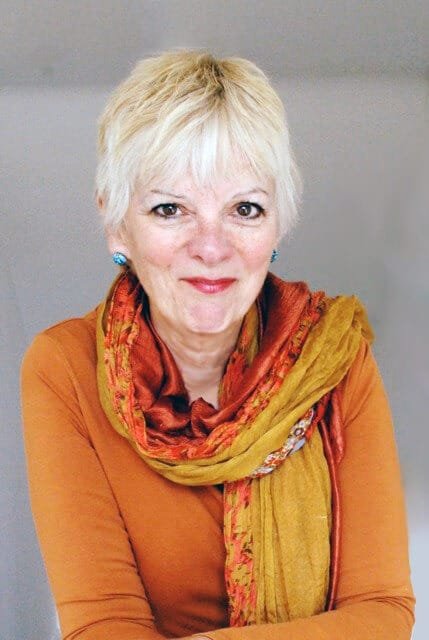
Stop smoking author’s guide to giving up

To help smokers quit during Stoptober we asked stop smoking experts for their top tips on how to give up

Gillian Riley, author of How To Stop Smoking And Stay Stopped For Good, is a former smoker who has been helping others to quit since 1982. She runs workshops and individual counselling sessions across the UK and also delivers training seminars for NHS staff.

Her sessions focus on the thinking that drives addictive behaviour and the psychological barriers between success and failure when it comes to giving up smoking.

We asked Gillian for her tips on quitting, cravings and keeping motivated.

What are the biggest challenges smokers face when trying to quit the habit?

The biggest challenge I see in clients is in recognising the influence of the mind; of attitudes and beliefs. There certainly are chemical changes going when a smoker quits, but so many people explain every difficulty in physical terms. Just because sensations are felt in the body, that doesn’t necessarily mean they were created by the body. Consider that gut-wrenching feeling when you stand in the parking lot thinking your car has been stolen. That physical pain is created by your awareness of an empty space where you thought you’d parked it.

Is there anything they should do to prepare themselves before giving up?

It can be good to stop smoking as privately as possible, so keeping it quiet, even before actually quitting, can be worth a try. A lot of people say this one thing has been a game-changer for them compared to previous attempts where others got involved in some way that didn’t turn out to be so helpful. That goes double for anyone in your life who really wants you to quit, because no matter what they say, it will feel like pressure, as if you’re being forced. The automatic reaction to this is to rebel – by smoking.

Is it best to give up gradually or to stop straightaway?

Both! I suggest a few days of gradual reduction using the technique of ‘working through’ desire that I describe in my book. The purpose of these few days is to practise using the technique. It’s important to make a gradual reduction with that in mind – and to have a quit day selected before the practice days begin. So… less than a week of reducing gradually, followed by a stop straightaway.

What tips do you have for those quitting smoking on how to control their cravings?

The tip is there are no tips. Being able to release and heal by ‘working through’ feelings of desire or craving puts most smokers on a steep learning curve. Quitting can feel like a bereavement, loss or tragedy, and it’s no small thing. There’s the adjustment to self-identify and the need to develop self-control in other respects, such as eating habits, when no longer smoking.

How can those quitting smoking best cope with withdrawal symptoms?

They best way for smokers to cope is to recognise the impact of the mind in the process of stopping, and taking steps to shift some of the ways in which they think in order to make the experience easier, and more doable. For example, (as with anything in life) it makes a big difference to feel like you’re freely choosing to do this, rather than feeling victimised or coerced.

How To Stop Smoking And Stay Stopped For Good (Random House, 2007) £9.99, is available in paperback, Kindle and audio versions.

‘I Gave Up Smoking As a Gift To My Son’

Paul Taylor, 48, a dad-of-two and chemist from Barry, gave up smoking ten weeks ago after attending a smoking cessation course at his local pharmacy.

He first started smoking in his early 20s and decided to quit to mark his and his three-year-old son’s birthday. This is his story:

I first started smoking in my early 20s and I’ve got to say I’ve had a few attempts at quitting over the years. Sometimes I’ve gone a year, sometimes a couple of years. This is my latest attempt and although I haven’t smoked for ten weeks I don’t quite feel I’m out of the woods yet.

Why I’m Quitting Smoking

The main reason I decided to quit is because I’ve got two young kids now and I want to be around for them as long as possible. There’s also the financial side of it. A packet of fags costs around a tenner now which is a bit daft really. My wife was keen for me to give up too.

dad-909510_1920


Setting a Date

I planned this quit attempt to coincide with my birthday which is also a day before my son’s birthday. It’s a good landmark and hopefully a year down the line I can say I smoked my final cigarette on my last birthday. It’s just a nice present to my son really.

In the past I’ve found it difficult to stop smoking because events have come up in my life that have put me under pressure. I’ve then fallen into the trap of having one cigarette and not been able to give myself the message that one leads to another. And then I’m back to where I started.

The last time I stopped was five years ago and I stopped for three years. I used NHS patches and an inhaler. I went to group meetings once a week and did the CO tests. I learnt from that experience that quitting is much easier when you have support both from NRT and from the people around you.

Unfortunately, I fell off the wagon because of stressful events in our lives. Then, seven months down the line, I thought ‘let’s go back and try again’.

We already know High Street Pharmacy because it’s where we collect our prescriptions and they’ve been good to us as a family.
One day when I was collecting my wife’s prescription I saw the poster advertising the 12-week smoking cessation course and I signed myself up.

I’ve tried cold turkey in the past and it’s horrible. The difference between that and using NRT to quit is a quantum leap. This time I’m using nicotine patches and a nicotine inhaler, but mainly the patches.  They really take the edge off the cigarette cravings.

The great thing about the pharmacy is that they don’t just give you support to cope with the physical side of withdrawing from nicotine but also to overcome the psychological challenges.

Feeling the Difference

This time has honestly been ok, and I feel fine. I miss cigarettes occasionally, but I don’t think about them that much. I’ve definitely noticed the difference in my pocket, but I won’t lie and say ‘I feel so much better now’. I think the health benefits are incremental and you notice them more over time. You don’t wake up straight away and suddenly feel better.

For now, I’m taking this one week at a time and hoping I can make a success of it this time. I do think you have to be in the right place mentally in order to have the strength to quit. Of course, you need NRT to deal with nicotine cravings, but you also need to have built up resilience within yourself.

My message to other smokers who are thinking of quitting would be, that it doesn’t have to be hell on earth.  There is support out there. You just need to be ready to accept it.

If you want to stop smoking Help Me Quit is run by NHS Wales and will help you to find the stop smoking service that best suits you. Contact them on 0800 085 2219 or visit www.helpmequit.wales.

How I Finally Quit Cigarettes After 36 Years of Smoking

Grandmother Angela Howarth, 58, a service driver from Wrexham, gave up smoking nine years ago, having smoked since the age of 13. She told ASH Wales about the effect smoking had on her life and how she quit:

I was 13 when I first started smoking on the way to school. It was peer pressure at the time really. I ended up smoking around 20 to 25 cigarettes a day until I was 49.

When I was a smoker, cigarettes ruled my life. If I knew I had to go to a place where I couldn’t smoke I would avoid going. For instance, I’d have a real problem going on public transport.  If I had to go to Manchester on the train I’d put it off because I knew I wouldn’t be able to smoke. I look back on that now and think that’s really bad.

I found that cigarettes slow you down. While I was smoking I didn’t have the energy I have now. I felt lethargic and it also affected my moods. People say they smoke because they feel stressed. But in fact it’s the cigarettes themselves that make you feel stressed because of the cravings.  Then there’s the amount of money you spend on cigarettes. Nowadays they are so expensive I don’t think I could afford to smoke.

I had used patches in the past to try to quit but they made my skin itch so didn’t work for me. Then one day I went into a bookshop and saw the Allen Carr Easy Way to Stop Smoking book and it was reduced to £2. People used to joke that I never have change on me because I usually only use a bank card. But that day I just happened to have £2 in my pocket. I thought ‘Ok I’m going to give myself a kick up the backside and give it a try’.”


For me it was a miracle cure really. You’re allowed to smoke all the way through while you’re reading it then once you’ve finished you smoke your last cigarette and that’s that. I’ve never hankered after a cigarette since and there was nobody I knew that was more addicted to smoking than me. I used to think ‘once a smoker, always a smoker’ but now I know that’s not the case.

I’ve persuaded lots of people around me to give up smoking using the same method. My only regret now is that I didn’t try it sooner.

‘How I finally quit cigarettes after 36 years of smoking’

Grandmother Angela Howarth, 58, a service driver from Wrexham, gave up smoking nine years ago, having smoked since the age of 13. She told ASH Wales about the effect smoking had on her life and how she quit:

I was 13 when I first started smoking on the way to school. It was peer pressure at the time really. I ended up smoking around 20 to 25 cigarettes a day until I was 49.

When I was a smoker, cigarettes ruled my life. If I knew I had to go to a place where I couldn’t smoke I would avoid going. For instance, I’d have a real problem going on public transport.  If I had to go to Manchester on the train I’d put it off because I knew I wouldn’t be able to smoke. I look back on that now and think that’s really bad.

I found that cigarettes slow you down. While I was smoking I didn’t have the energy I have now. I felt lethargic and it also affected my moods. People say they smoke because they feel stressed. But in fact it’s the cigarettes themselves that make you feel stressed because of the cravings.  Then there’s the amount of money you spend on cigarettes. Nowadays they are so expensive I don’t think I could afford to smoke.

I had used patches in the past to try to quit but they made my skin itch so didn’t work for me. Then one day I went into a bookshop and saw the Allen Carr Easy Way to Stop Smoking book and it was reduced to £2. People used to joke that I never have change on me because I usually only use a bank card. But that day I just happened to have £2 in my pocket. I thought ‘Ok I’m going to give myself a kick up the backside and give it a try’.

For me it was a miracle cure really. You’re allowed to smoke all the way through while you’re reading it then once you’ve finished you smoke your last cigarette and that’s that. I’ve never hankered after a cigarette since and there was nobody I knew that was more addicted to smoking than me. I used to think ‘once a smoker, always a smoker’ but now I know that’s not the case.

I’ve persuaded lots of people around me to give up smoking using the same method. My only regret now is that I didn’t try it sooner.

Ex-smoker and Allen Carr CEO reveals the secret of his success

To help smokers quit during Stoptober we asked stop smoking experts for their top tips on how to give up

John Dicey is Global CEO & Senior Therapist for Allen Carr’s Easyway stop smoking method. After quitting smoking, having smoked 80 cigarettes a day, John Dicey was inspired to help others do the same. He was trained by the late Allen Carr in 1998 and went on to treat more than 30,000 smokers face to face. John and Allen worked with smokers in 50 countries and worked on a series of books together which have sold 15 million copies worldwide.  He revealed what inspires him to help smokers and his advice on how best to kick the habit.

What are the biggest challenges smokers face when trying to quit the habit?

 There are probably a few – most of which fall into the category of ‘misinformation’. As a smoker I tried to quit smoking so many times but never succeeded in doing so for more than a few hours. Yet even for those few hours it felt like absolute torture. It never occurred to me that as long as I got my mindset right it could actually be easy and painless. Those experiences feed into the misinformation about how hard it is to quit and how you have to ‘tough it out’ on willpower alone.

Actually, one of the challenges is understanding that we don’t smoke because of the habit – habits are easy to break – we smoke because we’re addicted to nicotine. The real challenge then is to understand how in spite of it being an addiction – it is still easy to break free.

Is there anything they should do to prepare themselves before giving up?

Choosing the right support is really important. When people use Allen Carr’s Easyway method it’s important not to attempt to cut down or control your smoking before quitting. Cutting down just makes cigarettes seem more precious – so our advice is always to carry on smoking as normal until you stub out your final cigarettes. Advice differs for other methods – so my #1 advice would be to follow the instructions of whatever method you use.

What in your opinion is the best method for giving up smoking?

Well, I’m clearly biased because I know that Allen Carr’s Easyway to Stop Smoking is the best method and even before I became involved with Allen Carr I’d always recommend it to my friends and colleagues. Generally though – it’s always reassuring to listen to what worked for other people – and there are other methods that people can choose.

Is it best to give up gradually or to stop straightaway?

It’s really important that you follow the instructions and guidance for whatever method you decide to use. Cutting down can make it harder to quit. It’s akin to when you go on a diet – within minutes you’re dying for the cake and biscuits you’ve just committed to not having. With the Allen Carr method we actually encourage smokers to keep smoking throughout the seminar/book until they’re happy to stub out their final cigarette. It helps us to cover every aspect of smoking before they decide if they’re ready or not.

What tips do you have for those quitting smoking on how to control their cravings?

Cravings are physical feelings – but it’s important to remember that they are generated by a thought process. If when you quit you think “I want a cigarette” knowing that you can’t have one – you feel miserable, uptight, anxious, and angry. It’s a horrible feeling. The longer you resist the urge to smoke – the worse the feeling gets. But if you stop smoking realising that you’re getting rid of something, rather than giving it up, you don’t have to put up with that “I want a cigarette” thought and physical reaction. It doesn’t take any willpower to “not do” something that you don’t want to do.

How can those quitting smoking best cope with withdrawal symptoms?

The actual physical withdrawal pangs from nicotine are really mild – almost imperceptible – it’s the physical reaction to the mental craving that causes all of the discomfort. As long as your mindset is right – withdrawal really shouldn’t bother you. I went from 80 cigarettes a day to zero and barely noticed any withdrawal at all.

How quickly will smokers realise the benefits of a smoke-free life?

Wow – it happens really quickly. Within 24 hours of quitting smoking you’re half as likely to suffer a heart attack. Noticing the changes can take time so it’s best not to wait for them to happen. Yet all of a sudden the steps at the railway station don’t seem to wind you so much and for super-fit smokers athletic performance is noticeably improved within days. The greatest effect of being free is noticeable immediately. Not being controlled by the addiction is wonderful from the start – choosing when to go for a break rather than being obliged to go for a break because you’re desperate for a cigarette. You notice so many differences in that regard that it only then dawns on you exactly how controlled by the drug you were.