Illegal Tobacco in Wales – The Problem

Almost half of smokers in Wales have been offered illegal tobacco to buy and 15% of all tobacco sold in Wales is illegal, according to new research published by ASH Wales. Wales has one of the largest illegal tobacco markets compared to each of the English regions.

ASH Wales has commissioned the first ever survey into the scale and extent of the illegal tobacco market in Wales. The findings suggest that a quarter of Welsh smokers buy illegal tobacco with almost 60% of them buying at least once a month.

Illegal tobacco includes foreign brands made especially for the black market; cigarettes and tobacco smuggled from countries with lower taxes and counterfeit or fake cigarettes. It is often sold under the counter in shops and bars, in private houses and in car boot sales. The cigarettes sold on the black market are much cheaper than legal cigarettes making it easier for children to start smoking. The people who sell illegal tobacco are often linked to the selling of other illegal goods like drugs and alcohol, therefore buying illegal tobacco helps support organised crime.

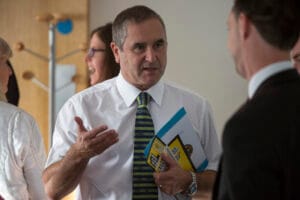
The Health Minister, Mark Drakeford, said, “Smoking is one of the leading causes of early death; and we are implementing a comprehensive range of measures to reduce the harm caused by tobacco. The trade in illegal tobacco is undermining our efforts to control tobacco use and to help people give up smoking.”

“It is important that we support more people to quit smoking. Stoptober is a great opportunity for smokers to be part of the challenge and give up.”

Mark Drakeford – Health Minister

“It is shocking that Wales has such a large illegal tobacco market. There needs to be investment and a comprehensive strategy to tackle the issue. The North East of England also had high sales of illegal tobacco but investment and a concerted campaign with several partners working together has brought the level down to 9% compared to 15% in 2009.”

Elen de Lacy, Chief Executive of ASH Wales

“We look forward to working with enforcement agencies and other partners to have a positive impact on the use and attitudes towards illegal tobacco highlighted by the survey results published today.”

Steve Hay, Illegal Tobacco Programme Manager for ASH Wales

ASH Wales will be launching the report on at the Wales Millennium Centre in Cardiff on September 17th on the eve of their international conference on Tackling Health Inequalities through Tobacco Control.

Notes:

  • NEMS Market Research conducted the survey with 2,547 telephone and face-to-face interviews across each of the 22 local authorities in Wales.
  • The cheap tobacco market in Wales accounts for 19% of tobacco consumption, with 15% being illicit tobacco and 4% duty free.
  • Almost half (45%) of smokers have been offered illegal tobacco to buy.
  • A quarter of smokers buy illegal tobacco and this makes up an average of 42% of their total consumption.
  • Where people buy illegal tobacco:
    • Private address – 52%
    • Pub/club – 45%
    • Shops – 19%
    • Street sellers – 16%
  • 59% buy illegal tobacco at least once a month with only 9% buying once a year.
  • The average price of 20 illegal cigarettes is £4.
  • 53% agree strongly that illegal tobacco brings crime into their community and 43% agree strongly that it encourages gangs and anti-social behaviour.
  • 70% of buyers agree strongly that illegal tobacco makes it possible to smoke when they couldn’t otherwise afford it.
  • ASH Wales is the only voluntary organisation in Wales with the sole task of tackling the ill health caused by tobacco use. Our main aim is to achieve a reduction in, and eventual elimination of, the health problems associated with tobacco use.

Ending Smoking in Cars with Children a Step Closer

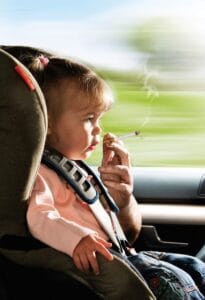
ASH Wales welcomes the announcement today of the consultation on banning smoking in cars with children under 18 present.

There is widespread public support for a ban on smoking in cars with children, with 4 out of 5 Welsh adults (79%) now wanting to see legislation introduced, according to a YouGov survey for ASH Wales in 2014.

While ASH Wales also welcomes the report that the number of children being exposed to smoking in private vehicles has declined, there is still more to be done. Evidence from Canada has shown that countries with a ban have seen a steeper decline in children’s exposure to secondhand smoke in vehicles than countries running education campaigns alone.

“We welcome the decision by the Welsh Government to release a consultation on the issue of smoking in cars with children. Concentrations of tobacco smoke inside a car can reach dangerous levels very quickly. We welcome the findings that children’s exposure to secondhand smoke has reduced but there is more to be done. The time has come for a ban to be introduced to prevent any further harm to children in Wales.”

Elen de Lacy, Chief Executive of ASH Wales

ASH Wales Welcomes Standard Pack Regulations

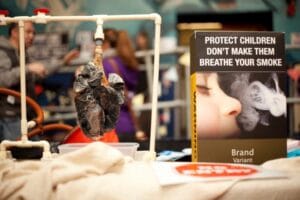
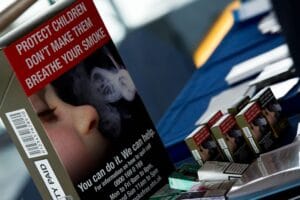
Action on Smoking and Health Wales has welcomed the start of the consultation on standardised packaging for cigarettes and tobacco. The UK Department of Health today published the draft regulations which will lead to the introduction of standardised packaging across the UK in May 2016. The standard packs proposed will include health warnings and graphic images showing the harm caused by smoking.

In a recent ASH Wales Roadshow young people were shown some examples of the cigarette packets currently on sale. Amongst the comments were: “It looks like chewing gum!”; “It looks like soap!”; “It looks like it’s got Lego in it!” and “They are lush, I’m going to ask my Dad to buy me them!”

“It’s high time that we got rid of these cigarette packs that are deliberately designed to be attractive to children. We know that 14,500 11-15 year olds in Wales take up smoking every year. We must do everything we can to protect our children from the harm caused by tobacco.”

Elen de Lacy, Chief Executive of ASH Wales

A poll by YouGov for ASH Wales in March 2014 indicated that 66% of adults in Wales support or strongly support standard packaging.

ASH Wales Welcomes UK Government Decision to Press Ahead with Standardised Packaging

The UK government has announced that it is moving forward with plans to ban branding on cigarette packs.

The decision announced today followed the publication of an independent review by Sir Cyril Chantler which found that standardised packaging was “very likely to have a positive impact” on public health and in stopping children from starting to smoke.

The Chantler review has also concluded that standardised packaging need not increase the illicit trade in tobacco, rejecting claims from the tobacco industry. All the key security features on existing packs of cigarettes would be present on standardised packs (including coded numbering and covert anti-counterfeit marks).

The UK Government now plans to draft regulations for a final, “short consultation”.

“Bringing in standardised packaging in the UK will make attractive cigarette packs targeted directly at our young people history. Smoking kills and the time has come to take away the tobacco industry’s last form of advertising to our children.”

Elen de Lacy, Chief Executive of ASH Wales

Standardised packaging is popular with the public. A new poll by YouGov, published today and conducted for ASH Wales in March 2014, found that overall 66% of adults in Wales support or strongly support plain standardised packaging.

In November 2013, the Government announced that it had appointed the eminent paediatrician Sir Cyril Chantler to conduct an independent review into the public health impact of the standardised packaging of cigarettes and tobacco products. The announcement followed Parliamentary votes to include in the Children and Families Bill powers for the Health Secretary to introduce regulations on standardised packaging in England. The Scottish, Welsh and Northern Ireland Governments have also supported the policy.

Australia was the first country to introduce standardised packaging, in December 2012. Soon after standardised packs began to appear in Australian shops, smokers reported that they found cigarettes from plain packs less appealing or satisfying. Research showed that, compared with smokers who were still using branded packs, the plain pack smokers were 81% more likely to have thought about quitting at least once a day during the previous week and to rate quitting as a higher priority in their lives than smokers using brand packs. There was also a big increase in the number of people contacting smoking quit-lines following the introduction of the new packs.

More Than 11,000 Babies A Year Affected By Smoking During Pregnancy In Wales

Wales has the highest rate of smoking during pregnancy in the UK which is putting thousands of babies’ lives at risk, health charity Action on Smoking and Health (ASH) Wales has warned.

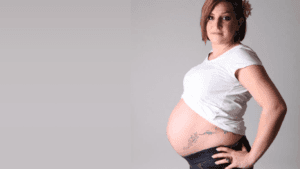
33% of mums-to-be in Wales smoke at some point during their pregnancy – considerably higher than the UK average of 26% – exposing 11,864 unborn babies to harm from tobacco each year.

Smoking during pregnancy increases the risk of stillbirth, Sudden Infant Death Syndrome (cot death); premature birth; low birth-weight and miscarriage. Maternal smoking is also associated with a range of health problems throughout the baby’s life including asthma, birth defects such as cleft lip, ADHD and learning difficulties.

In Wales, one-to-one quit smoking support can be provided to pregnant women by Stop Smoking Wales, but rates remain stubbornly high.

As Mothers’ Day approaches this Sunday ASH Wales is calling for every midwife and health visitor in Wales to be trained to advise women about quitting smoking as part of their pre-registration training, in a bid to support more women through the process of giving up.

“It is a sad fact that Wales continues to have the highest rate of smoking in pregnancy in the whole of the UK. Giving up smoking is hard on its own but with the added pressures of having a baby it is doubly challenging, which is why extra support is vital for pregnant women to help them give up. Midwives and health visitors are able to build close relationships with women, at home and in the community, and are often the best placed to support women throughout their pregnancies and afterwards.”

Elen de Lacy, Chief Executive of ASH Wales

Four of Wales’s Health Boards have been piloting a new programme called the MAMSS (Models for Access to Maternal Smoking Cessation Support) project which uses different groups of staff such as midwives and maternity support workers to deliver intensive interventions in women’s homes or a setting of their choice in a bid to improve engagement with pregnant women.

It is hoped this project will inform the future direction of smoking in pregnancy services in Wales.

Samantha Paul from Bridgend gave up smoking when she was pregnant with her second child with support from the MAMSS project at Abertawe Bro Morgannwg University Health Board.

“I was smoking between 10 and 20 a day and knew I had to give up but I couldn’t do it on my own. The help I got from my midwife Julie was brilliant. She came to the house and really helped me through it. She told me that we would set a date to quit and helped me prepare all week for that day. I got an inhaler and patches and within two days I’d quit and I haven’t smoked since but she still calls me up to see how I’m doing. The readings on the carbon monoxide monitor used to scare me because of what was going through to the baby – the reading was 18 before but is now down to 2. Now I can’t even stand the smell of smoke!

“I would encourage other mums-to-be to just give it a go, but they need support and someone to help them through it. The MAMSS project has a great approach that’s so supportive. I’m really scared though of falling off the wagon especially after the baby is born with all the stress and worry of a new-born baby. I don’t want to smoke again but I I’m worried because that’s what happened after my first child was born. I think support for mums post-natal is just as important as before the baby is born.”

Samantha Paul

Welsh Young People “Stand Out, Speak Up And Seize Control” Against The Tobacco Industry

Youth groups from across Wales will be spending Wednesday 19th March creating events and activities as part of an international day of activism to speak out against the tobacco industry as part of Kick Butts Day.

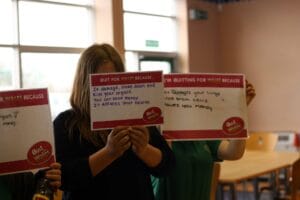
Kick Butts Day aims to encourage young people to have their say against the tobacco industry by organising activities focussing on issues around smoking and tobacco use. Events on the day will include a school taking part in four workshops around smoking (Merthyr) and producing films about the effects of smoking (Butetown).

Young people taking part in Kick Butts Day last year in Wrexham

14,500 11 to 15 year-olds try smoking every year in Wales alone – that’s a classroom full every single day and that is why The Filter, ASH Wales’ youth project, is supporting groups from every corner of Wales to take part in this day of activism.

Emily Cole has been co-ordinating Kick Butts Day across Wales for The Filter project.

“Kick Butts Day is a real chance for young people to take control and speak out against the tobacco industry. Teenagers are ‘easy’ prey for the tobacco industry which needs to replace their dying customers, but Kick Butts Day encourages/empowers young people to say ‘No, we won’t be your next victims.’”

“It’s great to see so many young people wanting to get involved and buck the idea that they don’t care about their futures. Smoking-related diseases kill 5,450 people each year in Wales alone and if our younger generations don’t do something about it, like with Kick Butts Day, that number will can only rise.”

Emily Cole