




Walesโ€™ Beaches Worst in Great Britain for Cigarette Butt Litter

  • Latest data reveals that Welsh beaches hold the highest amount of cigarette butts across Great Britain in 2021
  • Despite a decline in average beach litter, cigarette butts more than double in a year
  • ASH Wales and the Marine Conservation Society call for a ban on plastic in cigarette filters, and action to reduce smoking-related litter

New figures reveal the number of cigarette butts littered on Welsh beaches has more than doubled in a year, making Wales the worst nation in Great Britain for cigarette waste on beaches.

The Marine Conservation Society 2021 survey of more than 3,500 meters of Welsh coastline show that despite a decline in overall beach litter, cigarette waste has reached an all-time high.

The survey found an average of 64.2 cigarette butts per 100 metres of Welsh beach, a stark rise from 32.6 in 2019, and 9.5 in 2020.

In response, tobacco control action-group, ASH Wales, and the Marine Conservation Society have called for a ban on plastic in cigarette filters, and direct action to reduce smoking-related waste.

The survey shows that Wales holds the highest number of littered butts in Great Britain in 2021, with more than double that of England with an average of 31 butts per 100 metres, and Scotland at 9.4.

The results were obtained through the Marine Conservation Societyโ€™s annual Great Beach Clean, which took place from 17th – 26th September this year, and saw Welsh volunteers clear litter from local streets, parks and over 3,765 metres of coastline.

On a global scale 4.5 trillion cigarette butts are discarded each year, making cigarette butts one of the most littered items on earth. Many cigarette butts contain cellulose acetate, a type of plastic which takes up to 12 years to biodegrade. Cigarette butts are ultimately harmful to the environment, as they are filled with micro-plastics, tar and nicotine which effect wildlife and natural habitats.

Suzanne Cass, CEO of ASH Wales said: โ€˜โ€™Wales boasts some of the UKโ€™s most iconic beaches, and it is upsetting to see that cigarette butt litter has more than doubled in the last year. Cigarettes not only pose a risk to public health, but also presents a significant risk to the wildlife and coastline of Wales.

โ€˜The fact that Wales holds some of the highest cigarette butt waste in Great Britain is shocking. Our Smoke Free Beaches campaign flagged this issue in 2016, calling for voluntary smoking bans across beaches in a bid to drive down the number cigarette butts. We urge Welsh Government to either ban these harmful micro-plastics, or to create solid safeguards to protect our coastlineโ€™โ€™.

Safeguards such as voluntary smoking bans have been a staple for the charity in reducing cigarette waste. ASH Wales Smoke Free Beaches was rolled out in 2016 and seeks to denormalise smoking in public spaces in a bid to create a cleaner environment. To date, Little Haven, Caswell and Langland Bay have joined the campaign, in a bid to create cleaner spaces for locals and tourists.

The Marine Conservation Society added to calls for action, marking that plastics in cigarette filters need to be removed.

Angie Contestabile, of the Marine Conservation Society said: โ€œThe stark increase in the amount of cigarette stubs our volunteers found on Welsh beaches this year is certainly cause for concern. Littered cigarette stubs, like many other forms of plastic pollution, are incredibly harmful to animals which call the Welsh seaside home and are one of the most prevalent items found on Welsh beach cleans. Thatโ€™s why itโ€™s so important to not only remove plastic from cigarette filters, but introduce more guidance on how to dispose of smoking-related litter while on the beach.โ€

The rise in cigarette litter coincides with the launch of Welsh Governments ambition to make Wales smoke-free by 2030. Earlier this month, Deputy Minister for Mental Health and Wellbeing, Lynne Neagle, launched a consultation for a strategy to drive down smoking rates in the population to 5%.

The Deputy Minister of Health and Wellbeing said smoke-free spaces are a key element of our tobacco control measures.

Deputy Minister for Mental Health and Wellbeing, Lynne Neagle, said: โ€œI have recently announced our ambition to be smoke free by 2030 and through our public consultation we have started a conversation on how we can achieve this.

โ€˜Wales has led in making a number of public places smoke free including playgrounds and school grounds. I recognise that smoke-free spaces can play an important role in reducing health and environmental risks. Itโ€™s important we respect our surroundings and be mindful of how our actions may impact our beautiful Welsh landscapes as well as our own health and the health of others.โ€

Deputy Minister for Climate Change Lee Waters said Welsh Government is now considering ways to address the cigarette-litter issue.

Deputy Minister for Climate Change Lee Waters said: โ€œI welcome the annual beach litter surveys which provide valuable data on the litter problems affecting our marine environment.

โ€˜It is disappointing to see people are still not disposing of their cigarette butts responsibly. There is really no excuse for this type of behaviour and the impacts it has on our beautiful coastline.

โ€˜The Welsh Government remains committed to abolishing the most commonly littered single use plastics and we are considering the options for dealing with cigarette filters.โ€

Despite the significant rise in cigarette butt waste on Welsh beaches, the overall amount of Welsh litter has fallen. This year volunteers relayed that the average litter recorded per 100m was 414.4 kg, a significant decrease from 2017 where 677 kg was collected. However, it is clear more needs to be done to tackle cigarette litter on our coastline.

ย 

ASH Wales protest against JTI Event at the Senedd 17/11/21

This week ASH Wales were denied entry into an event hosted by Japanese Tobacco International, in the Senedd. The tobacco giant was invited to hold a conference by the Conservative Darren Millar MS. We believe a tobacco company should not be allowed to host conference in a building committed to the health of Wales. Had we had been allowed to attend, here is what we would have asked organisers.

ASH Wales Urges Senedd Members to Boycott Tobacco Industry Event

Walesโ€™s leading tobacco control action group, ASH Wales is calling on Senedd Members not to attend an event organised by one of worldโ€™s biggest tobacco manufacturerโ€™s Japanese Tobacco International (JTI).

The event on Wednesday (17th) on the Senedd Estate is sponsored by Conservative MS Darren Millar and focuses on JTIโ€™s information on the illicit tobacco trade.

Welsh Government is already taking action, which does not involve the tobacco industry, to tackle illicit tobacco as part of Walesโ€™s Tobacco Control Delivery Plan.

World Health Organizationโ€™s (WHO) Framework Convention on Tobacco Control (FCTC) sets guidance on how to protect health policy โ€œfrom commercial and other vested interests of the tobacco industryโ€. This event presents a significant risk of tobacco industry influence over Walesโ€™s emerging health policies.

CEO of ASH Wales, Suzanne Cass said:

โ€œThe tobacco industry have a long history of undermining tobacco control policies and trying to play down the health impact of their lethal products. Allowing one of the big tobacco companies to host an event in the Senedd which focuses on a major tobacco control policy, flies in the face of the protocols laid down by the World Health Organisation. Wales is on the brink of launching ambitious tobacco control polices to make Wales smoke free by 2030. It is imperative that the tobacco industry is kept at arms-length from the decision makers involved in that process.โ€

The Chair of the Senedd Smoking & Health Cross-Party Group John Griffiths MS strongly criticised the decision to allow the event to go ahead on the Senedd estate. Mr Griffiths said:

โ€œWe have seen lots of good work by our Welsh Government to create more smoke-free environments with the bold ambition of having a smoke-free Wales by 2030 โ€“ and this event undermines this and our strong public health efforts here in Wales.

โ€œSmoking continues to take a terrible toll on our health in Wales. It is particularly damaging to families in our most deprived communities where it is a major cause of premature death and disability. It greatly adds to the pressure on our doctors, nurses and hospitals. There should be a political consensus to drive down smoking rates and support young people in stopping to develop the habit and helping smokers to quit.

โ€œTobacco companies have a long record of working to undermine health messages and measures, fighting a rearguard action to continue to profit from death, ill health and misery. And seeking to portray themselves as cooperating with governments and agencies to address the damage smoking causes. They have been called out by the World Health Organisation, United Nations and governments across the globe.โ€

The Royal College of Physicians joined the growing number of calls for Senedd Members to boycott the event, Vice President for Wales of the RCP, Dr Olwen Williams said:

โ€œThe RCP has a long history of campaigning on issues relating to tobacco use and control.ย  In 1962, we published Smoking and health which first highlighted the link between smoking and lung cancer, other lung diseases, heart disease and gastrointestinal problems.

โ€œDespite five decades of campaigning, smoking unfortunately remains the leading cause of preventable death in Wales, causing at least 5,600 deaths in Wales in 2018.ย  It has a major impact on health inequalities and avoidable illness,ย and costs the NHS in Wales almost ยฃ400 million every year.

โ€œGiven the recently published target of a smoke-free Wales by 2030, I am disappointed to see that tomorrow, a Senedd member is hosting an event organised by the tobacco industry.

โ€œI urge you and your colleagues to boycott this event in the interests of protecting the health of the people of Wales.โ€

Health charities across Wales have backed the boycott, including Cancer Research UK (CRUK), the British Heart Foundation (BHF) and the Asthma UK and British Lung Foundation Partnership (AUK-BLF).


For further information contact:

Simon Scheeres | Policy and Public Affairs Manager | simon@ashwales.org.uk | 07841571516|

ASH Wales will be attending the event at 10:30- 2pm, 17/11/21. If you would like to cover this item for broadcast, please contact Simon Scheeres on the above number.

About us:

ASH Wales Cymru is the leading organisation working for a smokefree Wales via strong tobacco control policy and country-wide campaigns. We work to raise awareness of the health, social and economic effects of smoking by engaging with communities, young people and partners across Wales.

NB: Please refer to ASH Wales Cymru as a โ€˜tobacco control campaign groupโ€™

Website www.ash.wales ย Facebook www.facebook.com/ASHCymru

Twitter www.twitter.com/ASHWalesCymru

Second Open Letter To Members Of The Senedd: Japan Tobacco International

Following our previous letter to the Senedd highlighting concerns with Japan Tobacco International (JTI) funding Welsh charities for PR campaigns claiming to target cigarette butt littering, JTI are now hosting an event within the Senedd.

The โ€˜Tackling Illicit Tobacco Sales in Walesโ€™ drop in event, scheduled for Wednesday 17th November in Tลท Hywel is being organised by JTI in what may well be an attempt to garner political support.

We now write an open letter to Senedd Members urging them to not attend this event, once again referencing Article 5.3 of the World Health Organisation’s (WHO Framework Convention on Tobacco Control (FCTC).

To view the full document, click HERE.

Global Tobacco Index: UK Fails to Regain Number One Position for Second Year Running

Credit: Tobacco Control Research Group at the University of Bath

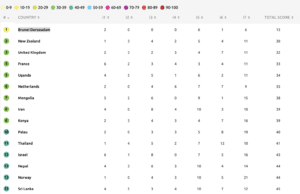
Overall, the UK has failed to make progress in preventing the tobacco industry from interfering in policy and legislation, according to the latest global rankings.

While the UK continues to compare favourably to many of the 79 other countries surveyed, there is still work to do to raise its performance to the level reported in 2019, when it ranked first.

Researchers found that the UK continued to offer tobacco companies opportunities to use so-called corporate social responsibility (CSR) programmes to open the door to government officials and policy makers, particularly in areas of significant public interest such as environmental pollution and COVID-19. Also of concern is the growing use of industry front groups, and the difficulty of identifying their role in lobbying and influencing policy.

The UK research, published today in the UK Tobacco Industry Interference Index (UKTI), was led by the Tobacco Control Research Group at the University of Bath in collaboration with Action on Smoking and Health (ASH), ASH Scotland, ASH Wales and Cancer Research UK (CRUK).

The UKTI forms part of the Global Tobacco Index (GTI), which, this year, ranks 80 countries based on how well they implement and comply with the obligations of a global health treaty, known as the World Health Organization Framework Convention on Tobacco Control, which prevents tobacco industry interference with governments.

The UK scored 32 out of a possible 100 โ€“ compared to 26 in 2019 โ€“ in the ranking where the lower the score, the better a country is faring.

The Index shows several key areas of concern in the UK:

  • tobacco companies conducting CSR activities via informal parliamentary groups and by lobbying. In the case of COVID-19, this was in response to direct requests from government
  • despite Foreign and Commonwealth Office guidelines to the contrary, UK diplomats engaging with the tobacco industry in low- and middle-income countries
  • a lack of transparency across government departments about their interactions with the tobacco industry, with inconsistent and insufficient requirements for reporting between different departments
  • no general requirement for the tobacco industry and affiliated entities to register with the government, which is of particular concern given the industryโ€™s growing use of third parties

Dr Raouf Alebshehy, monitoring coordinator for the Tobacco Control Research Group at the University of Bath and the lead researcher for the UKTI, commented:

โ€˜The UKโ€™s policy-making system accepts stakeholdersโ€™ submissions in some instances, allowing tobacco companies to present opinions. In such cases, as a minimum, who said what must be clearly documented and made public. Submissions from the tobacco industry canโ€™t be equated with submissions from health advocates. This is not a level playing field.โ€™

Deborah Arnott, chief executive of ASH, said:

โ€˜Yet again the annual Global Tobacco Index demonstrates that the UK is doing well by comparison with many other countries in preventing the tobacco industry from interfering in tobacco policy. However, more importantly, the specific UK Tobacco Industry Interference Index shines the spotlight on the areas where the UK can and should be doing better.โ€™

Sheila Duffy, chief executive of ASH Scotland, said:

โ€˜Tobacco is the single most damaging consumer product on the market, and the corporate multi-nationals who promote it and profit from it have long and well-documented track records of deceit and attempts to interfere with proposed public health measures. The Westminster and Holyrood Governments must up their game on transparency about tobacco industry funded attempts to influence public health policy, and reject any suggestion that the industry and its vested interests are valid health stakeholders or partners.โ€™

Suzanne Cass, chief executive of ASH Wales, said:

‘Recent activities in Wales show that the tobacco industry is not beyond interference at a grassroots level. ASH Wales will be working to ensure any campaigns funded by the tobacco industry are not endorsed or supported by Welsh Government or its officials.ย As Wales embarks on a robust campaign to reduce demand and drive down illegal tobacco sales, it is imperative that the tobacco industry is not given the opportunity to interfere.ย The tobacco industry still holds significant swaying power: we must continuously ensure that this does not influence policy on a local or wider level.’

Michelle Mitchell, chief executive of Cancer Research UK, said:

โ€˜Itโ€™s disappointing to see that the UK has not managed to regain its leading position in preventing the tobacco industry from interfering in policy-making. Given the industryโ€™s long history of subverting public policy for its own vested interests, we need our government to increase transparency, and ultimately limit interactions with these companies.

โ€˜As highlighted by the recent takeover of Vectura by PMI, going forward it will also be essential for the government to step up its adherence to the WHO FCTC to ensure that Big Tobaccoโ€™s expansion into the health sector doesnโ€™t permit it a seat at the policy-making table.โ€™

Writing Credit: Dara Oโ€™Hare at the Tobacco Control Research Group at the University of Bath

Open Letter to Members of the Senedd: Japan Tobacco International

In early November 2021, we wrote an open letter to members of the Senedd, highlighting concerns with Japan Tobacco International (JTI) funding Welsh charities for PR campaigns claiming to target cigarette butt littering, in relation to Article 5.3 of the World Health Organisation’s (WHO Framework Convention on Tobacco Control (FCTC), requiring governments to take measures to protect health policy “from commercial and other vested interests of the tobacco industry”.

To view the full document, click HERE.