



Mental Health, Smoking and Me?

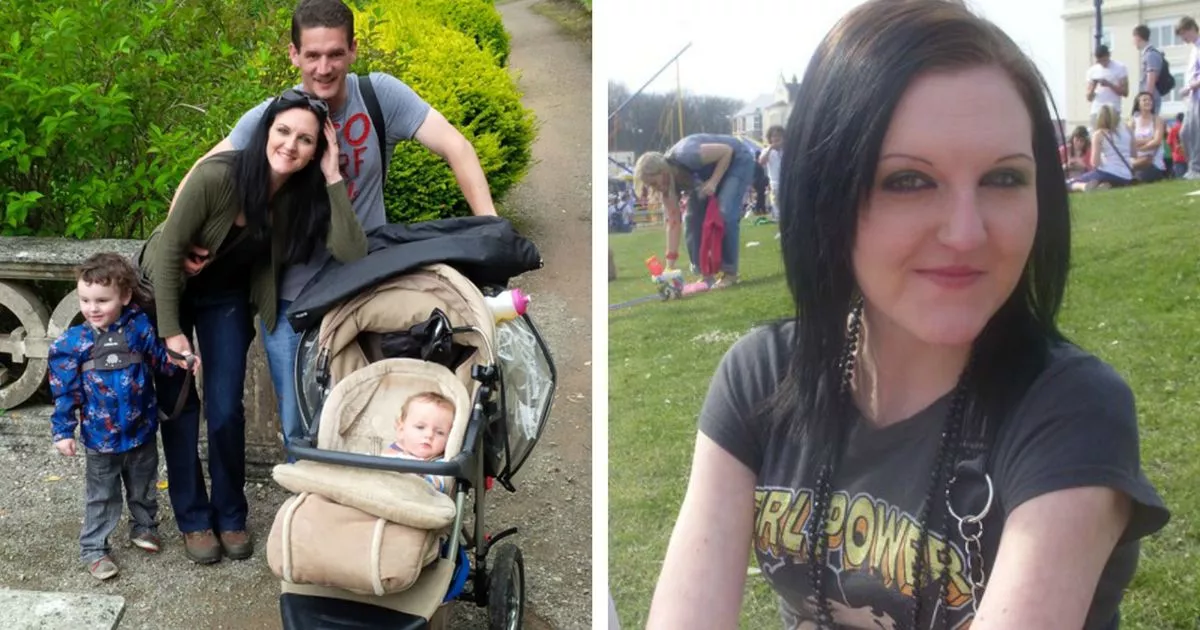
Charlotte Harding, author of Welsh Mummy Blogs overcame the challenge of giving up smoking, despite suffering from mental health problems. To mark Mental Health Awareness Week, she tells us her story.

Can you tell us about your experiences of mental health issues?

I have suffered ill mental health from a young age. I first started seeing a psychiatrist at 14 years old when I was suffering from anorexia. From there I was diagnosed with an anxiety and panic disorder. I suffer with depression at times and I was diagnosed with a more severe mental health illness years later.

When did you start to smoke?

I started to smoke on and off around 15 years old, I was smoking full time at 16.

Did you smoke to relieve symptoms of your mental health issues?

100% yes! I found smoking stopped me eating. I also found that I smoked more when my anxiety was high. Smoking in a way regulated my breathing and this would help with my panic attacks, or so I thought.

Do you think suffering from mental ill health made it more challenging for you to give up smoking?

I made the stop smoking Wales service aware of my mental illness before I started the smoking cessation. I explained that I am not good sitting in a group environment and would benefit more if I was having 1:1 meetings. They said it wasn’t a problem, I just had to wait for a space to be available.

Giving up was extremely difficult. I found I was craving a cigarette every time my anxiety played up, which was constant when quitting. I found I had really bad mood swings which played on my mental health.

I also found that I was hungry more often whilst giving up, and I gained around 1st due to snacking. This caused a few problems, I found I tried to restrict calories in my food due to the weight gain. This did resolve itself once the cigarette cravings lessened.

I explained I was finding quitting difficult to my GP and she decided to support me after the smoking cessation finished. I was prescribed my Quick Mist Spray for almost a year. In the end, I decided to go ‘cold turkey’ and I quickly found that I was no longer addicted to nicotine, I just had a habit of reaching for my spray when I felt stressed or anxious.

Would you say there is enough support available for those suffering from mental ill health to give up smoking?

I was lucky, I had a really supportive GP who prescribed me nicotine replacement after the 12 weeks stop smoking service. The GP said she would rather put the nicotine replacement on my repeat than me going back to smoking. If I didn’t have a good GP I would probably had started smoking after the 12 week service.

What advice would you give to anyone with mental ill health who would like to give up smoking?

Go for it! You will feel so much better once you have quit. It may be hard at times but it is so worth it. Be honest with your GP and/or stop smoking adviser, they will help. Most GPs would prefer you on nicotine replacement than smoking.

Mind over matter – why quitting smoking could improve your mental health

Did you know that quitting smoking could improve your mental health? To find out more, we’ve taken a look at how smoking affects your state of mind.

Smoking and stress

It’s a common misconception that smoking helps to relieve feelings of stress and anxiety. Many smokers will automatically reach for a cigarette when the going gets tough.  And while it’s true that puffing on a cigarette will bring a feeling of instant relaxation, in the long term, smoking becomes the cause not the cure for stress.
Once gripped by nicotine addiction, smokers quickly find themselves in a never-ending cycle of smoking to relieve nicotine withdrawal symptoms, experiencing the warmth of a nicotine hit, before the withdrawal symptoms kick in once again. These withdrawal symptoms and cigarette cravings then become the cause of anxiety symptoms which can only be relieved by smoking another cigarette, and so the cycle goes on.

Smoking and depression

It is unclear whether smoking leads to depression or vice versa however, according to the Mental Health Foundation, smoking rates in the UK, are around twice as high among adults with depression as among the general population.    It can be more challenging for people suffering from depression to give up smoking.   Nicotine stimulates the release of dopamine in the brain which is the chemical responsible for triggering positive feelings. Those with depression often have low levels of dopamine. As a result, some people use cigarettes to temporarily increase their levels of dopamine. Regular smoking leads the brain to switch off its own mechanism for making dopamine, meaning that in the long-term supplies decrease, encouraging people to smoke even more.

Medication

Smoking can make prescribed medication for some mental illnesses less effective. This means the smoker would have to take higher doses of their medication in order for it to work effectively. Smoking is known to interfere in particular with the way some antipsychotic medication and antidepressants work.

The benefits of quitting for mental health

According to the NHS quitting smoking can be as effective as antidepressants when it comes to  treating anxiety and depression.   Although coping with cigarette cravings can be tough, those with mental health problems who successfully quit the habit are likely to feel calmer, more positive and have a better quality of life.  Quitting means escaping the cycle of nicotine cravings but also the pressure to fund a habit that costs on average £56 a week and £243 a month for a 20-day smoker.

How to quit

All smokers are different and there is not one quit method or smoking cessation services that suits everybody. To help you find the quit smoking support that is best for you contact Help Me Quit, NHS Wales’ free smoking cessation service.  To get in touch text HMQ to 80818, call 0800 085 2219 or click here to visit the Help Me Quit website.

Depression and smoking – one woman’s journey to a smokefree life

To mark Mental Health Awareness Week we have asked ex-smokers who have experienced mental health problems to tell us their smoking story and how they quit. Today we hear from Tracey Jones *  from North Wales  who suffers from depression and has recently quit smoking.

Can you tell us about your own experiences of mental health issues?

I have experienced depression at low and stressful times of life. The longer the stressful situation, the worse it gets. I’d describe it as like having a very sad stone in your stomach, it’s always there. Sleeping takes away the feeling.

When did you start smoking

I started smoking at around 15 or 16-years-old. At first I just wanted to have a go but I was hooked instantly. Yes, smoking helped to relieve my depression but all it does really is hide issues, and build up a habit at the same time.

In your experience do you think there is enough support out there to help people with mental health issues to stop smoking?

I do think that people with depression and anxiety need much more support, and it’s not out there. Most help is fully booked, and the staff, well meant as they are , don’t really understand. And it’s the dealing with people thing that makes it even more difficult.
Quitting is extra hard I guess for people dealing  with depression and addiction on top of that. The lack of nicotine and habit is extra pressure ( not to mention pressure from other people)

How did you give up smoking?

This my fifth serious attempt at quitting. This time I didn’t tell anyone, and used inhalators bought online. I bought sugar free mints, and used an app to monitor the benefits. To be honest, the hardest thing has been food, and feeling sad.

How has your life changed as a result of giving up smoking?

It’s early days still. But I already have a better sense of taste and smell. My home smells better. My chest is clear, and I have no cough. And I have a lot more time on my hands! And my bank is much healthier.

What advice would you give to anyone who suffers from anxiety or depression and is worried about quitting smoking?

Do it your way. Prepare. Read up. Monitor your progress with an app. Nap when you can ( the body kind of goes into shock when you quit), and empty your house of all smoking paraphernalia!

* Surname changed

Mental health and smoking: My story

Graham Morgan has an MBE for services to mental health and helped to write the Scottish Mental Health Care and Treatment Act. He is also an author, having written a book, Start, about his own personal experiences of mental illness.  We asked him to tell us his story and how he finally found the strength to stop smoking. 

When you start smoking and why?

I first started smoking to fit in, I went to school away from home and was terribly lonely. Anyone who wanted friends and to be even slightly cool smoked. I had never wanted to smoke but it was the ideal way to look slightly rebellious and to make friends. I started at 16 and gave up when I was about 40. In the early years it felt like a great comfort and later, when I experienced sadness and despair, I took an obscure pleasure from the fact that smoking might kill me, which, at the time, was my ambition.

In hospital thirty five years ago smoking was a currency; a form of friendship. Smoking was an excuse to have conversations and to give small gifts, it was a vital way of making a connection with my fellow patients and seemed to be a way of dealing with the pressure, boredom and isolation of being a patient.
For many, many, years I was never without a roll up, always patting my jacket for my tin, my papers, panicking when I frequently lost them. Smoking was a huge part of my life, I didn’t really consider giving up and really struggled during those times when I couldn’t smoke.

Do you think suffering from mental illness made giving up smoking more of a challenge for you?

I think it was, I now know that smoking is bad for your mental and emotional health as well as your physical health but for many years I thought it helped make me happier and calmer. I was very worried about how I would cope if I gave up. As well as being meant to experience Schizophrenia, I also experienced anxiety and depression. I worried that my anxiety would increase dramatically. I also worried that I would no longer have people to talk to and share a cigarette with.
However when I finally decided to give up I found it easy. It was like a key turned in my head and I knew I was going to give up. From then on I just needed to plan my patches, my snacks and so on. I had great support from my then wife and some of my friends, who had mental health problems too, were a great help when I was away with them and thinking of getting a last pack of cigarettes. They refused to let me! After that it all went smoothly, although I felt a desire to smoke for years after I was easily able to resist this.

I used to joke for many years that I was actually a smoker who didn’t smoke. I did worry that if I went into hospital again I would immediately start smoking. In the event I was able to not smoke and even in those times when we still had smoking rooms, which were great hubs of support, I was able to go to them and sit with other people and yet not feel the temptation to ask for a cigarette.

Why do you think there are such high rates of smoking prevalence among people with mental illnesses?

I think there are many, many, reasons. Whether we like it or not it does seem bring a form of pleasure and when you feel miserable any glimpse of pleasure helps. A considerable number of us have nothing to look forward to, have nothing to do, have a lack a belief in ourselves and have no motivation to be healthy, if we are not enjoying our lives then it is hard to look forward to the future, to plan for better times. This might come from the exclusion and stigma we experience, from poverty, from powerlessness, from our illness itself.

For me it was getting to an emotional state where I wanted to live, wanted to celebrate my life that enabled me to even consider stopping. However I know for many other people that is not their reality. Smoking can feel like their last pleasure, their last bit of control in unenviable lives. I think many people who feel apart, use drugs and unhealthy lifestyles to cope with life and that smoking is just one element of this. Despite this I also think it is very sad that smoking can represent a form of pleasure when it is one of the reasons we have such reduced life expectancy and poor health, when much to our confusion, what seems to be pleasure is not actually the pleasure we are seeking.

How would you describe the effects of smoking on people’s mental health?

I do not know how to describe it. I am aware of the research that says it is bad for emotional health and I am aware of the fact that smoking often means that we have to take higher doses of anti psychotics than we would normally need but at the time I was smoking I had no idea about this.
It is only many years later that I find myself grateful that I don’t have that clutch of anxiety when waiting on a cigarette, that constant need to make sure I had cigarettes around me. The thought of smoking doesn’t occur to me now; it feels a blessing to be away from all that.

Is there sufficient awareness out there do you think about the effects of smoking on mental health?

No not at all, we all know that it is bad for us and I think feel pretty patronised by people asking us to give up and reminding us of the horrible ways we are likely to die but I think we often feel that other people don’t know or get why we smoke, why it feels sometimes like one of the last pleasures we have.
I first found out about its effect on mental health and our medication from ASH Scotland. I was extremely surprised as many of my friends were convinced that giving up would be bad for their mental health. I still think giving up suddenly if you are a patient in hospital and in crisis would be very difficult and very upsetting but it may also be an opportunity for some people. Knowing that in the long term it will improve our mental health is very helpful to me and I think would be for other people who are trying to decide whether to give up or not.

Based on your personal experience, do you think there is enough smoking cessation support available for people suffering from a mental illness?

No, Speaking purely personally I am very sad at the lack of support patients are given in hospital when they are not allowed to smoke at desperate points in their lives. I cannot understand why vaping is not seen as a viable stop gap measure when you are an inpatient. I know how desperate I have been for the outside world when I have been confined to the ward, not being able to smoke if you are a smoker at these times must be awful, people need all the support that they can get at such times, the end result is people smoke when they are not allowed to the nurses become more like the tobacco police and everyone else suffers. There must be better ways of dealing with such critical times in our lives. It could be a good and positive opportunity to consider our smoking but often seems to become a battleground.

I am idealistic I think smoking cessation involves much more than tips and hints and support to give up. For me smoking comes from inequality and exclusion, it comes from poverty and self loathing. In an ideal world we would address the myriad things that can lead us to think there is no point in us being healthy: that we wouldn’t manage to give up anyway and that we do not really deserve the support that might help us appreciate the lives we have and that we would have nothing in our lives to replace the loss of tobacco. It is not just the support that is given an individual or the wish that people like us would take more responsibility for our health but the support that should be given to a neglected community of people to have a better and more positive place in society. In some strange ways I can see how addressing poverty could be a part of smoking cessation, or that providing community facilities where we can meet our peers and have things to do, food to eat, conversation and support to give each other are also a way of looking at smoking cessation.

What is the best way to start conversations about smoking with people who have a mental health condition?

Try to understand our perspective, don’t preach, don’t force, don’t control, don’t coerce or threaten. Too many of us experience that in our daily lives anyway.
Actions like that will cause us to recoil, become defensive and bloody minded.
So I would say get to know us, our motivations our lives try to see us as people and ask us what we would like. I know most people who smoke wish to stop, so start the conversation but in partnership and with gentleness and sensitivity.
Also help those groups and people who are spokespeople for our community to recognise that smoking is a human rights issue in that far too many of us are hooked on something that kills us, impoverishes us, damages us. Help us recognise that we have been conned by the tobacco lobby and that far from campaigning for us to be able to smoke as much as we want, we would do well to recognise that having the right to find the means to find ways out of smoking will go a long way to eliminating that terrible inequality in health which means so many of us die so much earlier than the rest of the population. Help us realise that the tobacco companies are not allies of any sort in our lives, that we can aspire to more and deserve more.

Help us get to the point where we say our community deserves so much better than this. I don’t know what will make the difference ultimately but I would hope that we would end up trying to reach a place where it is as natural to say we need support if we wish to live smoke free, just as we need support to challenge stigma, support to find hope, support to have community and connection.

From COPD to CEO – How a Diagnosis Transformed My Life

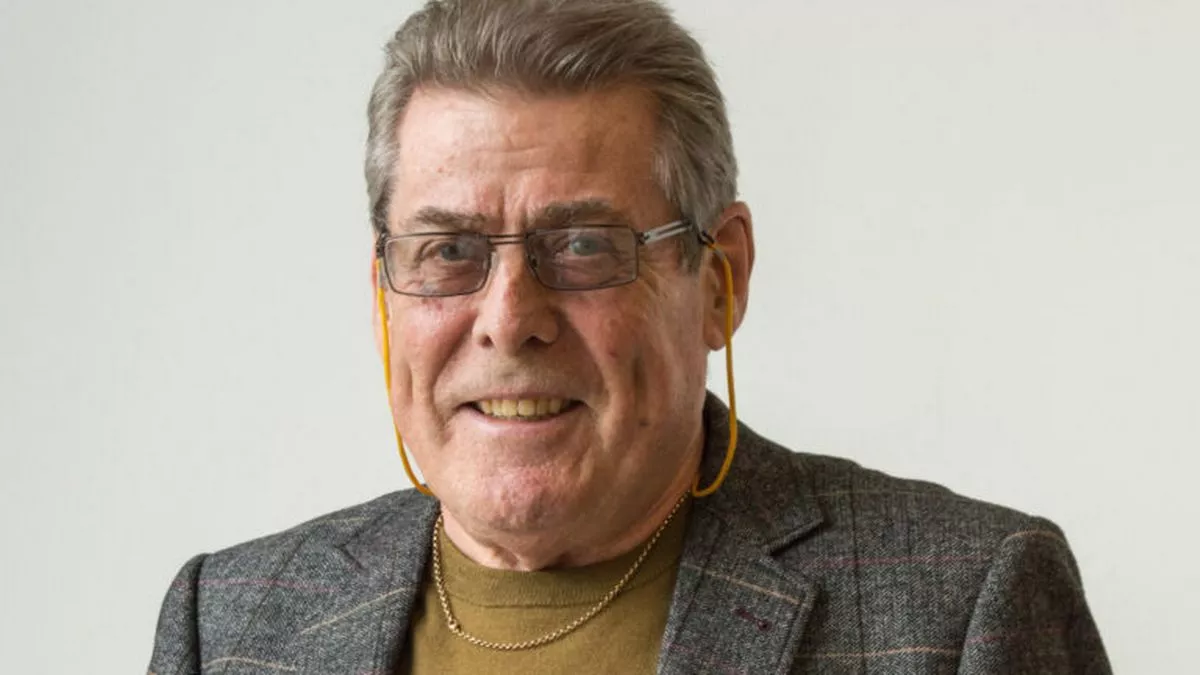
Ian Bond was a lifelong smoker before giving up 15 years ago. Shortly afterwards he was diagnosed with the lung condition Chronic Obstructive Pulmonary Disease (COPD). In a bid to better manage his condition he developed a series of digital self-management tools and went on to form Bond Digital Health, which is based in Cardiff Bay. 

To mark World No Tobacco Day, which this year focuses on the impact of tobacco smoking on lung health, Ian wrote a blog for us about how he finally gave up smoking.


Different Generation

I’m one of the older generation that was born into a smoking world. Literally. The midwife smoked I’m told, certainly both my parents did. In fact, pretty well everyone smoked in those days. You were a bit odd if you didn’t.

Smoking was recommended for nursing mothers, people were told it was good to help clear the lungs in the morning, it was said to quiet the nerves. Film stars and public figures posed seductively with cigarettes. The ads, the packaging, the ethos – it was all so cleverly managed.

So with the world subtly manipulated, generations of people ruined their lungs and lives to pour fortunes into the pockets of the tobacco barons.

Smoking was as ordinary as eating and breathing, you just did it. And felt good doing it.

Until of course the coughing got worse, the breathing laboured and the promise to give up was made.

I can’t remember how many times I tried to stop smoking. Every time I did however it became a battle between the desire to give up and the desire for a cigarette. That battle took place in my head and every time I backslid, I felt depressed and beaten and often smoked more as the smoker in me took revenge.

It was beating me, tormenting me and I recall looking at a cigarette at one point and asked myself ‘is this the one that is going to kill me?’

It Was Just ‘Trying’

The light bulb moment that saved my life came when I realised that when I was trying, even really trying, even really really trying, that’s all it was – trying…

…and trying almost by definition means there is a place for failure.

I had to stop trying and stop smoking. I went to bed that night, after a last late-night cigarette but with a decision made; and got up a confirmed non-smoker. There were the urges as I felt the need with a coffee, after a meal, throughout the next day and the next but my defences were up and the fight was less. I wasn’t ‘trying’ to give up any more and going through that turmoil of wavering, temptation, wanting just one to help on the way. No, I had stopped smoking. I won over my myself and my habit. I haven’t smoked for 15 years or so.

You won’t be surprised to learn that I had a diagnosis of COPD (chronic obstructive pulmonary disease) soon afterwards but, as a non-smoker, I could manage my condition with some meds and that last cigarette didn’t kill me.

The Benefits

With good medication and self management I’ll live a decent life. Did I enjoy smoking? Maybe in the early years, but then it was simply a habit. I was responding to some weird mental urge built from life long habit. What I really enjoy are the benefits of not smoking. The smell of good food, clean air, fresh clothing, extra cash and to be able to kiss my grandchildren without them cringing.

Another outcome came from wanting to learn about my condition and find ways of using detailed records to produce useful data for evidence with lung specialists.

This led to the development of digital self-management tools which, with a colleague, grew into a thriving business. Soon these tools will be available for a range of lung diseases and other conditions which come with age and smoking. We have got a great team of 10 working enthusiastically on many projects to improve the health of the community and our first will be launched next year and given free to NHS Wales for all COPD patients.

So, something good came out it after all.

Primary School Parents Quit Smoking Thanks to ‘Pupil Power’

The headteacher of a school where up to two thirds of children live with somebody who smokes, has stepped in to help parents quit the habit.

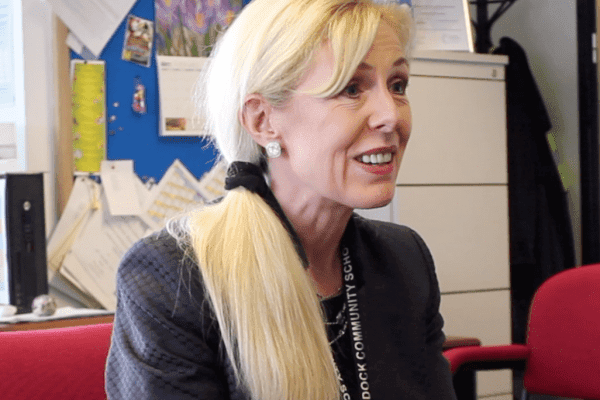
Michele Thomas, head teacher of Pembroke Dock Community School, became so concerned about the numbers of parents smoking that she decided to host stop smoking sessions at the school after Hywel Dda’s Help Me Quit Team and her local community pharmacy got in touch with the idea.

They had identified Pembroke Dock as an area of high smoking prevalence but realised that it was a challenge for smokers with young children to get to smoking cessation clinics.  To solve the problem, they offered to hold sessions at the school after the morning drop off.

The project started with Public Health Wales giving lessons to the children about the dangers of smoking and the positive benefits of quitting, including having more money to spend.

And it was the news that if their parents gave up smoking, they’d save £1,000 to spend on Christmas presents that really got the children fired up about asking them to quit.

Using Pupil Power

“We wanted to use pupil power,” explained Mrs Thomas.  “So, we held an assembly for the children and said if your parents or someone that you know gave up, they’d have £1,000 to spend on you for Christmas. They were all very keen in getting the people that they knew involved in giving up. And many children left that day saying, ‘I know who I’m going to be speaking to’.

The children were given a letter to take home inviting their parents to attend a smoking cessation group run by Help Me Quit. Nine parents signed up and by the end of the 6-week course 40% of them had successfully quit smoking thanks to support from community pharmacist Dave Edwards, who provided nicotine replacement therapy, and the Help Me Quit cessation advisor.

Inspiring Mums

One of the parents taking part was mum of three Kristy Briggs, who also works at the school as a teaching assistant. Before attending the sessions, she smoked up to 15 cigarettes a day having started ten years ago. Since giving up she has taken up running and says the support provided by the Help Me Quit advisors was invaluable: “They were just so supportive. It was saying how proud they were of you and they made you feel really welcome.

“Every week then we’d be welcomed, we’d be made a cup of coffee, we’d sit down, we’d have a chat, they’d ask how I was getting on, and whether there were any times I’d find difficult.  They’d give us ideas on what to do.

“I started off with the inhaler and the patches and within about three weeks I decided I didn’t want the patches anymore.  And I came off it really quickly. I took up running and I did enjoy doing that. And each week as I give up smoking, I noticed I was running further, I wasn’t getting out of breath as quickly.  It was really good.”

Getting The Word Out

Cath Einon, from Help Me Quit – Hospital Service,  came up with the idea of running lessons on smoking for the children before inviting the parents to take part. She said the children did an incredible job of spreading the word about the benefits of quitting smoking among the wider community:

“We encouraged them to talk to those people at home, so their care givers, their parents and their grandparents to say, ‘why don’t you come and speak to somebody’. We noticed there was a knock- on effect in the local services, so the people accessing services in the surrounding area had mentioned that the reason they had come was that their grandchildren or whoever had asked them to give up smoking. So, I think the nagging of the children on grandparents and friends and family has had a real impact on the wider community as well.”

It was the sheer number of parents at the school who smoked that prompted Mrs Thomas to organise the sessions and she admits that she’d underestimated the scale of the problem:

“I underestimated actually about the percentage of people who smoked. When I popped in to observe the lessons going on, and when they asked the children how many children had somebody in their house who smoke or in their family who smoke about two thirds of the class had their hands up. I was really quite shocked as to the high numbers.”

Having seen the success of the scheme Mrs Thomas now hopes to hold further sessions at the school and for it to be a rolling programme that parents can return to even if they fall off the wagon and start smoking again. And she says it’s not just the parents who have benefited from the project, describing it as a great learning experience for the children and one that she hopes, will stop them from taking up the habit themselves.

“It was a good educational opportunity.  They learnt all about the dangers of smoking, of passive smoking as well, they learnt about the law and also about the costs so I think it was a good learning experience and hopefully a motivator in the future for them not to take it up.”

Thinking Out The Box

Suzanne Cass is CEO of tobacco control group ASH Wales. She praised the innovative nature of the scheme and said more needs to be done across Wales to make stop smoking services more accessible to smokers:

“This is an excellent example of how stop smoking services can be provided within a community setting in an area of high smoking prevalence. Across Wales there is support available for smokers who want to quit, however the numbers accessing the services are low. Just 3.1% of smokers in Wales accessed NHS smoking cessation services in 2017/18, despite NHS Wales figures showing that two in three smokers in Wales want to quit.

“It is time to think outside the box and come up with new ways of bringing cessation services to the smoker. Community settings, schools and workplaces are just some examples of how this can be done, as this project has shown.”

https://youtu.be/ehb6RZG9PK4