




Ten facts about second-hand smoke

Second-hand smoke (also known as passive smoke) is one of the biggest causes of lung cancer in people who have never smoked, according to an article published in the Journal of the Royal Society of Medicine. If you’re a smoker, you’re not only putting your own health at risk, but also the health of your family, friends and even pets. Creating a smoke-free environment is essential for reducing harm and moving towards a healthier, smokefree Wales.

To help motivate you to quit smoking, here are 10 crucial facts about the dangers of second-hand smoke:

#1 Toxic Cocktail

Every cigarette contains over 4,000 chemicals, with at least 50 known cancer-causing agents. These carcinogens linger in second-hand smoke, endangering anyone who inhales it.

#2 Increased Cancer and Heart Disease Risks

Exposure to other people’s smoke increases a non-smoker’s risk of lung cancer by 20–30% and coronary heart disease by 25–35%. This was highlighted in a report by the International Agency for Research on Cancer (IARC).

#3 Harm to Infants and Children

Young infants exposed to second-hand smoke face a 50% greater risk of lower respiratory tract infections such as flu, bronchitis and pneumonia. Exposure also more than doubles a child’s likelihood of developing invasive meningococcal disease. In Wales and beyond, children deserve the best start in life—smoke-free homes are a vital step towards achieving this.

#4 Invisible but Deadly

Did you know that 80% of cigarette smoke is invisible? It can linger in the air for up to four hours after a cigarette has been stubbed out, allowing toxic chemicals to spread throughout the home.

#5 Toxic Particles Spread Easily

Smoke particles are smaller than dust particles and travel effortlessly from room to room, carrying harmful toxins with them. This makes it nearly impossible to contain second-hand smoke in one area of your home.

#6 No Safe Way to Smoke Indoors

Opening windows, switching on extractor fans or using air purifiers won’t protect others from second-hand smoke. The only reliable way to safeguard those you care about is to smoke entirely outside the home and firmly close the door behind you.

#7 Heightened Risks for Children’s Health

Children face the greatest risks because their lungs and immune systems are still developing. Those exposed to second-hand smoke may suffer from more frequent coughs, colds, ear infections, chest infections and reduced lung function—problems that can follow them into adulthood.

#8 Smoke Drift Affects Neighbours

Indirect second-hand smoke, known as smoke drift, can easily reach neighbouring homes, especially in densely populated areas. This can adversely affect neighbours’ quality of life, causing eye irritation, breathing difficulties, nausea and headaches, undermining community wellbeing.

#9 Pets Are Vulnerable Too

Even your beloved pets aren’t safe. Animals living with smokers inhale harmful smoke and ingest toxic particles clinging to their fur, increasing their risk of cancer, respiratory problems, cell damage and weight gain. Dogs, cats, rabbits, birds, and even goldfish can suffer from the effects of second-hand smoke.

#10 The NHS Bears the Burden

Across the UK, passive smoking leads to around 9,500 hospital admissions every year, costing the NHS approximately £23.3 million. Reducing second-hand smoke helps ease pressure on our healthcare system, supporting a healthier future for everyone in Wales and beyond.

It’s Time to Quit Smoking and Protect Your Community

Every step towards a smoke-free environment matters. By quitting smoking, you’ll not only improve your own health but also protect your loved ones, neighbours, and pets. Help is available, including expert advice, support services and treatment options tailored to people in Wales. Together, we can work towards a healthier, smokefree Wales.

Click here to visit Help Me Quit Wales for free advice and support

E-cigarettes – facts and fiction

Misconceptions about e-cigarettes prevent many smokers from using them to give up smoking.  To help smokers to make a more informed decision we’ve discovered the truth behind five common e-cigarette myths

# Myth 1:

E-cigarettes are more harmful than smoking tobacco cigarettes  

According to ASH Wales’ latest YouGov stats, over 50% of smokers in Wales do not know that e-cigarettes are less harmful than tobacco cigarettes. Meanwhile, surveys carried out by Public Health England found that nearly half of the population don’t realise that e-cigarettes are less harmful than smoking. Although there are no studies currently available of the long-term effects of e-cigarettes, the current evidence that is available indicates that e-cigarettes are significantly less harmful than smoking tobacco.  Indeed, an expert independent evidence review published by Public Health England found that e-cigarettes are in fact 95% less harmful than smoking.

# Myth 2:

E-cigarettes encourage young people to start smoking  

Fears that  e-cigarette use would encourage young people to start thinking smoking is ‘normal’ have been shown to be unfounded. A study of 248,324 teenagers by researchers at Cardiff University found that young people’s attitudes towards smoking tobacco have become more negative since the emergence of e-cigarettes.  Meanwhile the percentage of young people who reported having tried smoking continued to fall during the same period. According to the research, the percentage of young people who thought trying out smoking a cigarette was ‘ok’ fell from 70% in 1999 to 27% in 2015.  This rate went down faster from 2011 onwards, during which time there was a surge in the numbers of people trying e-cigarettes

# Myth 3:

Smoking e-cigarettes is harmful because they contain nicotine  

According to Public Health England, 4 out of 10 smokers think it’s the nicotine in cigarettes that causes smoking-related cancer. It’s true that nicotine is highly addictive, however it is only carries a minimal risk to health.  Actually it is the other chemicals contained in cigarettes that cause cancer not nicotine. And unlike cigarette smoke, e-cigarette vapour doesn’t contain tar or carbon monoxide, two of the most harmful elements in tobacco smoke.

# Myth 4:

E-cigarettes won’t help you to stop smoking  

A major UK clinical trial involving 900 participants and funded by the National Institute for Health Research (NIHR), found that when combined with expert face to face support, e-cigarettes are almost twice as effective at helping smokers to quit as other nicotine replacement therapy such as patches and gum.  Two groups of quitters were tested and those that combined e-cigarette use with behavioural support, also had far faster reductions in coughs and phlegm. It is recommended that e-cigarettes should only be used as a way of quitting smoking and ideally e-cigarette users should gradually reduce the amount of nicotine they are using until they are able to stop vaping altogether.

# Myth 5:

E-cigarettes are not properly regulated  

E-cigarettes are strictly regulated in the UK and must meet minimum standards of quality and safety as set out in the Tobacco and Related Products Regulations 2016.  Regulations cover not only the ingredients used to make the products but also packaging and labeling requirements.  Manufacturers must notify the UK Medicines and Healthcare products Regulatory Agency about any products they make, listing all the ingredients they contain.

Campaign to stop parents from smoking on the sidelines kicks off with live ITV Wales broadcast

A campaign to stop parents from smoking on the sidelines at children’s football games, kicked off with a live broadcast from ITV Wales.

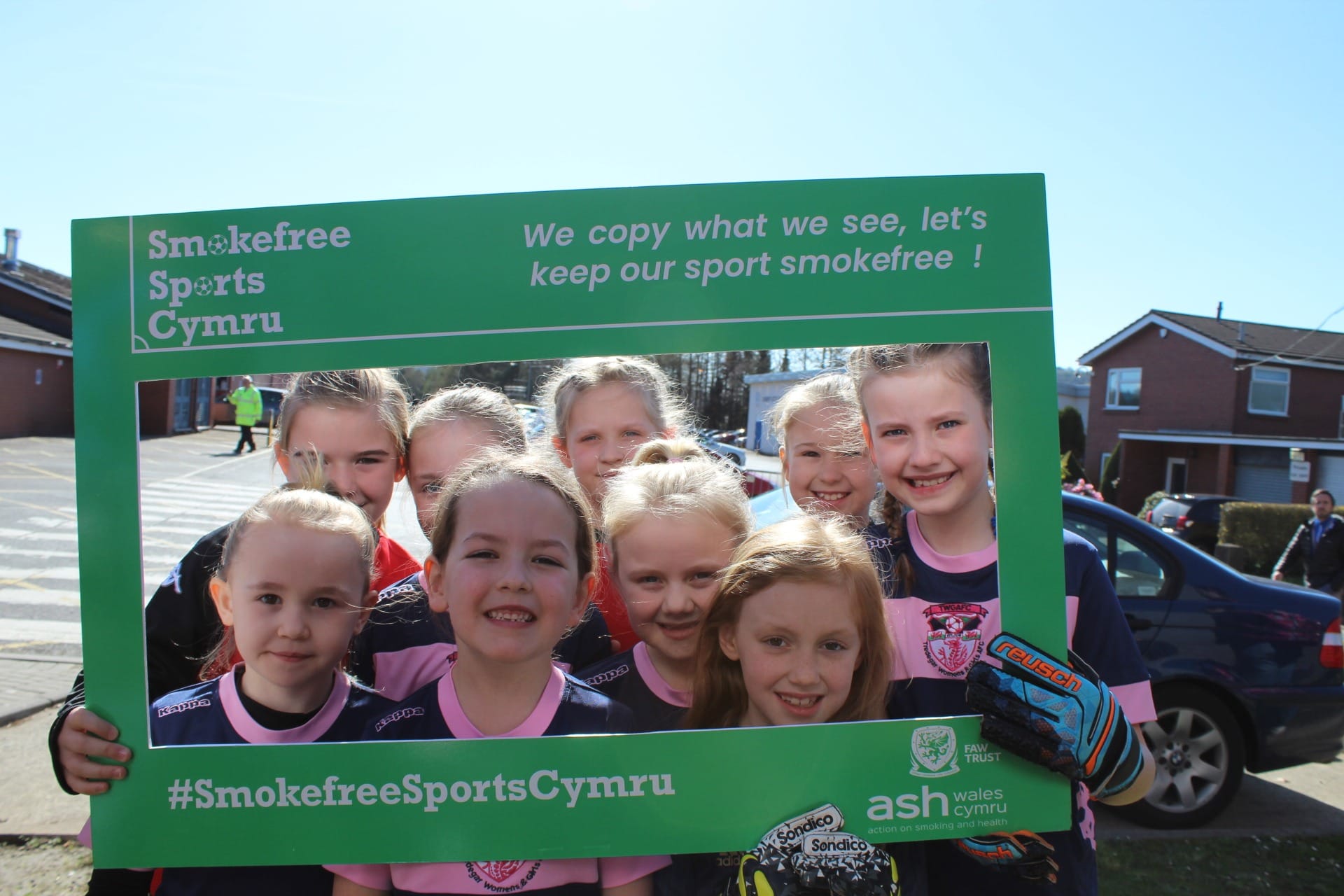
ASH Wales joined forces with the Football Association of Wales (FAW) Trust for the pilot project which will see smoking banned at Rhondda & District Football League’s mini and junior football games and at the South Wales Women’ and Girl’s League games in the Rhondda.

The project was launched at a Ton and Gelli Boys and Girls Club training session in Pentre, and ITV Wales broadcast live from the event for the ITV Wales News at Six.

Speaking at the launch, Gavin Elliott who is the RDFL’s club secretary, said he was “over the moon” that the league had been chosen for the pilot project:

“I think it’s great because I’m an ex-smoker myself and I’ve seen first hand the effects that smoking can have on a family because my father was a smoker.

“If children see smoking around them from a young age then they grow up thinking it’s an acceptable thing to do.

“When I found out about the project, I was over the moon really. It’s a fantastic for the Rhondda League that we’re going to be providing a healthy environment for the kids to play in.”

The aim of the project is to encourage parents watching the games from the sidelines not to smoke in a bid to reduce children’s exposure to second hand smoke, but also to de-normalise smoking in the eyes of youngsters.

Smoking rates in the Rhondda where the launch took place are among 20% of the adult population and feedback gathered by ASH Wales shows that parents smoking on the side lines is a problem faced by many clubs.

Caroline Spanton, is Head of Football Development at the FAW Trust. She said:

“This is all about trying to create a positive environment for young people to enjoy and thrive in their sport.

“It’s critical for young people to have positive role models in their lives and parents have a huge influence on their children. If we can prevent children from seeing smoking as the norm, it could make a real difference.”

If the project is successful ASH Wales hopes to roll it out to other youth sport teams across Wales.

Parents urged to stop smoking on the side lines as charity teams up with the Football Association of Wales for Smokefree Sports campaign

ASH Wales has joined forces with the Football Association of Wales (FAW) Trust to stop parents from smoking on the side lines at children’s games.

To kick off the campaign, ASH Wales and FAW have launched a pilot project which will see smoking banned at Rhondda & District Football League’s mini and junior football games and at the South Wales Women’s and Girls’ League junior games in the Rhondda area. And if it is successful, ASH Wales hopes to roll it out to youth football teams across Wales, following the success of a similar campaign in Norfolk.

The aim of the project is to encourage parents watching the games from the side lines not to smoke, in a bid to reduce children’s exposure to second hand smoke, but also de-normalise smoking in the eyes of youngsters.
Research has shown that children exposed to smoking are significantly more likely to smoke themselves. Currently in Wales a classroom of children starts smoking every day and 66% of smokers in Wales start before the age of 18.

Smoking rates in the Rhondda district, where the games will take place, are among the highest in Wales at 20% of the adult population. Initial feedback gathered by ASH Wales shows that parents smoking on the side lines is a problem faced by many clubs, particularly in Wales’ most deprived communities where smoking prevalence stands at 28% compared to 13% in the most affluent areas.

As well as spectators being encouraged not to smoke during training sessions and matches, there will be smoking cessation information made available to parents. Suzanne Cass, CEO of ASH Wales, said:

“Our Smokefree Sports campaign aims to get the message across to parents and young people about the harms of second-hand smoke and the importance of de-normalising smoking.
“Working with FAW Trust we have a fantastic opportunity to spread our message to hundreds of parents and their children in an environment which already promotes healthy behaviour.
“Children copy what they see and are highly influenced by the behaviour of their parents and carers, so asking parents not to smoke on the side lines can determine whether young people become smokers themselves in later life.”

From fag to fork – how smoking affects your diet and nutrition

Smoking affects your appetite, sense of taste and smell and ability to absorb vital nutrients. To explain why we’ve answered your questions about the impact of smoking on diet and nutrition.

Why can’t I taste my food properly anymore? Smoking a cigarette fills your brain with nicotine which affects your ability to taste flavours in your food. Meanwhile the body’s oxygen supply is reduced which leads to a dulling of flavours in the mouth.

Will smoking affect my sense of smell too? If you’re a regular smoker it’s likely that your sense of smell will take a hit. This is because smoking irritates the nasal passages and causes them to become inflamed. This will affect your sense of smell and you may find you lose enjoyment in your favourite foods.


I don’t have much of an appetite, even for my favourite foods. Is this because I smoke? Smoking will suppress your appetite because of the effects of nicotine on the brain and the nervous system. This could lead you to have a more restricted diet which may affect your health.

If I eat a healthy diet, I’ll be ok though, right? No, not necessarily. Smoking affects the body’s ability to absorb and retain a range of essential vitamins and minerals including vitamins C and D and calcium. Vitamin C is one of the body’s main antioxidants, which means it helps to prevent a number of diseases. It also helps you to absorb iron. A low level of vitamin C can cause vitamin deficiency. Meanwhile low levels of calcium can lead to an increased risk of osteoporosis.
Even if you take a vitamin C supplement and increase your intake of calcium, fruit and vegetables you cannot protect your body from the cell damage caused by smoking, which leads to diseases such as cancer, coronary heart disease and respiratory disorders such as chronic obstructive pulmonary disease.

If I stop smoking, will that help? Yes! Within just 48 hours of quitting smoking, the carbon monoxide and nicotine within your body will have been eliminated and your sense of taste and appetite will start to return. Your body’s ability to absorb and retain essential vitamins and minerals will improve and you will once again be able to smell the roses!

Quitting smoking can be challenging, however there is plenty of free support available to help you on your journey to a smoke-free life. Contact  Help Me Quit on 0800 085 2219.

ASH Wales welcomes study showing e-cigarettes have not made teens think smoking is ‘OK’

Fears that the rise in e-cigarette use would lead to young people thinking smoking is ‘normal’ are unfounded, according to a study of 248,324 teens carried out by researchers at Cardiff University.

Their research, published in the Tobacco Control Journal, was based on three national surveys of 13 to 15-year-olds from Wales, England and Scotland. ASH Wales, believes e-cigarettes have a crucial role to play in reducing smoking prevalence in Wales and has welcomed these latest developments.

The study funded by the National Institute for Health Research (NIHR), found young people’s attitudes towards smoking tobacco have become more negative since the emergence of e-cigarettes. Meanwhile the percentage of young people who reported having tried smoking continued to fall during the same period.

.

According to the research the percentage of young people who thought trying out smoking a cigarette was ‘OK’ fell from 70% in 1999 to 27% in 2015. This rate declined faster from 2011 onwards, during which time there was a surge in the numbers of people trying e-cigarettes.

Suzanne Cass is CEO of ASH Wales. She said: “Since the emergence of e-cigarettes there have been concerns they would make smoking seem ‘normal’, particularly amongst young people and this study has proved those fears unfounded.

“Thanks to this study, we now know there is no link between e-cigarettes and the so-called ‘renormalisation’ of smoking among teenagers.

“These results also show just how effective tobacco control policies and public health campaigns have been in changing young people’s attitudes towards smoking. What was once seen as a normal part of daily life and a lifestyle choice, is now perceived by many teens for what it really is – a powerful addiction that destroys lives, leading to devastating health conditions.

“We welcome the results of the study and hope this will strengthen the case for e-cigarettes to be considered a highly effective smoking cessation tool and a far safer alternative to smoking tobacco, rather than the first step to becoming a smoker.”

ASH Wales continues to campaign for policies aimed at de-normalising smoking in the eyes of young people. Successes have included the launch of a Smokefree Sports campaign, the banning of smoking at school gates across Wales and campaigns for smokefree university campuses.

The landscape in which e-cigarettes are sold and used is continually changing and ASH Wales believes there needs to be continual assessment of how this affects young people