



10 years of the smoking ban – what’s changed in Wales?

Today (Sunday 2nd April) marks 10 years since the ground-breaking legislation banning smoking in enclosed public places came into force across Wales.

The hotly debated ban has helped to drastically bring down smoking rates among adults and teenagers alike and saved thousands from the harms of a product which kills 1 in 2 of its long-term users.

In 2007, 24% of adults in Wales smoked now levels stand at 19% – over 94,000 less smokers. The stats are even greater when it comes to teens, with smoking rates reduced by 6% for boys and 14% for girls respectively.

A major cultural shift has taken place over the past decade. A vast decrease in the numbers of those who smoke in the home, from 80% to 46% since the ban’s implementation, suggests a better awareness of the dangers of second-hand smoke, especially around children and families.

Chief executive of tobacco control campaign charity ASH Wales, Suzanne Cass, said: “The smoking ban has resulted in the most positive improvement in the nation’s health in decades. The significance of this legislation should not be underestimated. Thousands more children now live in a smokefree home, and hundreds of thousands of people are no longer subjected to the deadly effects of passive smoking.”

There is clear evidence smokers no longer feel as comfortable smoking around others – the number of people smoking in their own home has almost halved since the ban came into place. It is fantastic to see the message about the dangers of smoking, especially around children, is being heard.”

The hidden threat from second-hand smoke, especially for workers in the leisure industry such as pubs and clubs, was cited as one of the major reasons for bringing in the indoor smoking ban. The World Health Organisation says more than 80% of cigarette smoke is invisible and odourless, and there is no safe level of second-hand smoke exposure.

There continues to be strong support for the smoking ban in Wales, with 81% of people in support of the smokefree legislation. Notably three quarters of smokers are in favour of the ban.

Despite the huge steps forward, ASH Wales believes there are still more changes to be had. Suzanne continued; “Smoking rates have dropped for most of the population except among the unemployed where they’ve in fact increased from 41% to 43%. This shows the stop smoking message still isn’t engaging these ‘hard-to-reach’ people and the health inequalities gap between the ‘haves’ and the ‘have nots’ in Wales in increasing.”

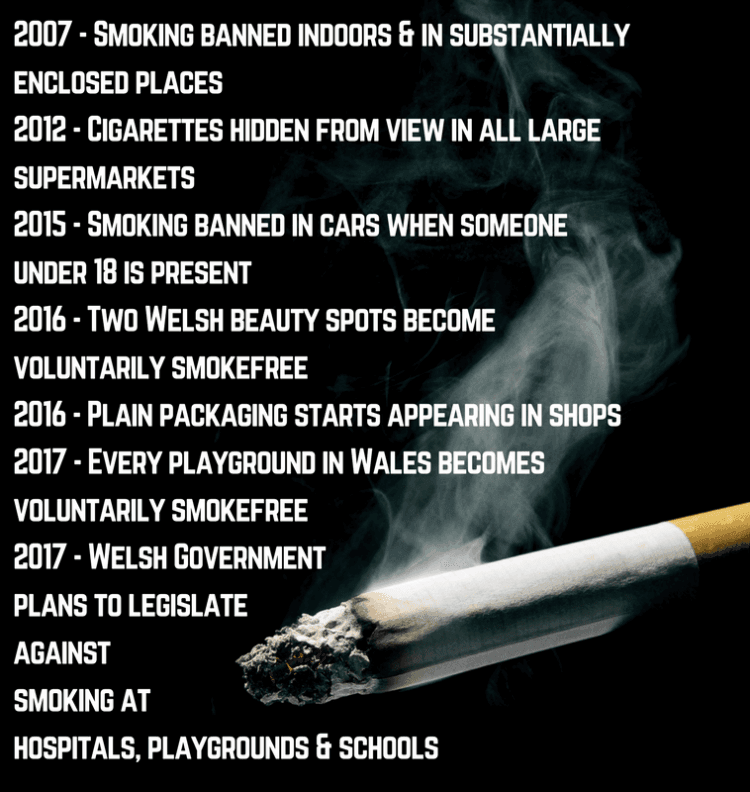
Substantial laws and voluntary bans have come into force in Wales over the past decade since the implementation of the smokefree legislation…

2007

  • 24% of people smoke in Wales
  • The age limit to buy tobacco is raised to 18 from 16

2012

2015

2016

2017

  • 19% of people smoke in Wales
  • Welsh Government plans to legislate against smoking on hospital groundsschool grounds and at children’s playgrounds
  • 11 Welsh local authorities voluntarily make their primary school gates ‘no smoking’ areas
  • Packs of 10 are no longer on sale

E-cigarettes “Not a Pathway to Smoking” for Young People – ASH Wales Welcomes Report Findings

Wales’s leading tobacco control action group, ASH Wales, welcomes new research into the prevalence and frequency of e-cigarette use among young people in Wales.

This latest study – released yesterday by Cardiff University’s Centre for the Development and Evaluation of Complex Interventions for Public Health Improvement ‘DECIPHer’ unit – surveyed 32,479 secondary school pupils from across Wales.

Despite the research reporting an increase in usage among young people, the report also showed e-cigarettes are not providing a new pathway into smoking.

The number of young, regular smokers has been falling year-on-year and rates now stand at around 8% for 15 and 16 year olds in Wales. From the evidence gathered, the increasing use of e-cigarettes does not appear to have led to an increase in the number of young people smoking.

E-cigarettes are the number one cessation tool for adults who are trying to give up smoking and ASH Wales would encourage anyone who is addicted to tobacco to try switching to an e-cigarette. ASH Wales views e-cigarettes solely as a smoking cessation aid and strongly discourage their use recreationally, particularly among young people and never smokers.

We are aware from our own work with young people that there are increasing numbers experimenting with e-cigarettes and this is something that needs to be monitored. Evidence to date suggested that regular use among never and non-smokers is very low, a finding confirmed by the study which states that just one in 100 never and non-smokers regularly used an e-cigarette.

ASH Wales has been working with young smokers across Wales for the past five years, helping hundreds to quit smoking and some to never start. Since January 2016, more than 380 young people in Wales have asked for our support to help them quit smoking.

ASH Wales youth worker, Andrew Foster, said: “We’ve encountered a number of young people who are not cigarette smokers but use e-cigarettes just because they see it as the next big trend – they’re initially attracted by the plumes they can make and the different flavours. Young people see e-cigarettes as the latest ‘fad’ item rather than anything related to smoking. We are also starting to see that e-cigarettes play a role with being accepted into traditional social groups of smokers, in the sense that it is a must-have object even for smokers who are not necessarily using the device to help them to quit smoking.”

ASH Wales is committed to reviewing the evidence and welcomes further research on e-cigarette usage and their long term effects. ASH Wales provides evidenced-based direction and support to help reduce smoking prevalence in Wales.

Bridgend Primary School Gates Become No Smoking Zones

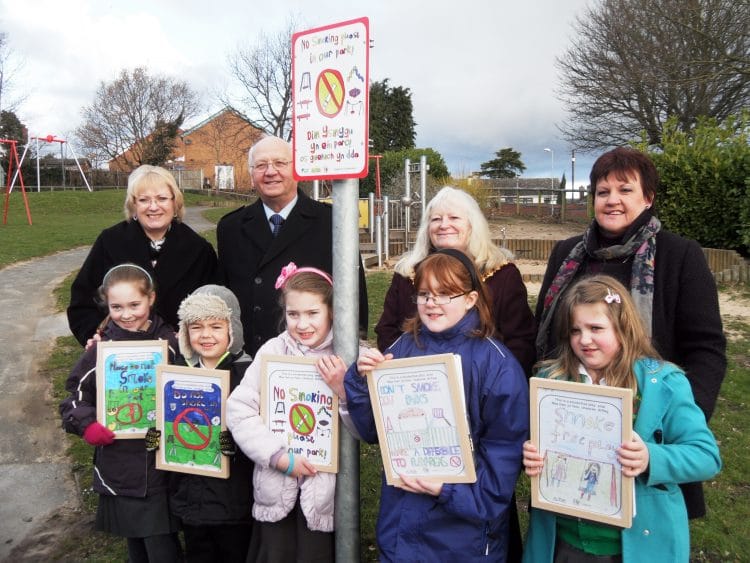
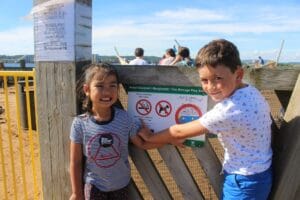
Smokers are being asked to keep their habit away from the gates of every primary school in Bridgend as they are declared no smoking zones.

Garth Primary School will officially launch the initiative today (Tuesday 14th February), with all primary schools across the county following suit. Bridgend is the latest local authority in Wales to join the ASH Wales’s campaign to make all primary school gates smokefree zones.

Research shows young people are highly influenced by others smoking around them – those with a parent who smokes are 70% more likely to take up the habit.

Smokefree areas also protect from second-hand smoke whilst ‘denormalising’ the deadly habit. Almost half of long-term smokers begin smoking before leaving high school and among children who try smoking around a third become regular smokers within 3 years.

Tobacco control charity, ASH Wales Cymru, has been lobbying schools across Wales to ban smoking at their gates and has produced guidelines and signage to support schools wanting to take part.

Suzanne Cass, Chief Executive of ASH Wales Cymru, said:

“Smoking in areas which are created specifically for our young people sends them the completely incorrect message that tobacco is a harmless part of everyday life rather than a deadly and addictive drug. It is essential we set positive examples wherever we can – we do not want our country’s next generation to be the tobacco industry’s next customers.”

Suzanne continued,

“We believe children and young people have a right to get an education, play and meet their friends in a clean, smokefree environment. Banning smoking at playgrounds and now school gates is a huge step in the right direction.”

Julie Thomas, Head Teacher of Garth Primary School, said:

“We were delighted to have been asked to host the launch of the ‘Smoke Free School Gates’ initiative on behalf of Bridgend schools.”

“At Garth Primary School, we are passionate about improving the health and well-being of our pupils. As a ‘Rights Respecting’ school, we recognise that is our responsibility to ensure that children are protected from harm. The campaign will support us in our endeavours to develop resilient, informed and confident young citizens.”

ASH Wales Backs Child Health Experts Calls for More Smokefree Spaces

ASH Wales Cymru today welcomes the findings of the Royal College of Paediatrics and Child Health’s (RCPCH) ‘State of Child Health – Wales’ 

report and backs their calls for more smokefree spaces for young people.

Key findings see RCPCH calling for an extension of the ban on smoking in public places to all school grounds, sports fields and

playgrounds – something ASH Wales have long campaigned for.

ASH Wales has publicly supported plans to ban smoking in school grounds and playgrounds in the forthcoming Public Health Bill. However, the leading tobacco control campaign group also believes child-friendly areas such as sports grounds and beaches should be covered under the legislation.

The RCPCH also asks Public Health Wales to protect services which support pregnant women to stop smoking and to make sure the services are accessible to all. Much progress is required to reduce smoking prevalence among pregnant women in Wales with current rates far

too high, ranging from a low of 13.1% in Powys THB to a high of 24.4% in Cwm Taf UHB. Smoking postnatal is also an issue – 75% of women return to cigarettes within 1 year of giving birth. This itself represents a major problem due to the harms associated with second-hand smoke.

The report calls for action on smoking among young people, especially among girls from socio-economically deprived areas who are more likely to become mothers who smoke in later life. 7% of 15-year-old boys and 9% of girls currently smoke in Wales, which has bee

n a significant drop in recent years. Further tobacco control measures will reduce young people’s exposure to smoking and de-normalise the habit as an everyday activity.

Newport Secondary School Gates Become No Smoking Zones

Smokers are being asked to keep their habit away from the gates of secondary schools in Newport as the council launches a new plan to make their schools healthier.

Caerleon Comprehensive will be the first to officially declare its school gates a no smoking zone today (Thursday 24th November) as part of Newport’s wider healthy schools initiative.

Tobacco control charity, ASH Wales Cymru, has been lobbying schools across Wales to ban smoking at their gates and has produced guidelines and signage to support schools wanting to take part.

Every secondary school in the county will be asked to follow suit and implement the voluntary ban over the coming weeks. Primary schools in the area have already committed to smokefree gates with signage going up across the city.

Smokefree areas protect others from second-hand smoke and ‘denormalising’ the deadly habit.  Almost half of long-term smokers begin smoking before leaving high school and among children who try smoking around a third become regular smokers within 3 years.

Research shows young people are highly influenced by others smoking around them – those with a parent who smokes are 70% more likely to take up the habit. Banning smoking also helps to improve litter levels and the local environment.

Newport Cabinet Member for Education and Young People, Councillor Gail Giles, said: “I am pleased that schools in our local authority area have the chance to sign up to this initiative which highlights the harm smoking does to a person’s health. And it is great that Caerleon Comprehensive is the first secondary school in South Wales to do so. Anything we can do to encourage people not to smoke around their children, and particularly at the school gates is a good thing. We hope all schools across Newport will take up this voluntary code.”

Catherine Handley, assistant head teacher at Caerleon Comprehensive said: “We are delighted to take part in this initiative lead by ASH Wales. It is an important step forward in our work to promote Healthy Schools and raise awareness with young people of the health risks associated with smoking.”

Suzanne Cass, Chief Executive of ASH Wales Cymru said, “Smoking in areas which are created specifically for our young people sends them the completely incorrect message that tobacco is a harmless part of everyday life rather than a deadly and addictive drug. It is essential we set positive examples wherever we can – we do not want our country’s next generation to be the tobacco industry’s next customers.”

Suzanne continued, “We believe children and young people have a right to get an education, play and meet their friends in a clean, smokefree environment. Banning smoking at playgrounds and now school gates is a huge step in the right direction.”

Health Minister Celebrates Success of Quit Smoking Youth Service

Wales’ Social Services and Public Health Minister Rebecca Evans today joined teenagers at a skills centre in Cardiff to mark the success of ASH Wales’s unique quit-smoking service for young people.

Commit to Quit, an 8-week stop smoking course, has helped hundreds of young ‘hard-to-reach’ people to quit the habit. The Minister visited the latest eager recruits at Itec Training and Skills centre in Cardiff who are all trying to give up smoking.

This year over 300 young smokers from more than 30 sites across Wales have opted to take part in the Welsh Government-funded programme. The project has been a huge success with more than 50% of the young smokers who have completed the course managing to quit their deadly habit.

Smoking rates among Welsh teenagers are at an all-time low with 8% of boys and 9% of girls aged 15 and 16 saying they smoke regularly, but smoking rates in the more deprived areas of Wales remain stubbornly static.  Smoking is the biggest driver of health inequalities in Wales, especially as young smokers become addicted adults.

Smoking rates in the most deprived areas of Wales are significantly greater than in the more affluent – 29% of those classed as ‘most deprived’ smoke, compared to just 11% of those classed as ‘least deprived’. For example, smoking rates in Ceredigion and Pembrokeshire are as low as 16%, whereas in Blaenau Gwent 26% of residents are smokers.

The Minister for Social Services and Public Health, Rebecca Evans, said: “We have made excellent progress on tackling smoking here in Wales. Smoking rates are at their lowest ever levels – and crucially – fewer young people are taking up the habit.

“I am delighted the Welsh Government has been able to support Commit to Quit. The project is helping hundreds of young people quit smoking, which will have a positive effect on their future health and set them in good stead for the rest of their lives.”

Suzanne Cass, Chief Executive ASH Wales, said: “Commit to Quit is a successful and engaging project with the stats speaking for themselves.”

“Smoking is an addiction of childhood – two thirds of smokers took up the habit before the age of 18, and almost 40% already smoke regularly before the age of 16. If we can get young people to quit smoking before they reach adulthood then we are saving them from a lifetime of disease, illness and the high chance of premature death caused be a smoking-related disease.”

“This is a project the Welsh Government and the Health Minister can be immensely proud of. Because of the government’s commitment and funding we have been able offer young people the chance to make lifesaving lifestyle changes. These young smokers want and need our help and we are delighted we have been able to demonstrate what these young people are capable of.”

Funding for the programme runs for another year in which time ASH Wales is aiming to help and support hundreds more young smokers to quit. The Commit to Quit project is a free service and available to youth settings with groups of teenagers who want to quit smoking.