
Skip to content
Nicofiends activity

Power Play

A passing game where teams decide whether an easier way to score is worth taking a bigger risk.

What it explores

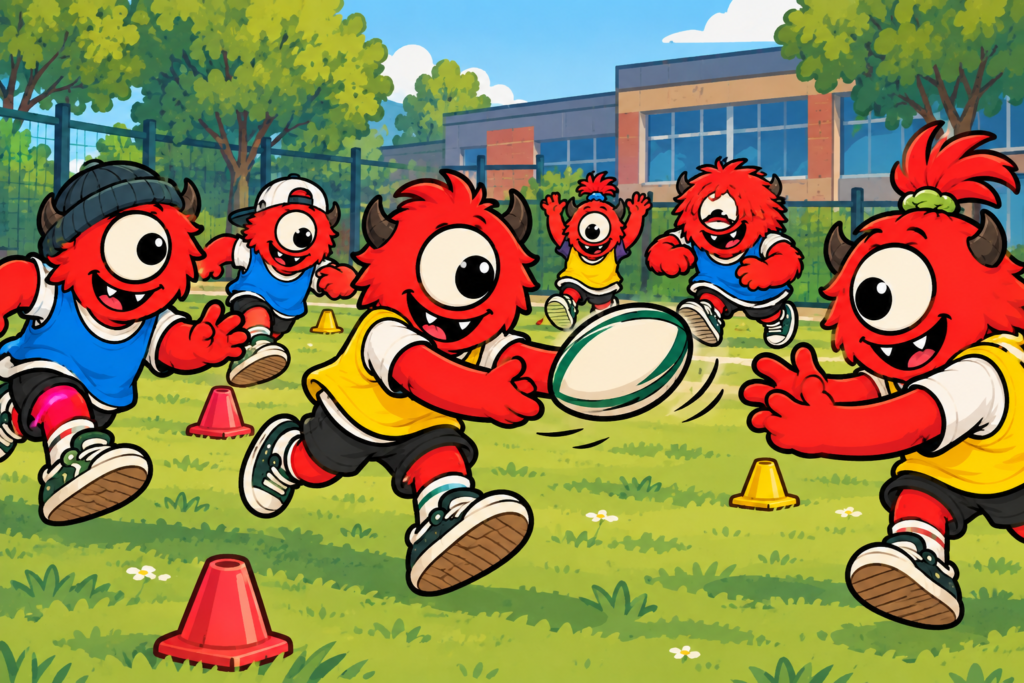
This team passing game explores why a quick advantage can feel tempting. Teams normally need five successful passes to score. Each team then receives one Power Play, which makes scoring easier but creates a bigger risk if possession is lost. Young people compare the attraction of an easier reward with the hidden cost attached to it.
Time
15 to 20 mins
Age
Ages 8 to 18
Setting
Sports Clubs, Youth group, Community setting
Group size
4 to 16 players

Activity at a glance

Best for

Tempting offers, hidden trade-offs, quick decisions and claims linked to confidence, calm, focus or performance.

You’ll need

Cones. Bibs. A ball. A few cones or counters for keeping score.

Key message

An offer can sound helpful without showing the full picture. Pause and check what the advantage may cost before deciding.

How to run it

  1. Mark out a small playing area and divide players into two teams.
  2. Keep a few cones or counters beside the coach to record points.
  3. Explain that this is a non-contact passing game.
  4. Players may move freely when they do not have the ball.
  5. A player holding the ball must stop and pass.
  6. Defenders cannot tackle, grab or make contact. They may only intercept the ball.
  7. Round one: Five successful passes in a row scores one point. If the ball is dropped, intercepted or leaves the playing area, possession passes to the other team. Play for a few minutes so players understand the normal scoring system.
  8. Round two: Give each team one Power Play token. Before starting a possession, the team captain may choose to use the Power Play. During that possession, three successful passes score one point instead of five. However, if the ball is dropped, intercepted or leaves the playing area, the other team scores one point. Once that possession ends, return to the normal rules.
  9. The team with the most points at the end wins.

Discussion prompts

  • Why did the Power Play feel tempting?
  • Did the easier score change how the team played?
  • Did the bigger risk make players more careful?
  • Was the quick advantage worth the possible cost?
  • What information would you want before accepting an offer like this?
  • Who benefits when something is presented as a quick solution?

Reflection

The Power Play offered a quicker route to scoring, but it changed the risk at the same time.

Some teams may have accepted it straight away. Others may have waited or decided that the possible reward was not worth the cost.

A tempting offer is easier to judge when people pause, ask what is missing and look beyond the first advantage.

Link To Smoking, Vaping or Nicotine

Nicotine products can be promoted as helping with confidence, calm, concentration, focus or sporting performance.

These messages may make a product sound useful, but they can leave out cravings, dependence, cost and the difficulty of stopping.

In the game, the Power Play looked like a quick advantage, but it came with a hidden trade-off. The same question can be asked about nicotine products: what is the message promising, and what has it left out?

Adapting the activity

Make it Easier

Use three successful passes for normal play and two passes during the Power Play.

Make the playing area larger.

Allow players more time with the ball.

Use a softer or larger ball.

Make it Harder

Use six successful passes for normal play and three during the Power Play.

Make the playing area smaller.

Give each team two different Power Play options with different hidden costs.

Ask teams to decide when to use their Power Play without being told the risk until after they accept it.

Safety Note

Keep the game non-contact.

Mark clear playing boundaries and stop play if the space becomes crowded.

Use a ball suitable for the age and confidence of the group.

Adapt movement, space and player roles so everyone can take part.

Keep discussion general. Do not suggest that nicotine improves sporting performance. Follow the setting’s safeguarding process if a young person shares a concern about nicotine use, unknown products or pressure from others.

Ready to Run The Acitvity

Download the activity PDF or go back to the resource hub to find another activity.

Help us improve Nicofiends

Used this activity?

Tell us how it went. It takes about a minute and helps us understand how Nicofiends is being used with young people across Wales.

Share feedback