

Survey of adults with lung conditions reveals 52% have tried to quit smoking during pandemic

ASH Wales has welcomed the news that in a survey by Asthma UK & British Lung Foundation Wales, more than half of respondents said they had tried to quit smoking since the start of the Covid-19 pandemic.

The charity surveyed 344 adults living in Wales, all of whom have an existing lung condition. The majority, 52%, said they had tried to quit smoking since the start of the pandemic – with 13% said they have successfully quit.

ASH Wales and Asthma UK & British Lung Foundation Wales have campaigned to raise awareness of the increased risk faced by smokers from the Covid-19 pandemic – particularly those with lung conditions.

According to medical experts, Smokers are more at risk from Covid-19 because they have weakened lung defences as a result of smoking, which damages the cells protecting their nose, upper and lower airways. Many also have existing lung and heart conditions due to smoking, and those also increase their risk from the virus.

Covid-19 has led to the biggest surge in smokers quitting in Wales since the 2007 smoking ban – with 33,000 Welsh smokers having given up since the pandemic hit according to analysis by ASH and University College London.

Suzanne Cass, CEO of ASH Wales, said: “We welcome the news that so many people with existing lung conditions have attempted to quit smoking since the start of the pandemic.

“The risks posed by Covid-19 have proven a wake-up call for many smokers, prompting hundreds to finally quit the habit. It is vitally important to tackle the stubbornly high smoking prevalence in Wales and we are calling for more targeted stop smoking services to help reach those that need it most.”

According to the research by Asthma UK & British Lung Foundation Wales , 22% of those who tried to quit sought NHS support, with the majority, 48% trying to quit on their own.

Research has shown that those who quit using a combination of stop smoking medication and behavioural support are three times more likely to give up for good.

Ms Cass added: “We know that quitting smoking using will power alone is very challenging and often results in smokers falling off the wagon.
“It’s really important for smokers to know that there is free support available to them that will make the process so much easier.”

Joseph Carter, Head of Asthma UK & British Lung Foundation Wales, said:

“It’s great to see that more and more smokers are becoming  aware of the negative effects it has on their health and are trying to quit.

“Those trying to quit will find a variety of help and support available to aid them on their journey. For example, NHS Wales’ fantastic Help Me Quit service – which provides tailored support and advice.

“There has never been a better time to quit smoking and doing so will help keep you and your loved ones safe. Please do give it a go and seek out support if you need it.”

33,000 Welsh smokers quit the habit since start of Covid-19 pandemic

33,000 Welsh smokers quit the habit since start of Covid-19 pandemic

Covid-19 has led to the biggest surge in smokers quitting in Wales since the 2007 smoking ban – with 33,000 Welsh smokers having given up since the pandemic hit.

According to analysis by ASH and University College London an estimated one million smokers in the UK have quit since the start of the outbreak, including 33,000 Welsh smokers.

Fears over the impact of the virus have been a major driver for those quitting, with 41% surveyed in the UK citing Covid-19 as their main reason for giving up.

Smokers are more at risk from Covid-19 because they have weakened lung defences as a result of smoking, which damages the cells protecting their nose, upper and lower airways. Many have existing lung and heart conditions caused by smoking that increase their risk from the virus.

ASH Wales joined other leading charities in welcoming the news and said the huge increase in smokers wanting to quit the habit meant it was more important than ever for Welsh Government to invest in stop smoking services and awareness campaigns to tackle smoking prevalence.  The latest figures from the National Survey for Wales had revealed that before the start of the pandemic, smoking prevalence in Wales rose to 18%, from 17% the previous year.

Suzanne Cass, CEO of ASH Wales, said: “What we’ve seen during the pandemic is a year’s worth of quitting figures in just four months.

“We know that smokers are at significantly higher risk from the Covid-19 virus, and we welcome the news that so many are quitting as a result.

“This presents an opportunity to tackle the stubbornly high smoking prevalence in Wales and it is crucially important that those smokers that do want to give up can access the smoking cessation support they need both to quit and to remain smoke-free.

“There is also a strong need to reach those smokers in deprived areas where smoking prevalence is highest, and health inequalities are greatest, with targeted community-based cessation support.

“We are calling for more funding for stop smoking services and awareness campaigns and to introduce tougher tobacco control policies and more smoke-free spaces that will de-normalise smoking and encourage more smokers to quit the habit. “

Joseph Carter, Head of Asthma UK and British Lung Foundation Wales, also welcomed the figures and called for a new strategy to tackle smoking prevalence in Wales:

“Smoking is still the biggest preventative cause of lung diseases such as COPD and lung cancer, so unless we tackle smoking, lives will continue to be affected by these conditions.

The news that 33,000 smokers in Wales have quit during the pandemic is deeply encouraging but to continue this progress, we need a new smoking and tobacco strategy with a target for a smoke-free nation by 2030.”

Last year ASH Wales joined forces with other leading charities to call on Welsh Government to set an endgame target to eradicate smoking in Wales. Currently there is a target to reduce smoking to 5% of the population in England by 2030 and to make Scotland smoke-free by 2034.

According to the latest ASH Wales YouGov survey, 68% of adults in Wales would support the setting of an endgame target to reduce smoking in Wales.

Andy Glyde, Public Affairs Manager for Cancer Research UK in Wales said:

“Smoking accounts for 3,000 cases of cancer each year in Wales and remains the most preventable cause of the disease. We have been calling for the Welsh Government to adopt a new target for a smoke-free Wales, where smoking rates drop to just 5% by 2030.

“To achieve this we need to see progress speed up, which will include more resources for smoking cessation services like Help Me Quit so it can support more smokers across Wales.”

Adam Fletcher Head of British Heart Foundation Cymru said: “Quitting smoking is the best thing you can do for your health and to protect the health of your heart. We want to see a clear commitment in Wales for a smoke-free target date of 2030 or earlier to ensure investment and action is taken to reduce smoking prevalence below 5%.

“Further investment in smoking cessation services and tobacco control policies is likely to be highly cost-effective for improving people’s health in Wales and reducing the burden of preventable disease on the NHS.”

Welsh Government proposals could see smoking banned outside pubs, cafes and restaurants

Smoking could be banned outsides pubs, cafes and restaurants, if new Welsh Government proposals get the go-ahead.

ASH Wales has welcomed the plans which would see tough new anti-smoking laws extended to the outdoor seating areas of pubs, cafes, bars and restaurants to protect non-smokers from the effects of second hand smoke. The move follows concerns that smoking and exposure to second hand smoke, puts people at higher risk of suffering more severe symptoms if they catch Covid-19.

The ban on smoking in the outdoor seating areas of pubs, cafes and restaurants could come into force during the next Senedd term if the proposals are given the go-ahead.

New legislation is being planned to come into force shortly and will ban smoking in the grounds of  hospitals and schools and in playgrounds under the the Public Health (Wales) Act in a bid to protect the public from second hand smoke and de-normalise smoking in the eyes of young people.

Research by ASH Wales has shown there is strong public support for the introduction of tougher measures to curb smoking in Wales. Its research has shown that 63% of adults support a smoking ban in the outdoor seating areas of restaurants and cafes and over half (59%) support a ban on smoking in town centres.

ASH Wales’ latest YouGov survey showed that 68% of people in Wales would support the setting of an endgame target to reduce smoking to less than 5% of the population by 2030.

Currently in Wales 17% of adults smoke, an estimated 440,000 adults, and 45% of smokers tried to quit last year.

Minister for Health and Social Services, Vaughan Gething, said:

“Our Tobacco Control Delivery Plan for Wales sets a clear vision for a smoke-free society in Wales in which the harm from tobacco is eradicated.

“We have begun the process of setting our priorities for post-2020 to further reduce smoking rates to achieve our aim of a smoke-free Wales and I remain committed to making more of Wales’ public spaces smoke-free.”

Suzanne Cass, CEO of ASH Wales, said: “In Wales, where 83% of the population don’t smoke, it is crucially important that we introduce measures both to protect non-smokers, but also to de-normalise this devastating addiction and encourage smokers to seek help to quit.

“As lockdown restrictions are lifted and customers, including families with young children, return to the outdoor areas of pubs, cafes and restaurants, it is more important than ever to ensure that staff and customers are protected from breathing in second hand smoke which we know carries significant health risks.”

Keir Lewis professor of respiratory medicine at Swansea University, said he welcomed the proposals and explained the risk of smoking in enclosed outdoor seating areas: ” We know there is a direct risk from inhaling second-hand smoke due to  the small particulate matter going into the lungs and making people more likely to suffer from respiratory symptoms and narrowing of their airways.

“Moreover, the closer you are standing to someone, the higher the exposure to these fumes and molecules and the higher this risk. This risk is especially highest for those working in the hospitality industry who are exposed to second hand smoke on a daily basis because the effects are cumulative, even if they are outside.

“Theoretically there is also an increased risk of smokers passing on Covid-19 because they cough more often and when people cough, we know the droplets spread further than two metres. There is also the risk that those exposed to second-hand smoke are more likely to cough and spread any of their droplets further.

“During these uncertain times, anything we can do in terms of reducing discomfort and risk to others and ourselves, without any harm to others- is a really good thing.”

Smokers are more at risk from Covid-19 because they have weakened lung defences as a results of smoking, which damages the cells protecting their nose, upper and lower airways. Many have existing lung and heart conditions caused by smoking that increase their risk from the virus. They also have more regular hand to mouth contact, giving more chances for picking up the virus.

Data from the COVID Symptom Study app involving more than 3 million people from the UK, Sweden and the US found that current smokers were 14% more likely to develop the three classic symptoms of Covid-19 infection – fever, persistent cough and shortness of breath – than non-smokers.

Smokers were also 29% more likely to report more than five symptoms associated with Covid-19 and 50% more likely to report more than 10, including loss of smell, skipping meals, tiredness, diarrhoea, confusion and muscle pain. In addition, smokers were more than twice as likely as non-smokers to end up in hospital with severe symptoms of Covid-19 having tested positive for the disease.

Animations created by Cardiff Met students reveal impact of cigarette butts on the environment

STUDENTS from Cardiff Met university have joined forces with ASH Wales to create animated films showing the devastating impact of cigarette butts on the environment.

The two chosen animations, which were created by Amabel Fry and Maja Risvoll, will be shared online and shown to school children across Wales, in a bid to raise awareness of the risks posed to marine wildlife from discarded cigarette butts.

ASH Wales approached the university for help over growing concerns about the scale of cigarette butt pollution in Wales, where 17% of the adult population smokes.

Every year 4.5 trillion cigarette butts are dropped across the world. In 2018 cigarette butts were found on more than 80% of streets in Wales. They contain a plastic called cellulose acetate which takes up to 15 years to biodegrade.

Cigarette butts are highly toxic and filled with tar and chemicals, including arsenic, lead and nicotine, that are released into the sea, poisoning marine wildlife. One cigarette butt left to soak in water for 96 hours will release enough toxins to kill half of the half or fresh water fish exposed to it. They are also swallowed by birds and small mammals, leading to poisoning, malnutrition and death.

ASH Wales has campaigned for the introduction of smoke-free spaces, resulting in the introduction of smoking bans at school gate across Wales, and smoke free beaches in Swansea and Pembrokeshire.

Suzanne Cass, ASH Wales CEO, said: “We very much hope that these animations will open people’s eyes to the fact that discarded cigarette butts are one of the prolific forms of plastic pollution in the world.

“They may be small but the damage cigarette butts cause to the environment is huge, poisoning waterways and killing wildlife every day.

“ASH Wales will continue to campaign for the introduction of more smoke-free spaces across Wales, not only to de-normalise smoking and protect others from second hand smoke, but to protect the environment and the marine eco-system.

“As lockdown restrictions ease and smokers return to beaches, parks and town centres, we would urge them to consider the devastating impact they could have on the environment, simply by dropping a cigarette butt on the floor.”

The photograph of the bird trying to feed its chick on a cigarette butt was described as heartbreaking ( Karen Mason/Facebook )

Despite growing awareness of the harms of plastic pollution, research has shown that few smokers know that discarded cigarette butts are bad for the environment.

A survey carried out by Keep Britain Tidy, found that less that half of smokers know that cigarettes contain plastic and one in 10 do not consider cigarette butts to be a form of litter.  Meanwhile 10% believe that cigarette butts are biodegradable.

Tom Edgar is animation lecturer at Cardiff Met.  He said:

“This term our Cardiff School of Art and Design (CSAD) BA Animation students embarked on their Live Brief with many of them eagerly choosing to work with ASH Wales on their #thebuttstopshere campaign to raise awareness around the issues of pollution from the careless discarding of cigarette butts.

“Two of our second year students, Amabel Fry and Maja Risvoll were selected for their ambitious animated films which help to make an important social message accessible and non-accusatory through film and image.We hope to further our successful relationship with ASH Wales on another campaign in the future.”

How I quit smoking during lockdown – Barry’s Story

Barry, from Swansea, planned to stop smoking once he retired earlier this year. What he didn’t anticipate was having to quit as the country saw itself transition into lockdown. Thankfully with support from NHS Wales Help Me Quit, he was finally able to conquer a 47 year addiction.  
I started smoking when I was 9 years old. I was the youngest in a group of friends who had already started smoking so peer pressure was a big part of it. My father and aunts and uncles also smoked so it seemed like the grown up thing to do. I began smoking more regularly when I was 14.

I decided to quit as I wanted to take early retirement and this would save about £100 per month. A friend I knew from the smoking shelter at work had a heart attack and died a day after I was talking with him and I was certain I didn’t want to go the same way.

I tried giving up initially 2 days after retiring but wasn’t ready. On the 29th March lockdown had started but I finally felt ready, so I smoked all the tobacco I had left and decided that was it.

Wales' NHS Stop Smoking Service - Help Me Quit

I had been advised not to go out so it was difficult. In the first 8 weeks I put on the best part of a stone which worried doctors. I have now stabilised my weight and have begun going out on more walks. I found the help of Help Me Quit invaluable. Even during lockdown they arranged for 12 weeks of patches for me and I had weekly phone calls which were helpful and confidence boosting.

I have to admit I still miss smoking but I know I’m doing the right thing. My advice to anyone wanting to quit is to do so as soon as you are ready, the younger the better, as the health impacts creep up on you. My other tip is to save the money you would have used for cigarettes in a jar, and spend it on something meaningful for YOU, no-one else. I intend to have a great holiday next year with the money I’ve saved from stopping smoking.

Barry is 56 and worked as a civil servant for 35 years alongside a number of other jobs. He’s married with 2 grown up sons and enjoys travelling, football, swimming, reading, puzzles, gardening, walking, cinema and eating out as well as spending as much time as possible with his family.

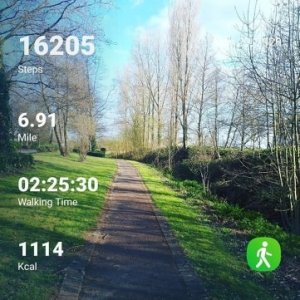
Smoker swaps cigarettes for 15,000 steps a day

After smoking for 27 years Andrew from Cardiff decided to quit following a health scare. He replaced smoking with walking and now aims to achieve 15,000 steps every day.

Andrew Action on Smoking and Health Wales

I quit smoking 7 months ago and it was the best thing I’ve ever done. I’ve now replaced smoking with walking and make sure I do a minimum of 15,000 steps a day, so it’s been a complete change of lifestyle for me.

I smoked for 27 years in total from 1992 to last November.  I had wondered whether there was any point in giving up, given how long I’d been smoking. I thought the damage was already done.

But I did lots of research and found out that even after so many years of smoking the body can repair itself and that after six months your risk from lung, mouth, throat and pancreatic cancer goes down. Your risk of developing smoking related conditions doesn’t disappear completely but it can make a real difference.

I’d decided to quit several times before using patches but never managed longer than a couple of weeks, a month at best.

Then last year I started to feel ill and had trouble swallowing my food. At that point I decided to give up smoking for good.

I saw my doctor who was very matter of fact and told me it could be the dreaded cancer then a week later I went for tests which included having a camera put down my throat. I got lucky in a way – they did find lumps, however they were benign and non-cancerous.

The lumps in my oesophagus might turn cancerous later on, who knows but hopefully not. I’m ok at the moment as I’ve got my medicine and I’m know that I’m more likely to stay healthy for longer if I don’t smoke.

At first the hardest bit about giving up was the anxiety. I was particularly concerned about the harm I’d done to my health and kept worrying about cancer.

It took about three months for this anxiety to start wearing off and what really helped was downloading a walking app and concentrating on my daily step count. That really took my mind off things.

My advice to smokers thinking of giving up would be of course to go for it. But I’d also say that it’s not easy and they have to be prepared to really work at it.

I’d also like to share with smokers some of the information I found on the Cancer Research UK website that really motivated me to quit.

If you smoke 20 cigarettes every day for a year that causes 50 DNA mutations per lung cell minimum and there are hundreds of millions of cells in the lungs.
Smoking also changes cells in the oesophagus, stomach, pancreas and liver to name but a few.

Another thing to consider is that people born after 1960 have a 1 in 2 chance of developing cancer at some point in their lives and that’s before you start smoking…

I really wish someone had shown me some of those statistics – if they had I would have stopped years ago.  But it’s really important to remember that it’s never too late to give up. Even after 20 years of smoking some of the damage can be reversed and your body starts healing within days of stopping. So, stub that cigarette out and get active.