

Meet the vape shop owners

As smokers across Wales give up smoking using e-cigarettes, vape shops have become a popular fixture on our high streets. We met the owners of two different shops to find out more about what inspired them to set up their businesses and how they help smokers to quit the habit.

Husband and wife team Lee and Amanda Woolls were heavy smokers before giving up using e-cigarettes. Their experience inspired them to open Wales’ first vaping shop and today they own 11 Barracuda Vape shops across the country.

When did you first discover e-cigarettes?
Lee: We were both smokers. I was on around 60 a day and Amanda smoked about 40. It was just an integral part of our lives. I had been working for several years in the Middle East and in North and South Africa where it’s far easier to be a smoker because cigarettes cost so little and there wasn’t any financial incentive to quit. It was when I hit 40 and came back to the UK that I decided to quit. I had several quit attempts but none of them worked. I tried using Champix medication but I didn’t get on with it, then I tried gum and lozenges but that didn’t help with the cravings. Then a friend suggested that I should try e-cigarettes. I was very dubious at first because it was 2009 and they had only just become available. But I started vaping and after that I never smoked again.

What was it about vaping that appealed to you?
Lee: For me vaping just ticked all the boxes. You got the nicotine, the hand to mouth gesture and the visual effect of the exhaled smoke. For me, having been a heavy smoker, it was really important to get that hit at the back of the throat. It just seemed effortless, and we became quite evangelical about it after cigarettes had been such a big part of our lives.

How did you go about setting up the business?
We were working in the insurance business at the time. I started talking to everybody about e-cigarettes and realised that nobody was really using them at the time and that there was a real gap in the market because people were very intrigued about them. We started researching e-cigarettes in detail and looking at all the different component parts of the e-cigarette and all the different liquids available. When we opened our first shop in Cowbridge Road East in Cardiff, it was 2010 and the middle of the recession yet the shop was a success straight away. We used to hold talks and presentations about e-cigarettes and the shop would be full. Demand for the products was crazy and there would be queues of people waiting to get into the shop. It’s 100% because of our own experience and how the product has worked for us that we’re so passionate about our products.

How important is it to you to get to know your customers?
Amanda: Customer care is the focus for us, it’s the absolute key stone of our business. There’s no one size fits all product. Everyone gets a tailored service and product. We always ask our customers about their habit. We find out what brand of tobacco they were using because there are lots of different flavours. Some people puff while others inhale that is relevant too when it comes to buying the products. We’ll go through all the products that are available and ask how committed they are. Once they have decided we go through the range of liquids with them. We offer our customers a lot of support and advice and we have a lot of success stories. One lady came in and said she can’t get rid of her craving for a cigarette in the morning, so I advised her to take the vape to bed with her and then have it there ready in the morning. She said that really worked for her. One man came in and said he was going to have to have his leg amputated because of an arterial vein collapse caused by smoking. A year later he said the operation was no longer going ahead because he’d give up smoking and was vaping instead.

What have you learnt from your experience of running the business, about giving up smoking?
Lee: The biggest motivator for giving up smoking is oneself. If you don’t really want to give up smoking yourself then you’re not going to, not matter how much others persuade you. It’s all about will power really. Vaping really helps people to cope with the craving for a cigarette when they are quitting and can really replicate smoking. In fact, for some smokers it helps not to think of vaping as giving up smoking, but instead to think of it just as changing their brand or the product they are using.
Adam Edgerley runs Juice33, a chain of vape shops in West Wales, with shops in Carmarthen, Haverfordwest, Tenby and Milford Haven. He currently has 1,500 customers with the oldest aged over 90.

When did you set up the business and what inspired you to open a vape shop?
I launched the business with my business partner and best friend Joe back in late 2014, we had both been working for another electronic cigarette firm for a while and saw the amazing potential for growth in the sector, as well as an opportunity to corner the underserved West Wales market. Both of us had been heavy smokers for many years before working in the vape industry, so we’d seen first hand how transformative and effective the devices could be. After many years of pretty thankless jobs, it was a real boost to make a living from something that we could really see was making a difference.

Can you tell us about the different ranges of products you stock?
We stock a fairly exhaustive range of vape products, everything from very basic pen style starter kits to the more ‘hobbyist’ high powered mods, rebuildable atomisers and Sub Ohm tanks. The most important side of vaping for most people is the choice of e-liquids. In my opinion the ability to choose from such a massive range of different flavours is a big part of why vaping works long term for people.

Who are your typical customers?
Honestly, the only thing our customers have in common is they are all smokers who want to quit. We have around 1500 active customers on our system, and they come from every imaginable demographic. Our oldest customer is over 90 years old.

What advice do you give to smokers who are hoping to give up through vaping?
We always start with a new customer’s individual needs. Everyone is different so there’s a certain level of personalisation in what set up we will suggest for someone (nicotine levels that are likely to work for them, what kind of battery life they are likely to require for their lifestyle, certain flavours that may be more suitable than others etc).

Why, in your opinion, is vaping the best way to give up smoking?
From my personal experience, other smoking cessation devices and techniques don’t quite do the job. While some of them technically satisfy the nicotine cravings, there is a ritualistic element of smoking that they can’t replace. Picking up a physical cigarette or vape after a meal, seeing the smoke (or vapour in this case) as you exhale, feeling the ‘throat hit’, and simply having something to do with your hands just can’t be replicated with patches or any other smoking cessation device I’ve tried. That’s a common theme I hear almost every day in our stores; almost all of our customers have tried to quit before and the feedback we hear about how much easier it is to switch over and stick to vaping is astounding. The statistics seem to back up my opinion too; vaping has a 50% success rate, other smoking cessation techniques are around 3%.

Do you think there is a lack of awareness generally about the benefits of vaping compared to smoking?
Absolutely, there’s been a lot of bad reporting in the national and international media surrounding vaping; stories like the exploding e-cig, popcorn lung or similar make great headlines, but most have been either disproved, or are missing important context. Vaping has been largely vilified and it’s almost impossible for our industry to fight back against the disinformation and misleading headlines because of the incredibly harsh advertising regulations imposed on us as part of the Tobacco Products Directive. I think there’s a huge amount of scope to set the record straight, get the right information out there and encourage people to switch over to an unarguably less harmful alternative. However, I think it’s vital that this is approached with a responsible, measured approach as to discourage non-smokers from taking up vaping.


Quit smoking or risk developing mouth cancer says leading Welsh dentist

A leading Welsh dentist has issued a stark warning to smokers on World Oral Health Day.

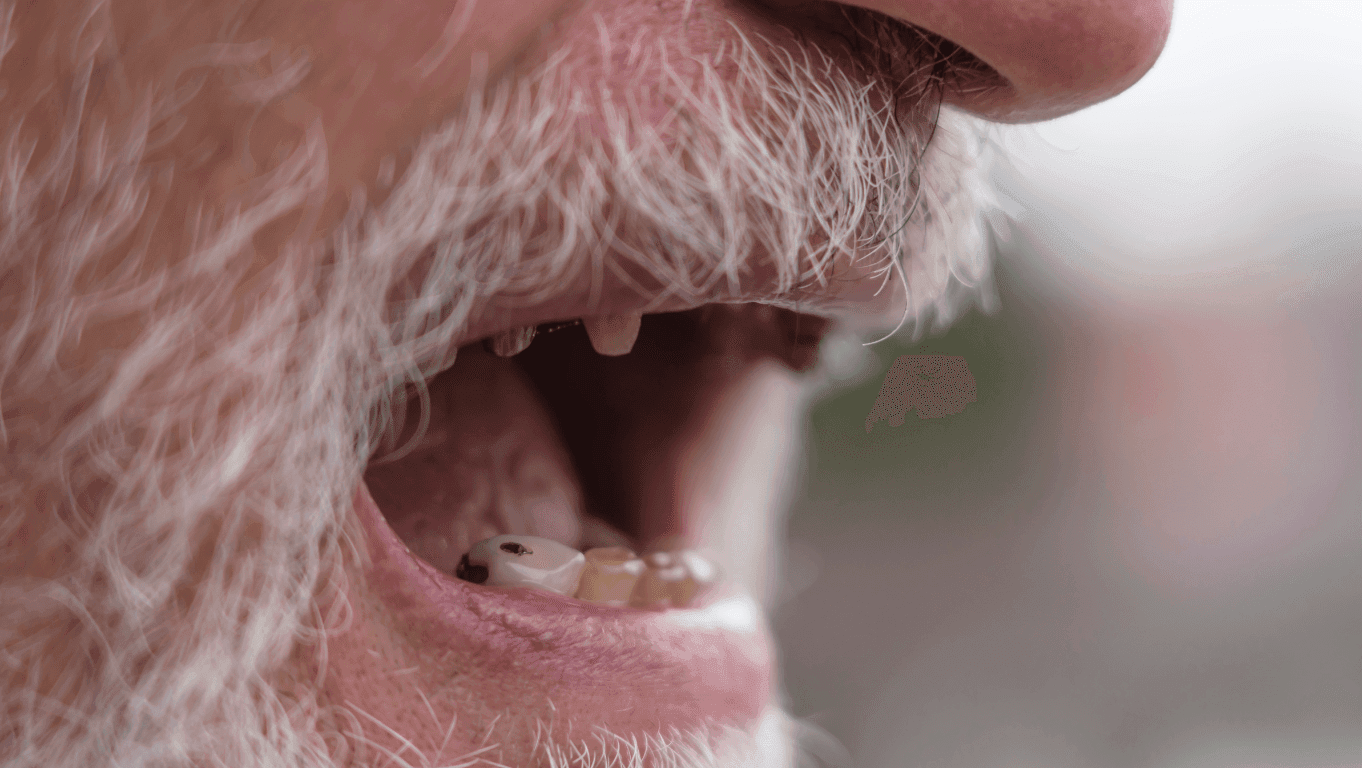
Tom Bysouth, who is chairman of the British Dental Association’s Welsh General Dental Practice Committee, says smokers face a far higher risk of losing teeth or developing mouth cancer than non-smokers.
He warns that there is a lack of awareness among smokers of the damage they can cause to their oral health and warns that symptoms of mouth cancer can often go unnoticed until it is too late and the condition is untreatable.

“There are very poor survival rates for mouth cancer, despite advances in medical technology,” said Mr Bysouth. “Although medical advances have improved the quality of life for patients, the five-year survival rate remains at only around the 50%.
“Surgery to treat mouth cancer can involve losing part of your tongue or jaw bone which can have big consequences for your quality of life.
“Radiotherapy is also used to treat mouth cancer but that can cause damage to the salivary glands which can lead to a dry mouth, causing problems speaking and eating and a much higher risk of tooth decay.
“What is particular concerning about mouth cancer is that the symptoms can be quiet in the early stages, it can often go unnoticed before it’s too late,” he adds.

In terms of what to look out for he says early signs can include a non-healing ulcer that has been in the mouth for three weeks or more and red or white patches on the tongue or the inside of the cheeks.
A smoker’s risk of developing mouth cancer is “massively increased” if you also drink over the recommended weekly units of alcohol, explains Tom, who says social smokers who drink and smoke at the same time are particularly at risk.
There is hope for those who quit, however with the risk of developing mouth cancer reduced:
“If you stop smoking your ongoing risk of developing gum disease or mouth cancer will reduce,” said Tom. “There are patches that can appear in your mouth that are not yet mouth cancer but that can develop into cancer if they are exposed repeatedly to cigarette smoke. This is one of the many reasons why it is important to see a dentist on a regular basis.”

Gum disease is greatly underestimated by patients, many of who do not realise that it leads to loss of teeth, says Tom. He explains that the disease gradually reduces the amount of bone supporting the teeth to the point where the teeth eventually become so loose that they fall out.

“The biggest thing I see among patients that smoke is gum disease.
“Smoking is one of the big risk areas for gum disease because it stops the body from being able to fight off bugs and bacteria and that causes the gum disease..
“The other worrying aspect of smoking is that it masks the signs of gum disease because the chemicals in cigarettes cause the blood vessels to shrink which means the smoker’s gums won’t bleed,” he goes on to say.

As well as smoking leading to specific conditions, it also makes it far harder for patients to heal and more prone to problems after having standard dental procedures carried out.
Having teeth removed, for example, can in smokers, lead to a much higher risk to what Tom describes as a ‘dry socket’, where the blood clot that would normally form over the hole where the tooth was and help it to heal, becomes lost, leading to the hole in the gum and even the bone being exposed.
“This is known as dry socket and people say it is far more painful than toothache,” explained Tom. “It can be washed out and treated with an antiseptic dressing and sometimes antibiotics, but it is really painful.”

Stopping smoking altogether is the only way for patients to reduce their chances of developing gum disease or mouth cancer or the risk of developing problems following standard procedures. And Tom said it is even possible for the staining caused by nicotine to be almost completely removed from patients’ teeth via a professional tooth cleaning from a dentist or hygienist
If you are smoker who would like to access support to quit, contact Help Me Quit by calling 0800 085 2219.

My Journey to a Smokefree Life – a Mother’s Story

Having smoked since the age of 13, Charlotte Harding, author of Welsh Mummy Blogs is finally smoke-free after her second attempt at quitting. To mark No Smoking Day 2019 we asked her to tell us her story.

Growing up I always thought smoking was cool. The popular kids at school, the heartthrobs in movies and the lead singer of my favourite band, all smoked. I used to think smoking can’t be that bad.

The Habit Begins

I was around 13 years old when I smoked my first cigarette. At first I was a social smoker, I only smoked when I had the money or if was going out with my friends. I used to hide cigarettes from my mum, I’d use body sprays and hand creams to hide the smell of smoke. I don’t think this worked, I am pretty sure she suspected I was a smoker.

At 16 years old I was smoking full time, I was working so could fund my habit. Without the worry of money or my parents finding out, I found my 10 a day habit quickly turned into 20 a day.

By the time I was 23 I was smoking 40+ cigarettes a day! This was becoming expensive and it started to play on my health.

I had never suffered from any respiratory problems growing up but at 24 I was diagnosed with asthma. I truly believe this had something to do with my heavy smoking.

I knew I had to do something about my habit. The problem was, I really enjoyed smoking!!

My First Attempt

At first I attempted to quit on my own. My quit day would always be a Monday (start of the week) I would go cold turkey, drive everyone insane for days with my mood swings from withdrawal and then end up smoking by the Friday.

I tried this method on and off for months, It was clearly not working.

I went to see the GP, he said he was happy to prescribe me nicotine replacement if I contacted Stop Smoking Wales.

Getting Extra Support

Contacting Stop Smoking Wales was simple. I called up the phone number on a card I was given and then gave the telephone staff my details. Stop Smoking Wales offered me group support straight away.

I explained I have a mental illness and some days I am not well and therefore a group appointment would be a little difficult. The telephone staff said that I could go on a waiting list for telephone support or I had the option of one to one appointments. I took them up on the offer of one to one support.

At my first appointment I was a little nervous. I had to breathe into a little machine which recorded the amount of carbon monoxide that was in me. Carbon Monoxide is not a good thing.

My carbon monoxide level was at the maximum the machine could reach! I was informed that I was a heavy smoker and I may need two different methods of nicotine replacement therapy (NRT) to help me quit.

After a long chat about the different types of NRT I decided on the nicotine patch and a quick mist mouth spray. This combination sounded perfect, a 25mg 16 hour patch to wear everyday and a quick mist mouth spray that would stop cravings in as little as 30 seconds!

I left my first appointment with an NRT script for my GP. I was feeling confident and ready to tackle my unhealthy habit. It was reassuring to know that I had 12 weeks of support and that I could contact Stop Smoking Wales whenever I needed to.

I am not going to lie, at first it was extremely difficult to give up. I kept thinking this will be my last cigarette but it never was. I went back to my stop smoking appointment two weeks later. I did the weekly carbon monoxide test and although it had come down drastically, it was still showing that I was a smoker.

My smoking support worker said it was to be expected, I was a heavy smoker so it was not going to be easy. The support worker said that I needed to make my quit date and stick to it.

There was no time like the present, I decided to quit the following day. I gave up and lived smoke free for 4 years.

Last year, I had a decline in my mental health and some unavoidable stress. With this, I went back to my old habit. I hated that I was smoking again after so many years smoke free.

I contacted Stop Smoking Wales who were very happy to help me a second time. I used the same methods of NRT and I gave up smoking by my second appointment.

My Smoke-free Life

I am now off NRT and living an awesome smoke free life.

I don’t think I would of been able to do it without the support of Stop Smoking Wales. They have been amazing over the years.

Benefits of me giving up smoking:

• I have more money
• I do not need my asthma pump
• I can run without getting out of breath
• I have more time for my kids or to clean the house!
• I don’t smell like an ashtray
• I don’t dread long public transport journeys
• I can exercise for longer
• My skin looks more youthful
• My teeth are whiter
• My food tastes great
• I have more energy
• I don’t have to go outside in all weathers to smoke

I recommend that everyone should at least try to give up smoking. It’s a great feeling to live without the cravings and you will find you have more money and more time living smoke free.

Please note – I gradually stepped down nicotine strengths of patches and then came off NRT. Do not come off it quickly as you could be tempted to smoke again.

Written by Welsh Mummy Blogs 

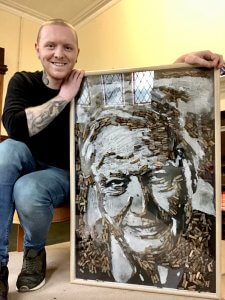
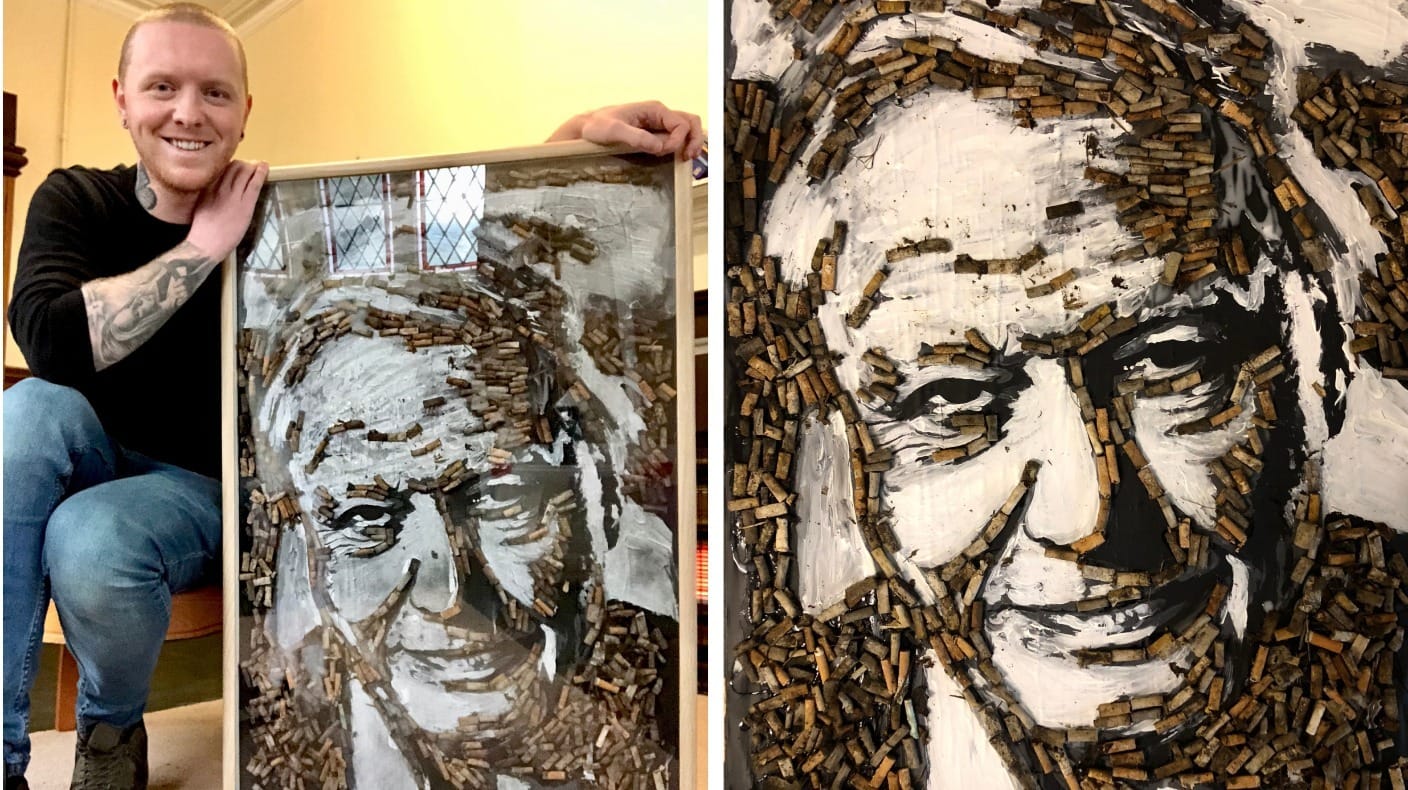
Sir David Attenborough portrait made from cigarette butts collected on Welsh beaches – No Smoking Day 2019

To mark No Smoking Day ASH Wales has commissioned Welsh artist, Britain’s Got Talent star Nathan Wyburn, to create a portrait of environmental campaigner Sir David Attenborough made using cigarette butts collected on Welsh beaches.

The aim of the portrait, made of butts collected by Keep Wales Tidy, is to highlight the impact of cigarette butts on the environment and the fact that they pollute our oceans and waterways with plastic and toxins.

ASH Wales and Keep Wales Tidy have joined forces to build awareness of the

damage cigarette butts do to the environment in a bid to deter children and young people from taking up the habit.

Today Nathan, who reached the semi-finals of Britain’s Got Talent, will unveil his portrait to children from Barry Island Primary School who will be learning about cigarette litter and, depending on weather conditions, carrying out a litter pick organised by Keep Wales Tidy on Barry Island Beach.

Cigarette butts are the most littered item in the world and across the UK alone it is estimated that 122 tonnes of smoking related litter are dropped every day. In 2018 cigarette butts were found on 80.3% of streets in Wales, making it the most common form of litter in the country.

Many of the cigarette butts dropped in the street fall down drains and eventually find their way into the waterways and the sea.

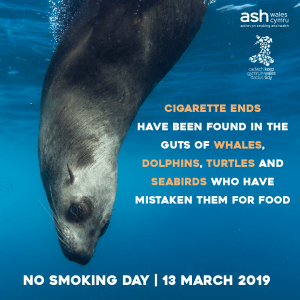
Contrary to popular belief, cigarette butts are not biodegradable. They contain plastic and can stay in the environment for up to 15 years. Cigarette filters contain harmful chemical ingredients including arsenic, lead and nicotine that pollute our waterways and the toxins in tobacco residue endanger animals that ingest them.

Indeed, one cigarette butt left to soak in water for 96 hours, will release enough toxins to kill half of the salt or fresh water fish that are exposed to it.

Suzanne Cass, CEO of ASH Wales, said: “This year we want to use No Smoking Day as an opportunity to raise awareness of the environmental impact of cigarette butts and there is a very serious message behind Nathan Wyburn’s portrait.

“Through the BBC series Blue Planet, Sir David Attenborough has shown the devasting impact plastic is having on our oceans.

“Plastic filled cigarette butts are a part of that problem and play a big part in turning the seas into what Sir David Attenborough has described as a ‘toxic soup’.

“Protecting the environment is a major concern especially amongst young people. Many smokers do not know the damage cigarettes do to the planet and we hope that by making people more aware of the impact, it might give them an extra incentive to kick this highly addictive habit.”

A survey carried out by Keep Britain Tidy last year found that less than half of smokers know that cigarettes contain plastic.  Meanwhile one in ten smokers do not consider cigarette butts to be litter and 10% think cigarettes are biodegradable.

Lesley Jones, Chief Executive of Keep Wales Tidy, said: “We want to debunk the myths and misconceptions around the disposal of cigarette ends. Because of their size, many people don’t recognise cigarette ends as litter and the real damage they can cause. They are not biodegradable and are harmful to our health, wildlife and the environment.”

Enquiries: Diana Milne | PR Officer  | diana@ashwales.org.uk | 02920 490621

Or Beth Mahoney | Marketing and Communications Manager| Beth@ashwales.org.uk | 02920 490621|

Interviews available. Please contact using the details above.

Scamp the sniffer dog uncovers illegal tobacco haul in Powys

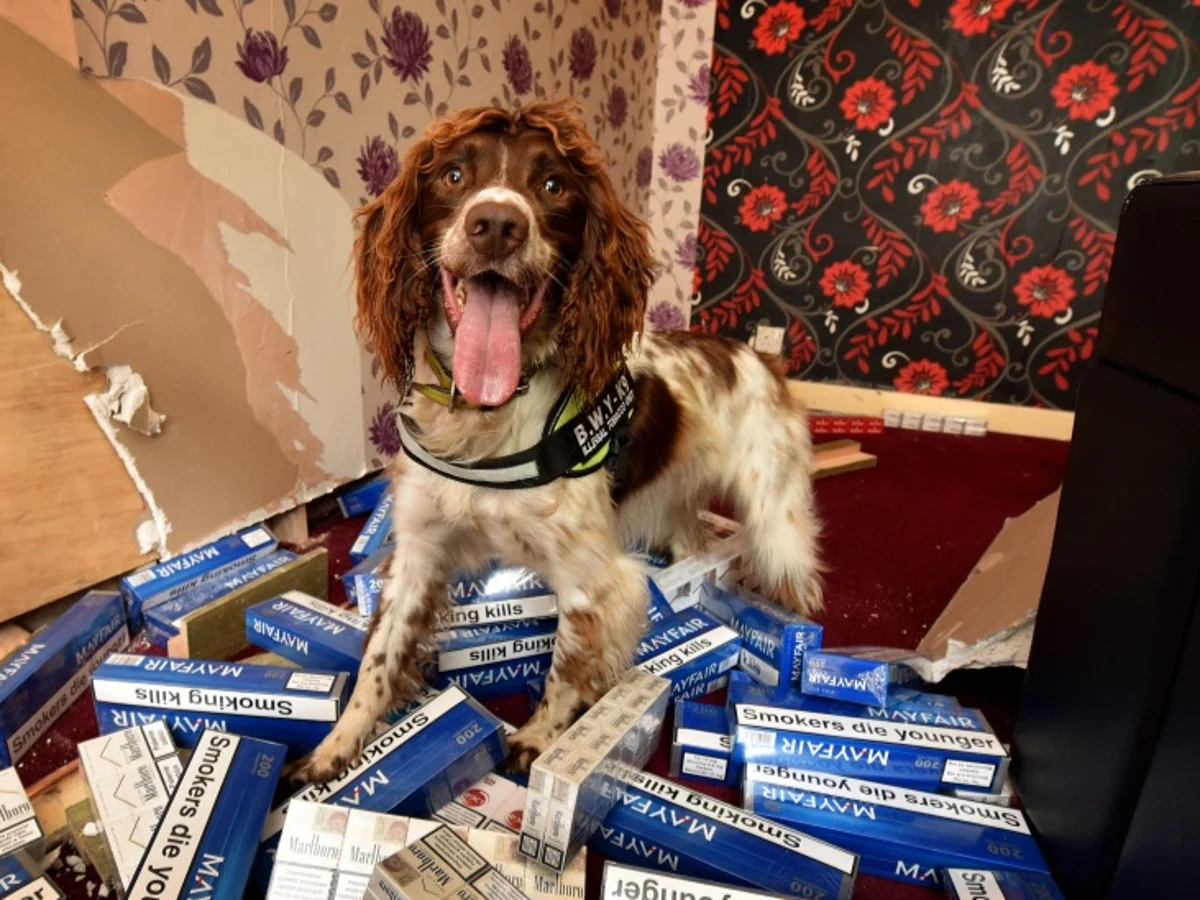
Scamp, Wales’ top sniffer dog, has uncovered a stash of hidden illegal tobacco in Powys during a crackdown by Trading Standards officers.

Acting on Intelligence, Powys Trading Standards working with Dyfed Powys Police and BWY Canine uncovered the counterfeit tobacco concealed at premises in Powys.
Earlier this year ASH Wales reported on how  Scamp is so successful at sniffing out illegal tobacco that he has had a £25,000 bounty put on his head by an organised criminal gang.

Illegal tobacco remains a major problem in Wales, making up 15% of all tobacco sales in the country and undermining tobacco control policies aimed at reducing the number of those that smoke. There are fears too that the trade in illegal tobacco could be funding organised crime both here in Wales and throughout the United Kingdom

Cllr James Evans, Cabinet Member for Trading Standards, said: “Combating the supply of counterfeit and illegal tobacco is one of our ongoing priorities of our Trading Standards Service. We are looking to increase the understanding of the impact it has amongst smokers and local communities when shadow activities occur with illicit products.

“Operations of this nature, should also serve as a warning to those involved in the supply and sale of illegal tobacco that we will take the appropriate action with partners that is necessary to combat this problem.”

Clive Jones, the council’s Professional Lead for Trading Standards, Community Safety and Emergency Planning added: “This illegal trade harms legitimate traders in Powys and wider afield. Over the past two years we have seized nearly 60,000 illegal cigarettes and 60kg of illegal tobacco as part of our overarching operation on illicit products, named Operation Date. Investigations are ongoing.

“The supply of illegal tobacco bypasses government tobacco control measures, such as not selling tobacco to children and availability of illegal tobacco is increasing. This makes it more likely that youngsters will start smoking and we find that counterfeit products often contain high levels of heavy metals such as cadmium.

“Our surveillance on illegal activity involving counterfeit products of any variety is increasing and we ask users or any person offered suspected counterfeit goods to be vigilant and to warn us of any suspicious sellers through our contact points. Alternatively ring Crimestoppers on 0800 555 111.

“This action would not have been possible without the support of Dyfed Powys Police and we wish to thank officers from operational policing team and intelligence units and support agencies such as BWY Canine”

Suzanne Cass, Chief Executive Officer of ASH Wales, said: “We applaud the efforts of all those involved in operations of this nature and hope this sends a message to others that this activity will not be tolerated.

“Illegal tobacco currently makes up 15 per cent of all tobacco sales in Wales – the highest level in the UK – and continues to undermine efforts to tackle smoking prevalence. Criminals sell illegal tobacco at pocket money prices to those who would not otherwise be able to afford it, disregarding all tobacco control measures.

It represents a major threat to the health of the nation greatly increasing the numbers of those at risk of developing smoking related conditions, which currently contribute to 5,388 deaths and 26,489 hospital admissions a year in Wales.

“It is a crime that threatens lives across Wales and resources must be directed towards helping to stamp it out.

The council’s Trading Standards Service can be contacted on Brecon 01874 623420; Llandrindod Wells 01597 826032; Newtown 01686 617524. Alternatively email trading.standards@powys.gov.uk or visit www.powys.gov.uk/tradingstandards

Smoking is forcing families across Wales further into poverty, charity warns

With cigarettes costing £10 a packet and nearly of quarter of Welsh residents living in poverty, ASH Wales is asking, ‘Who Can Afford to Smoke?’.

This week the tobacco control campaign group will call for action to tackle smoking among Wales’ most deprived communities, where up to a quarter of residents smoke.

It has warned that smoking contributes to the deprivation facing many families across Wales and says that quitting the habit would lift hundreds of thousands of people out of poverty.To find ways of tackling the problem experts from across Wales are gathering at the annual Wales Tobacco or Health Network (WTHN) conference in Cardiff on Wednesday (February 20), which this year is entitled ‘Who Can Afford To Smoke?’.

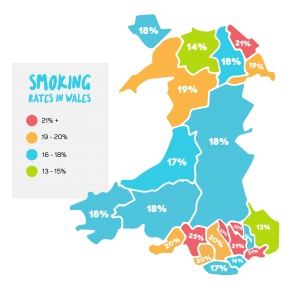
Currently 24% of people in Wales live in income poverty. Yet despite facing huge financial challenges they are the most likely to smoke, with 28% of those living in Wales’ most deprived areas smoking compared to 13% in the most affluent parts of the country. The lowest rate of smoking is in Monmouthshire at 13% compared to the highest in Neath Port Talbot at 25%.


And the situation shows no sign of changing with the gap in smoking prevalence between Wales’ most deprived and least deprived areas having barely fallen in the past decade.
Meanwhile 43% of unemployed people in Wales smoke – a figure that has risen in the past decade despite increased tobacco control legislation.

Speaking ahead of the event ASH Wales CEO Suzanne Cass said: “Nicotine addiction places a huge financial burden on smokers and it is the most deprived members of our community that are hit the hardest. The high cost of tobacco combined with the power of nicotine addiction means many smokers will prioritise fags over food or fuel or allow their debts to spiral.

“This has a devastating impact on the health and well-being of them and their families, and is a particular concern given the challenges many are facing since the introduction of Universal Credit.

“It is important to emphasise that smoking is an addiction not a lifestyle choice and what is needed is targeted smoking cessation support for those in our most deprived communities who are desperate for help to quit the habit.”

Research carried out by ASH has shown that 28% of those living on the breadline across the UK would be lifted out of poverty if they gave up smoking.
The average smoker in Wales spends more than £160 a month on tobacco with 20-a-day smokers shelling out around £327 a month and £4,000 a year to fund their habit.