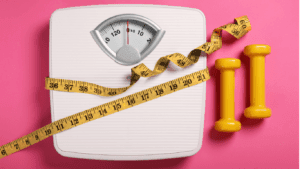
Maintaining a healthy weight when you give up smoking

When you give up smoking, maintaining a healthy weight can prove challenging.

There are several reasons why quitting cigarettes often results in weight gain. For a start smoking suppresses your appetite and when you stop, it will return with a vengeance – along with your sense of taste.  Your craving for cigarettes can quickly become replaced with a craving for sugary foods.

There is a risk too that you will comfort eat to cope with nicotine withdrawal symptoms, reaching for a sugary or salty snack when you feel the cravings coming on.

Many people feel the need to replicate the hand to mouth action of smoking that they have become so accustomed to and find that eating is a good substitute.

A more scientific reason for weight gain after quitting smoking is that smoking speeds up your metabolism, so that your body burns calories at a faster rate.  Unless you consume fewer calories when you give up, this could lead to weight gain.

However, fears over weight gain are not a good reason to continue smoking -the multiple health risks associated with smoking far outweigh the risks of putting on weight. And there is plenty you can do to avoid replacing cigarettes with calories.

Here are some top tips on maintaining a healthy weight when you quit:

Exercise

After quitting smoking your body will burn calories more slowly. This means it’s important to speed up your metabolism by keeping active.

Taking regular exercise is said to prevent about half the weight gain expected after a year of quitting.  Ideally you should build up to around 2.5 hours a week of aerobic exercise such as swimming, fast walking or cycling.

You could join a local gym or find out what classes are available at your local leisure centre. Alternatively make simple changes to your lifestyle that will allow you to incorporate exercise into your daily routine, such as walking to work or to the shops instead of driving.

The more exercise you do, the more calories you will burn.  Exercise is also a great way to take your mind off the challenges of giving up smoking and will distract you from your cravings.

Eat wisely

To combat cravings for unhealthy snacks, keep a supply of healthy nibbles handy. Fresh fruit is ideal as are nuts and vegetable sticks.

When you stop smoking, try to eat smaller portions of food until your metabolism stabilises. It takes 20 minutes for you to feel full after eating so take a break after your main meal before moving onto snacks or desserts. You may feel that after a 30-minute breather, you no longer feel the need to consume anymore.

Keep mid-morning hunger at bay by filling up with a wholesome bowl of porridge for breakfast. Porridge is made from oats which release energy slowly because they increase blood sugar levels over a longer period of time.  This means you are less likely to feel hungry or want to eat unhealthy snacks which can help with weight control.

If you are struggling to eat healthily, ask your GP to refer you to a dietitian who can put together a specially tailored diet plan that will suit your needs.

Use NRT

Quitting smoking through will power alone is tough and can heighten your chances of resorting to comfort eating to cope with cravings. Nicotine Replacement Therapy can double your chances of quitting smoking successfully and will help you to cope with cigarette cravings. There is a wide variety of different products to choose from depending on your individual requirements, from patches you wear to gum or lozenges you take when you feel a craving coming on.

To find out the best product for you see your GP or pharmacist. If you are giving up smoking and would like to find out what support is available to help you quit, contact NHS Wales’ Help Me Quit service on 0800 085 2219 or visit www.helpmequit.wales.

How to make New Year’s resolutions you’ll stick to

It’s notoriously difficult to stick to New Year’s resolutions – a study by Bristol University found that 88% of those that make resolutions will fail to keep them. And for people quitting smoking and coping with cravings the challenge is even greater. So what’s the secret to staying on track? We asked psychologist Carly Sandercombe (pictured, left) of Psychology Wales, for her advice.

How can people set themselves realistic goals for their New Year’s resolutions that they are more likely to reach?

SMART goals are a great way to make realistic goals for a New Year’s resolution. These are goals that are; specific, measurable, achievable, realistic and timed. SMART goals are designed to provide structure and guidance to the goal setting process and help to better identify what you want to accomplish.

What are the main reasons why people find it difficult to stick to their New Year’s resolutions?

Most often people fail to stick to a New Year’s resolution as the resolution itself was not realistic which can make it extremely difficult to achieve. Also, by not having a proper plan in place individuals can find it hard to know how to make the changes that they want. Having a realistic plan in place can help people to stick to their New Year resolution.

If people feel tempted to cave in and give in temptation – i.e. have a cigarette when they’ve decided to give up smoking – what can they do to put themselves back on track?

Distraction is a helpful technique that people can use whereby they have something else that they can do to occupy themselves when they are tempted to cave in. This can be anything that they find enjoyable, for example a crossword puzzle, watching a favourite TV programme, or reading a chapter of a book they like. Also, it can help to look back at the reasons why they wanted to give up. There are also lots of APPS available such as the Smokefree health and fitness APP by the NHS which help to remind the person how far they have come and what they have achieved as well as the health rewards of giving up smoking.

If people do slip up how can they stop themselves from becoming despondent?

Slip ups are sometimes inevitable and are extremely common. However, they can be used as an opportunity to learn about what went wrong and how to prevent a similar setback from occurring in the future. For example, people can ask themselves the following questions; what triggers led up to this setback? What can I learn from this setback? What can I do differently in similar situations in the future?

Why is New Year a good time to set new goals for yourself?

Any time is a good time to set goals. However, people tend to set goals during this time as it is seen a new year and therefore a fresh start. I would encourage people that want to set goals to start them whatever the time of year as once they begin to make positive changes, for example stopping smoking, they will start to see and feel the positive results.

Smoking as an addiction is particularly challenging to give up – what would you say to motivate smokers who are struggling with the idea of life without cigarettes?

There are not only numerous health benefits associated with giving up smoking but also the financial benefits are huge! Put aside the money that you would have spent on cigarettes and spend it on a treat for yourself, reward yourself for all your good work!

And the benefits of quitting will continue into the next decade of your life and beyond…..

  • Within a year your risk of heart disease will be about half that of a person who is still smoking.
  • After ten years your risk of developing lung cancer drops to half that of a person still smoking.
  • Once 15 years have passed, your risk of a heart attack is the same as somebody who never smokes.

If you want to stop smoking Help Me Quit is run by NHS Wales and will help you to find the stop smoking service that best suits you. Contact them on 0800 085 2219 or visit www.helpmequit.wales.

12 great reasons to give up smoking in 2019

If you’ve made the brilliant decision to stop smoking in 2019 then it’s crucially important that you don’t cave and give in to temptation. Traditionally, January 12th is the day when we’re most likely to break our New Year Resolutions. However, research has shown that when giving up smoking, if you reach the 28-day mark you’re five times more likely to quit for life. So, to keep you on track, we’ve compiled a list of 12 great reasons to stay smoke-free.

1  Money

If you’re a 20-a-day smoker, you’ll be spending around £56 a week on cigarettes. By quitting you’ll save £243 a month and £2920 a year – a massive boost to your finances and enough to pay off debts and even treat yourself to a family holiday abroad every year. Even if you smoke just 10 cigarettes a day, you’ll be spending £120 a month and £1,460 a year to feed your habit.

2  Breathing

The lungs are badly affected by smoking resulting in coughs, colds, wheezing, asthma and fatal conditions such as pneumonia, emphysema and lung cancer. Smoking causes 84% of deaths from lung cancer and 83% from chronic obstructive pulmonary disease (COPD) –a collection of debilitating lung diseases including chronic bronchitis and emphysema.  Symptoms of COPD are often dismissed as a smoker’s cough – however they progress to greatly impact on a sufferer’s quality of life.  Stopping smoking is the only effective way to slow down the progress of the disease.

3  Heart

The damage that smoking causes to your heart increases the risk of conditions such as coronary heart disease, heart attack, stroke, peripheral vascular disease, and cerebrovascular disease.  Nicotine and the carbon monoxide from smoke put a strain on the heart and force it to work faster, increasing the risk of blood clots. Meanwhile other chemicals in cigarette smoke damage the lining of the coronary arteries. Smoking doubles your risk of having a heart attack and gives you twice the risk of dying from coronary heart disease compared to non-smokers. However, if you stop smoking, that risk is reduced by half within just one year.

4  Family

When you smoke it’s not just your health that is affected. Second hand smoke can have a devastating impact on the health of those around you, particularly people you live with. Children face the greatest risk of health problems with exposure to somebody else’s smoke doubling their risk of developing invasive meningococcal disease and increasing their risk of infections such as flu, bronchitis and pneumonia by 50%. In adult non-smokers, second hand smoke raises the risk of lung cancer by 20 to 30% and coronary heart disease by 25 to 35%

5  Pets

Pets can develop serious health problems if they are owned by a smoker. Not only do they inhale cigarette smoke, but they lick the smoke particles that cling to their fur. As they have small lungs this can lead to breathing problems and cancer in cats, dogs, rabbits, bird and even fish.

6  Home

Across the UK, someone dies from a fire caused by a cigarette every three days. In Wales alone, 163 fires were caused by smoking materials in 2014/15. Second hand smoke lingers in the home for up to five hours even after a cigarette has been stubbed out, affecting the health of those around you. Meanwhile tobacco residue -or third hand smoke – builds up and stains surfaces and can be ingested by children that touch contaminated surfaces.

7  Dementia

In the UK it is thought that around 10% of cases of Alzheimer’s Disease are linked to smoking and according to the World Health Organisation around 14% of Alzheimer’s Disease globally are attributable to smoking and exposure to second hand smoke. This is because smoking increases the risk of heart disease and blood circulation problems which in turn can increase the risk of developing Alzheimer’s Disease and vascular dementia. By stopping smoking however, you reduce your risk of developing Alzheimer’s Disease to normal levels over time.

8  Mouth

Smoking causes staining to the teeth due to the nicotine and tar in the tobacco. Smokers’ teeth quickly become yellow and the teeth of heavy smokers are almost brown in colour. Smoking also leads to gum disease as smokers are more likely to produce bacterial plaque. It causes a lack of oxygen in the bloodstream which makes it harder for infected gums to heal and gum disease can eventually lead to tooth loss. In more serious cases smoking can lead to an increased risk of cancer in the lips, tongue, throat, voice box and oesophagus. More than 93% of cancers in the throat are caused by smoking. However, the good news is that when you stop smoking your risk of developing cancer of the head and neck is greatly reduced and the same as a non-smoker 20 years after quitting

9  Wrinkles

Smoking reduces the flow of oxygen to your skin meaning it ages more quickly and looks grey and dull. You are three times more likely to get facial wrinkles if you smoke and it ages your skin by between 20 and 30 years. Smokers often have a sallow yellow-grey complexion and hollowed out cheeks. If you stop smoking, you will prevent any further deterioration to your skin.

10  Bones

Smoking causes bones to become weak and brittle, particularly in women who are more likely to suffer from osteoporosis than non -smokers. By stopping smoking you will lower your risk of developing this debilitating condition.

11  Brain

Smoking raises your risk of having a stroke by at least 50% and doubles your risk of dying from a stroke. This is because it increases your chance of developing a brain aneurysm – a bulge in a blood vessel caused by a weakness in the blood vessel wall. This can rupture or burst leading to a subarachnoid haemorrhage – a type of stroke that can cause brain damage or death.
On the bright side however, if you quit, your risk of a stroke will be reduced to that of a non-smoker’s within five years.

12  Stomach

Stomach cancer and ulcers are both a higher risk for smokers. Smoking also weakens the muscle that controls the lower end of your oesophagus and this can lead to acid from the stomach travelling in the wrong direction back up your gullet – otherwise known as reflux. Smoking can also raise your risk of developing kidney cancer – research has shown that if you regularly smoke 10 cigarettes a day, you are one and a half times more likely to develop kidney cancer. The risk increases to twice as likely if you smoke 20 cigarettes or more.

Countdown to a smoke-free life

The year is drawing to a close and, if all goes to plan, December 31st will be your very last day as a smoker.

The moment you stub out your final cigarette, signals the start of your healthier and wealthier smoke-free life

Despite this, you’re probably feeling nervous at the prospect of giving up, worried about cravings and coping with life’s tricky moments without a cigarette in your hand.

However, it’s important to remember that the benefits of giving up smoking vastly outweigh any concerns you have about quitting.  And those benefits kick in minutes after you take your final puff.

]Here’s a reminder of what happens to your body when you stop smoking:

Within  20 minutes of stopping smoking your health rate returns to normal levels.

After eight hours, the nicotine and carbon monoxide levels in your body will reduce by more than half and your oxygen levels will be back to normal levels

48 hours later the carbon monoxide  in your body will have been eliminated completely.  Your lungs then start to clear out mucus and other smoking debris. There will now be no nicotine in your body and you will have improved taste and smell.

Your breathing will have returned to normal within 72 hours and your energy levels will increase.

Blood circulation will improve within 2 to 12 weeks and after 3 to 9 months, coughs, any wheezing and breathing problems you had a result of smoking will improve.

And the benefits of quitting will continue into the next decade of your life and beyond…..

  • Within a year your risk of heart disease will be about half that of a person who is still smoking.
  • After ten years your risk of developing lung cancer drops to half that of a person still smoking.
  • Once 15 years have passed, your risk of a heart attack is the same as somebody who never smokes.

If you want to stop smoking Help Me Quit is run by NHS Wales and will help you to find the stop smoking service that best suits you. Contact them on 0800 085 2219 or visit www.helpmequit.wales.
Celebrating a year of achievements for ASH Wales

It’s the end of another busy year for ASH Wales and we’d like to take this opportunity to thank our partners for the invaluable support they’ve given us in 2018 and to wish everybody a very merry Christmas.

Over the past 12 months, ASH Wales has continued to campaign for the introduction of smoke free spaces and tobacco control policies across Wales.

Highlights of the year have included the appointment of Scott Sanders, CEO of Linc-Cymru Housing Association, as the new ASH Wales Chairman. Mr Sanders brings to the role excellent leadership skills and 20 years of experience in the housing and social care sectors. He took over from our former Chairman, John Griffiths, who stepped down after 30 years in tobacco control.

In November ASH Wales welcomed Welsh Assembly members and representatives of the health and charity sectors across Wales to its first Cross Party Group. Chaired by Julie Morgan, the AM for Cardiff North, the group addressed the relationship between smoking and health inequalities in Wales, and heard a presentation from John Britton, of the University of Nottingham, who is Professor of Epidemiology and Director of the UK Centre for Tobacco and Alcohol Studies.

2018 also saw the continued roll out of smoke free spaces across Wales, following campaigning by ASH Wales. In July Langland Bay in Swansea became Wales’ third smoke free beach and the second in Swansea, following a successful pilot ban at Caswell Bay in 2016.

In May ASH Wales launched a pilot project in Swansea working with 27 GP practices to offer smokers free breath tests using a CO monitor and support to help them to quit.

Throughout the year, ASH Wales continued to raise awareness of the impact of the illegal tobacco market in Wales, supporting the work of Trading Standards teams across Wales and taking part in a road show event in Port Talbot as part of World No Tobacco Day.

The year ahead will see major changes to the perception and practice of smoking in Wales when the Public Health (Wales) Act 2017, comes into force. The Act will see Wales become the first country in the UK to ban smoking in outdoor areas, including hospital and school grounds and playgrounds. This will play a major role in the continued de-normalisation of smoking in Wales.

We look forward too, to Cardiff Met becoming Wales’ first smoke free university in September 2019 and will be working closely with the university and encouraging others to follow suit.

The Cross Party Group will hold its second meeting in February when it will once again address the reasons behind smoking prevalence in Wales. This focus is all the more pressing, as we edge closer to the Welsh Government’s target to reduce smoking prevalence among adults to 16% by 2020. With this in mind, ASH Wales will continue to lead the Wales Tobacco Control Alliance, bringing together organisations with an interest in tobacco control to address the key issues driving smoking prevalence.

We very much look forward to continuing to support the valuable work of our partners in 2018 and to raising awareness and campaigning for policies that will one day lead to a smoke-free Wales.

If you want to stop smoking Help Me Quit is run by NHS Wales and will help you to find the stop smoking service that best suits you. Contact them on 0800 085 2219 or visit www.helpmequit.wales.

A helping hand for smokers from hospital’s Smoke Free Officer

Smokers lighting up at the Royal Gwent Hospital in Newport, are set to be given more than just a ticking off from the hospital’s Smoke Free Officer.

Barry Butler-Huish has been the Smoke Free Environment Officer at the hospital for the past two years, patrolling the grounds speaking to patients, visitors and staff and asking them to stub out their cigarettes and move off the hospital grounds if they want to smoke.

And now he is set to play a major role in helping smokers to give up the habit with Barry now handing out advice on how to access support to stop smoking and referring those who want to stop directly to the NHS Wales Help Me Quit service.
He admits that although smoking has reduced, it is still a problem at the Royal Gwent, despite there being ‘No Smoking’ signs displayed prominently across the site.

“First thing in the morning it’s usually the patients who are out smoking. Later on it’s the visitors. Visiting hours have become longer, with some wards open to visitors from 9am and this has increased smoking on site. There are signs everywhere on the hospital site, but in a setting like this people have other things on their mind and often they don’t notice.”

Challenging some smokers is not a job for the faint hearted and there’s no room for the ‘fear factor’ says Barry, who has previously worked as part of the Royal Gwent Hospital’s Security Team.


But it is having a big heart, not big muscles that makes Barry the right man for the job. Although his job is to enforce the rules, he says he often finds himself acting as a confidante for those he meets on his daily patrols.

“I often feel like a counsellor because people tell me what they are going through and that’s an important part of this role. Generally, people are very open – it doesn’t take long to find out what is going on in their lives.
“I treat everybody on the hospital site as a vulnerable person. Everybody reacts to things differently. Some are very brave and others fall apart. In this role you have to have empathy with the situations people are facing.”

Although the stress of being a patient in hospital or of visiting a sick loved one is a big factor behind the numbers of those smoking at the Royal Gwent, boredom also play a part, says Barry, with many patients nipping out for a cigarette simply to get a change of scene.

He says that the majority of smokers, are apologetic and put their cigarettes out when he approaches them. There are others however, who refuse to comply:

“There’s no one size fits all approach. I tailor how I approach people according to their manner. In most cases they are standing next to a sign anyway. Usually, people apologise and put out their cigarette straight away. But there are always hard-core people who are not going to stop no matter what intervention you offer them.”

Barry patrols the whole site but varies his route and timing every day to ensure that regular patients and visitors can’t predict when he’s going to turn up: “It’s best to keep people on the back foot. They never know when you’re going to appear, so they are less likely to become complacent.”

Next summer when the Public Health (Wales) Act comes into force, smoking will be banned by law across the hospital site with those that do smoke subject to a fine if they refuse to move off site to smoke.

Barry is keen however for this to be the last resort and for all smokers to be offered help to stop smoking within the hospital setting or by being referred to stop smoking support in the community via the Help Me Quit service. He will be working alongside staff from many departments across the hospital, to achieve this and to provide a clean and smoke free environment for patients and the people who care for them.

“Lots of people simply need help to stop smoking. But they don’t know where to turn and they don’t realise that there is free help available. My role is being expanded so that I’ll be giving that advice either during my patrols or from a pop-up stand in the entrance to the hospital. I believe everyone deserves the opportunity to receive help to stop smoking – and speaking to myself and other staff could be their first step towards getting there.

Suzanne Cass, CEO of the tobacco control campaign group, ASH Wales, said she welcomes the news that Barry’s role is to be expanded:

“Barry is in a great position to start conversations with smokers about giving up. It’s crucially important to protect hospital staff, visitors and patients from the harms of second-hand smoke and to de-normalise this activity within the hospital environment.”

If you are a smoker who would like support to give up, contact Help Me Quit on 0800 085 2219, visit helpmequit.wales or text HMQ to 80818.

If you want to stop smoking Help Me Quit is run by NHS Wales and will help you to find the stop smoking service that best suits you. Contact them on 0800 085 2219 or visit www.helpmequit.wales.