Going Solo – How One Woman Quit Smoking Using Will Power Alone

Alison Thorpe, a complaints case manager from Cardiff, gave up smoking having started aged just 13. She described the simple quit method she used to quit her 20-a-day habit.

“I first started smoking when I was 13-years-old. I just decided to try it with a friend one day and the rest was history.

“I would smoke around 20 cigarettes a day but probably more if I was going out in the evening. It become such a regular part of my day to day spending that I didn’t’ really notice the impact it was having on my finances.

“I finally decided to stop after my manager left an article about quitting smoking on my desk. It was about how you could give up by telling yourself that you could smoke if you chose to but that you are choosing not to.

“You could carry the cigarettes with you and choose not to smoke them. I decided to see how long I could last without a cigarette. I managed to get through the day without going for another cigarette. Then I went out with friends for coffee and kept telling myself I could go out later and have a cigarette if I wanted to. And I kept going like that until I realised I had stopped smoking altogether.

“It was quite challenging but will power won through in the end. I was also inspired to carry on by a colleague who said ‘you smell nice now. I can smell your perfume instead of the fags’.

“To any smokers out there who would like to give up I’d say do it when you are ready to do it and only if you want to. Tell yourself you can smoke if you want to but that you are choosing not to. “

Keep calm and carry on – what to do if you relapse after quitting smoking

In an ideal world we’d all give up smoking for good on our first quit attempt.

But for many smokers, the road to a smoke free life is a rocky one. Having navigated their way through cravings, many smokers find themselves back where they started after relapsing and lighting up again.

If this happens it’s crucially important not to adopt a defeatist attitude and start to believe that you are incapable of quitting. Just because you’ve slipped up it doesn’t mean you are not perfectly capable of picking yourself up and getting back on the road to recovery.

To help you on your way here is our guide to recovering from a relapse.

Marvellous mistakes:

Mistakes can be a brilliant learning opportunity. A slip-up gives you a chance to re-evaluate your strengths and weaknesses and find out how best to deal with the situations you find challenging. You may need to decide on a different quit smoking strategy. Don’t treat your slip up as a mistake but as a bump in the road that you must cross in order to come one step closer to giving up smoking

Remember your reasons:

It can be easy to focus on your failure after a slip up. Instead direct your thoughts to the reasons why you wanted to quit in the first place. Whether it’s health concerns or money that drove your quit attempt, remind yourself that those reasons haven’t gone away.

Keep your eye on the prize:

The benefits of giving up smoking are huge. If you’re lacking motivation to carry on quitting, then visual yourself as a non-smoker with more money, better health and without the smell of cigarette smoke clinging to your clothing. Focussing on this goal will go a long way to helping you to stay on track.

Share the burden:

Sometimes it’s embarrassing to tell friends and family that we’ve failed. Particularly if you’d announced that you were going to stop smoking. But there’s no shame in admitting that you’re only human and you’ve slipped up. You will need to support of friends and family to quit again and by hiding the truth from them you are denying yourself that help.

Call for help:

Research has shown that only 3 in every 100 smokers manage to quit permanently using will power alone. In fact, the most effective way to tackle cravings is a combination of stop smoking medicine and behavioural changes. Help Me Quit offers free help to all smokers who are trying to quit. If you’ve relapsed after trying to go cold turkey then get in touch with them by calling 0800 085 2219 and find out what support you could access.

Coping with Cigarette Cravings

WHEN it comes to quitting cigarettes, cravings are the toughest challenge you will face.

In the first week after quitting, most smokers will experience powerful cravings for a cigarette because they have become addicted to nicotine.  But fear not, nicotine replacement therapy (NRT), behavioural changes and support from a stop smoking service can help you to resist temptation. If fear of coping with cravings is holding you back, read our guide to find out why they happen and how to fight back.

Understanding nicotine addiction

The main reason why smokers find it so hard to quit is because cigarettes contain nicotine which is highly addictive. Nicotine alters the balance of two chemicals in smokers’ brains, dopamine and noradrenaline.  This produces feelings of pleasure and appears to reduce stress and anxiety. Smokers become dependent on this nicotine rush and over time, as their brain gets used to the nicotine, they smoke more to produce the same effect. “Cravings are natural. It’s a way of understanding that behaviours are changing.”

–  Steve Clarke is a clinical and therapy services manager for The Priory Group

What happens when you quit

When you stop smoking the levels of dopamine and noradrenaline in your brain change leading to feelings of anxiety, irritability and even depression.  Craving nicotine is a normal response to this situation, as your brain knows nicotine will be an instant fix to make those unpleasant feelings go away but don’t lose hope there are ways to combat this.

Step One – Understand your cravings

There are two types of cravings;

  • One is the steady, constant craving for a cigarette that you will feel particularly strongly in the first week of giving up.  Gradually this feeling will subside as the weeks go on
  • The other type of craving is a sudden and intense urge to smoke. This craving is often triggered by a situation in which you would usually smoke, such as after a meal or while you’re drinking a cup of coffee.

Step Two – Coping Methods

Research has shown that going cold turkey isn’t necessarily the best way to quit as cravings can become overpowering.

Only 3 in every 100 smokers manages to successfully quit through will power alone. According to the NHS there are three effective ways to tackle cravings.  No one solution works for everybody and often it’s a combination of different methods that helps smokers to finally kick the habit.

1. Nicotine replacement therapy

NRT continues to provide your body with nicotine after you stop smoking, without the toxic chemicals you get from a cigarette.  It comes in the form of gum, patches, lozenges, microtabs, inhalers, nasal spray, mouth spray and oral strips. Talk to a pharmacist, GP or a smoking cessation advisor to find out which would suit you best and how you can use different forms of NRT in combination with each other for the best effects.

2. Prescription medication

There are two types of prescription tablets you can take to cope with nicotine cravings – Champix (varencline) and Zyban (bupropion).  You can start taking them a week or two before you stop smoking as they take a few days to work.   You cannot take them if you are pregnant, under 18 or have some pre-existing medical conditions

3. Self help

While NRT and prescription medication will help you to cope with physical cravings for nicotine, it’s important too to make changes to your lifestyle. Avoiding situations that could trigger nicotine cravings is particularly helpful. Be aware of moments when you would usually have a cigarette and distract yourself with another activity instead.  Try to steer clear of stressful times or making big life decisions while you are withdrawing from cigarettes. Prepare yourself mentally before special events such as holidays, weddings or parties when you would usually smoke, and make sure you go equipped with NRT in case the urge for nicotine strikes.

As cravings only last a few minutes, distracting yourself with another activity works wonders. Some people find that exercise helps.  So, if you feel the urge to smoke, why not go for a walk, jog or swim instead. Activities that involve keeping your hands busy can be useful too. If you enjoy craft activities, start a new project to coincide with you giving up smoking. Cooking, gardening, housework, board games and puzzles can also help.

Enlist the help of family and friends and tell them of your plans to give up smoking in advance so that they can be prepared to offer moral support and distract you from cravings.

If your resolve weakens remind yourself why you are giving up smoking and remember that the cravings will pass and a healthier, smoke-free life awaits you.[


Ten things you didn’t know about smoking and mental health

For #WorldMentalHealthDay, we want to shed light on the often-overlooked connection between smoking and mental health. Smoking has a profound impact on mental well-being in addition to its physical harm. Here are 10 key facts to consider:

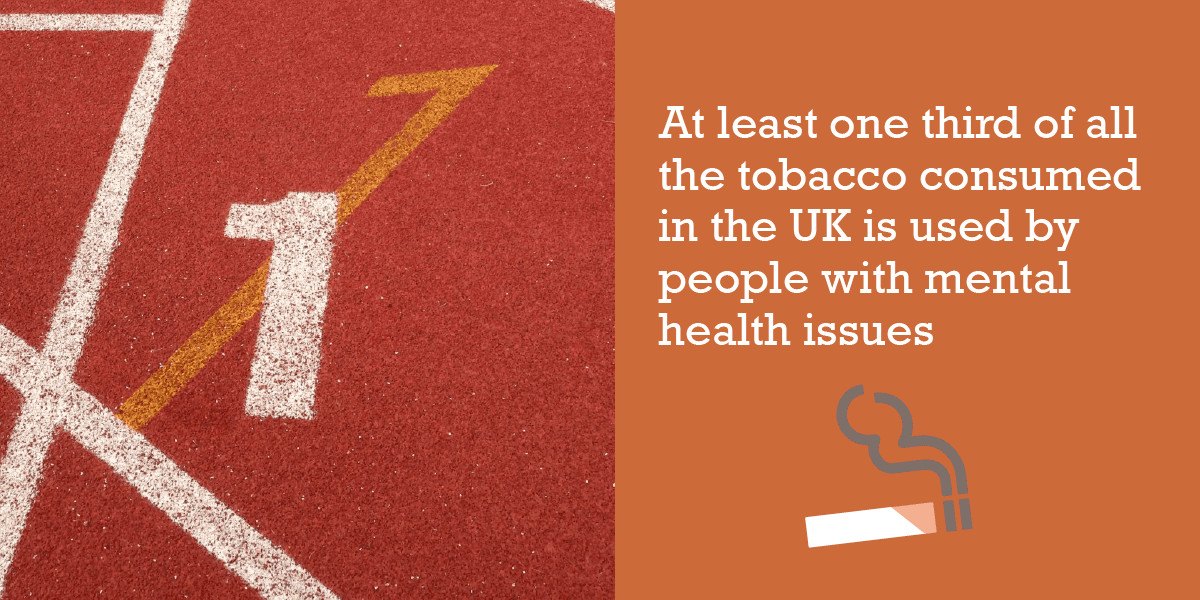
1. One-Third of Tobacco in the UK is Consumed by People with Mental Health Issues

At least one-third of all the tobacco consumed in the UK is used by individuals experiencing mental health challenges. This highlights the disproportionate burden smoking has on those who need greater support.

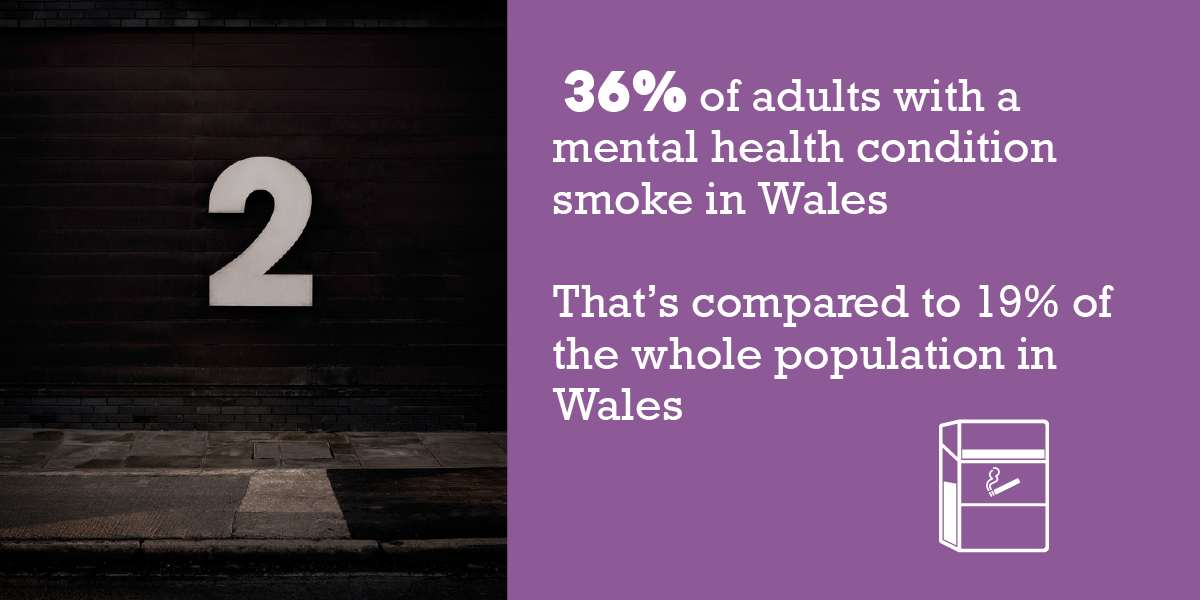
2. 36% of Adults with a Mental Health Condition Smoke in Wales

In Wales, 36% of adults with a mental health condition smoke-almost double the rate of smoking in the general population, which stands at 19%.

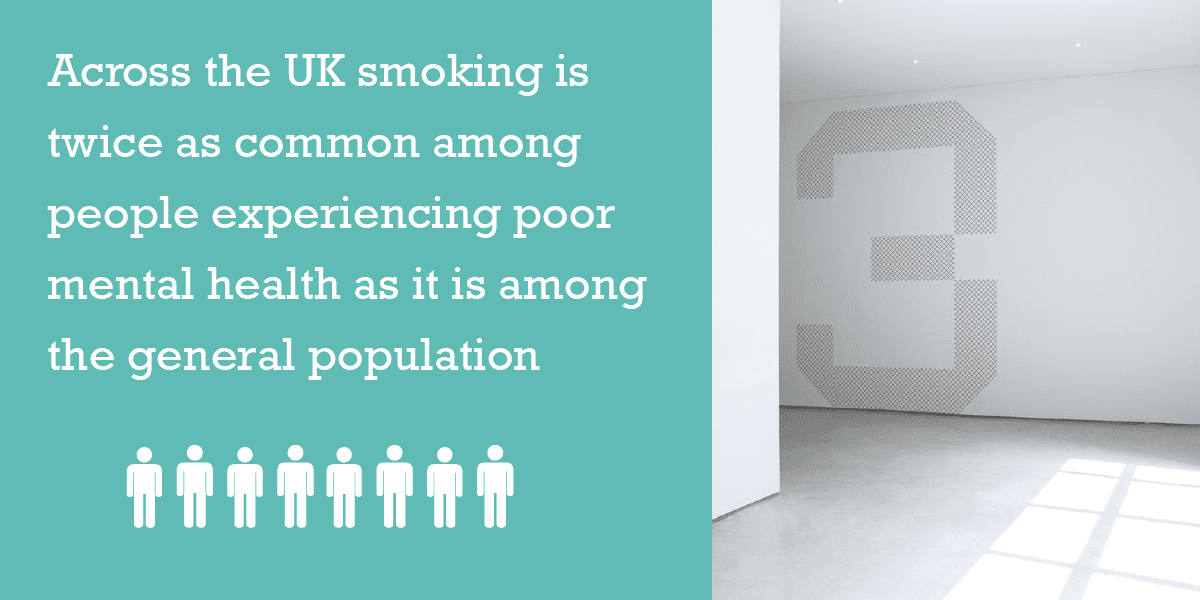
3. Smoking is Twice as Common Among People Experiencing Poor Mental Health

Across the UK, individuals experiencing poor mental health are twice as likely to smoke compared to the general population. This highlights an urgent need for tailored support to help them quit.

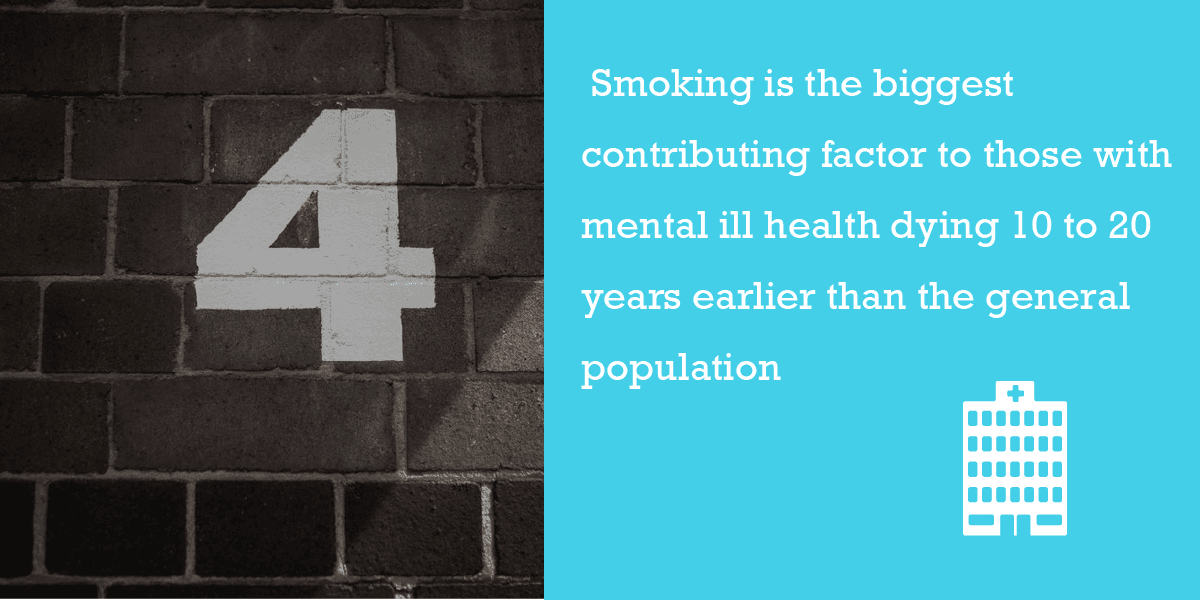
4. Smoking Shortens Lives for Those with Mental Ill Health

Smoking is a leading contributor to early death among people with mental ill health, cutting their lives short by 10 to 20 years compared to the general population.

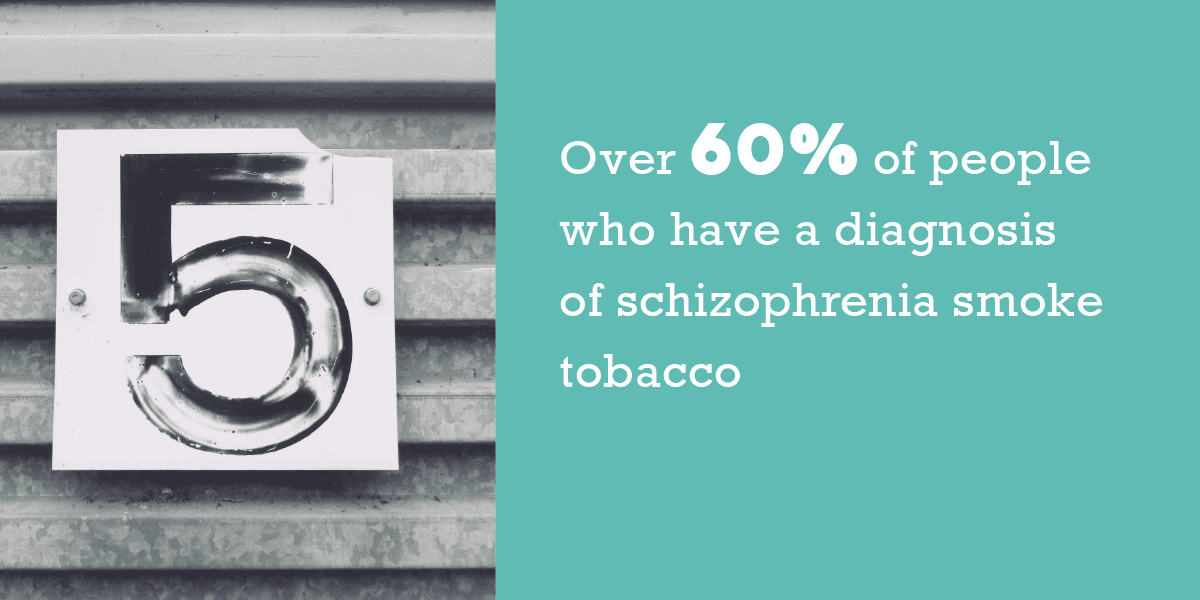
5. Over 60% of People with Schizophrenia Smoke

People with a diagnosis of schizophrenia are disproportionately affected, with over 60% being smokers. This stark figure highlights the need for targeted smoking cessation support.

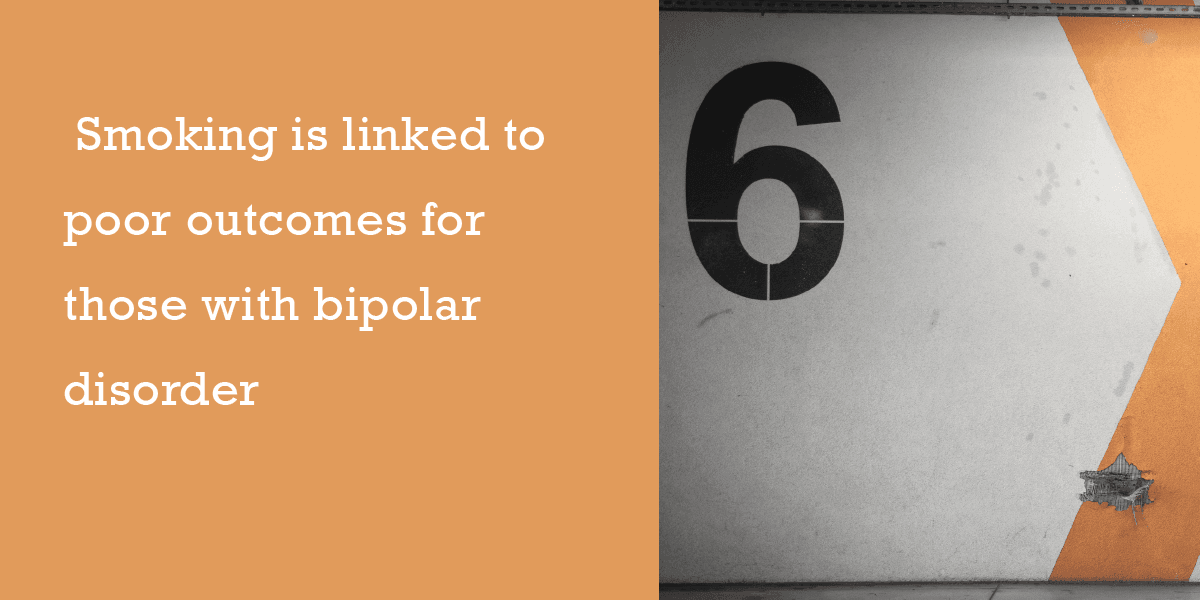
6. Smoking is Linked to Poor Outcomes in Bipolar Disorder

For individuals with bipolar disorder, smoking has been linked to poorer health outcomes and a greater challenge in managing the condition effectively.

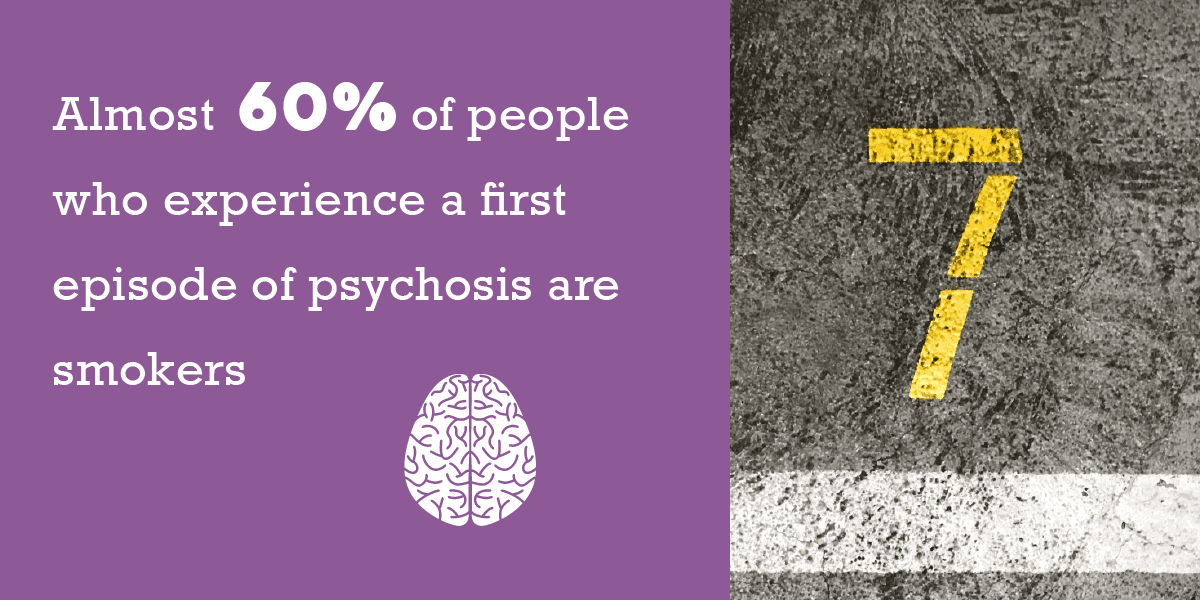
7. Almost 60% of People Experiencing First-Episode Psychosis Smoke

Nearly 60% of individuals experiencing a first episode of psychosis are smokers. This demonstrates the strong association between tobacco use and severe mental health conditions.

8. Nicotine Withdrawal Exacerbates Anxiety and Depression

Feelings of anxiety, stress, and depression can be exacerbated by nicotine withdrawal, creating a vicious cycle for smokers attempting to quit.

9. People with Mental Illness Smoke More Cigarettes

Evidence suggests that individuals with mental illnesses smoke a higher number of cigarettes compared to smokers without mental health conditions.

10. Smoking Reduces the Effectiveness of Mental Health Medications

Smoking can affect certain commonly prescribed mental health medications, making them up to 50% less effective. This underlines how quitting smoking can significantly improve treatment outcomes.

Need Support to Quit Smoking?

If you’re in Wales and looking for support to stop smoking, Help Me Quit is here to help. Visit their website or contact their team for tailored advice and support.

If you’re struggling with your mental health, please don’t hesitate to reach out to the Samaritans for confidential and compassionate support:
📞 08457 90 90 90 (24/7)

Further Reading

Want to learn more? Check out our Smoking and Mental Health page, where you can find resources, including a helpful diagram showing how nicotine impacts the brain.


Let’s work together to support healthier minds and healthier bodies in Wales.

Five facts about smoking and mental health

There is a far higher prevalence of smoking among people with mental health problems compared to the rest of the population. In Wales 36% of adults with a mental health condition smoke compared to 17% of the whole adult population in Wales. People with mental health problems tend to smoke more heavily. Across the UK people who are mentally ill smoke more than a third of all the tobacco smoked in the UK. Partly as a result of this, they tend to die on average 10 to 20-years-earlier than those who do not have mental health problems.

Smoking interferes with chemicals in the brain creating a craving for nicotine. The craving makes smokers feel anxious and irritable – a feeling that is temporarily relieved when they smoke another cigarette. This tricks people into thinking that smoking improves their mood, when in fact it’s the cigarette that caused the anxiety in the first place

Studies have shown that quitting smoking can actually improve people’s mental health. According to the NHS, those who give up smoking experience lower levels of anxiety, depression and stress. Their quality of life and moods improve and they can reduce their dosages of some medicines used to treat mental ill health. Some evidence even suggests that stopping smoking can be as beneficial as taking antidepressants for those suffering from anxiety and depression.

Smoking interferes with the effectiveness of some medication to treat mental health problems. This means smokers sometimes have to increase the amount of medication they take in order for it to continue being effective.

There is a far higher prevalence of smoking among people with mental health problems compared to the rest of the population. In Wales 36% of adults with a mental health condition smoke compared to 17% of the whole adult population in Wales. People with mental health problems tend to smoke more heavily and partly as a result of this, they tend to die on average 10 to 20-years-earlier than those who do not have mental health problems.

Expert’s guide to surviving nicotine withdrawal

Steve Clarke is clinical and therapy services manager for The Priory Group which provides specialist mental health services across Wales, and has more than 400 facilities in the UK. Here are his top tips on coping with the temporary impact on mental health of nicotine withdrawal

“Smokers who attempt to quit might want to be prepared for managing some anxiety that is created by cravings. Cravings are likely to happen as the body withdraws from its reliance on nicotine. These cravings may feel intense at first, however they will significantly recede within a short space of time.”

“There are two types of craving: a consistent craving for a cigarette, decreasing in intensity over several weeks, or sudden bursts of an intense desire or urge to smoke.”

“Cravings are often triggered by a cue or stimuli such as having dinner or drinks, or break-times at work. These urges to smoke will decrease as time passes; however, their intensity often remains strong for a reasonable period of time as we associate these events with smoking. In time, the association will completely diminish.”

“Cravings are natural. It’s a way of understanding that behaviours are changing.

“When we experience cravings and they are intense, it can be a good tactic to remind ourselves of the consequences if we pick up a cigarette once more. One good way to support this may to make two lists.
1 – What will life be like 5 years from now if I continue to smoke – maybe include “I’ll be less fit, I’ll have more health issues, I’ll have less money…”
2 – What will life be like in 5 years if I stop smoking? – maybe include “I’ll be healthier, I’ll be fitter, I’ll have more money, my clothes will be fresher…”